
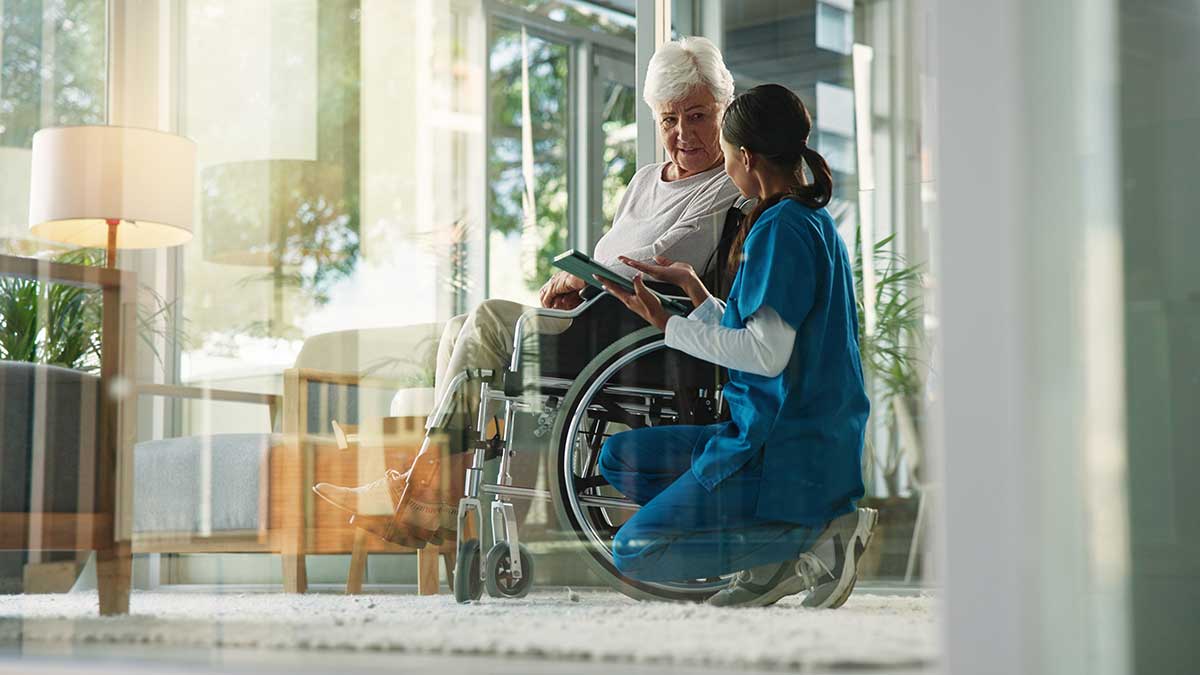
As healthcare systems explore ways to support older adults who choose to remain in their own homes, conventional residential care models often face financial constraints. This dynamic has become particularly evident in the United Kingdom, where social care continues to shape major political discussions.
Internet of Things (IoT) technology offers a practical intervention for this widespread challenge by enabling individuals to maintain independence in familiar surroundings. You will find that this technological integration simultaneously provides necessary oversight for families and medical professionals alike.
Demographic pressures and technological solutions
The push for connected solutions stems from an overarching international shift. The United Kingdom anticipates sustained demographic pressures as life expectancy expands, while plans for a new National Care Service have pushed social care reform back into the policy spotlight.
That context gives smart home IoT a clearer role by helping older adults remain safer and more independent at home. At the same time, families, councils and healthcare providers look for scalable support beyond conventional residential care. These domestic pressures mirror an international reality in which many developed economies are being affected by a rapidly ageing demographic.
Such shifting realities create a pressing requirement for adaptable care options. Smart home technology addresses this gap by converting standard residential properties into responsive environments. These networked systems bridge the divide between total independence and institutional care. Families can implement phased technological upgrades whenever the needs of older relatives change. Evidently, modernising existing housing stock with intelligent sensors offers an economically viable way to supplement broader residential care provisions.
Essential IoT devices for independent living
Several categories of IoT hardware provide the practical foundation for home-based care. Voice-activated smart speakers function as central command hubs for residents experiencing reduced mobility. Users can adjust room temperatures or contact relatives through clear vocal prompts, bypassing the operational friction often associated with standard smartphone screens.
Environmental sensors introduce an unobtrusive layer of physical safety across living spaces. Discreet motion and door sensors track routine activity patterns along corridors and living areas. In local authority trials, passive assistive technologies support independent living and reduce hospital admissions by using discreet door and motion sensors to flag emerging complications before health deteriorates. Across wider domestic setups, these same sensors trigger automated lighting to illuminate dark pathways at night. Connected access locks allow relatives or emergency responders to enter during an urgent situation.
Connected health hardware also enables the continuous evaluation of vital physiological signs outside clinic walls. Modern wearable devices can log pulse rates alongside blood oxygen levels and transmit telemetry securely to clinicians, who can intervene swiftly whenever baseline readings degrade. Additionally, smart medication devices further support daily clinical adherence by unlocking specific compartments on schedule.
Infrastructure and privacy considerations
Deploying these intelligent networks demands reliable digital infrastructure paired with comprehensive privacy safeguards. Older residents must maintain complete confidence regarding the security of their sensitive domestic data. After all, data privacy structures are a key pillar of human-centric IoT design. This includes transparent collection practices, user control over personal information and adherence to regulations like GDPR.
Hardware developers should adopt end-to-end encryption protocols to secure transmitted telemetry against unauthorised access. At the same time, health providers require interoperable software architectures so information from disparate equipment converges into a coherent health record. Telecommunications providers must also expand dependable broadband coverage into regional communities, ensuring rural residents receive equal access to these digital services.
The sector must address lingering obstacles surrounding consumer confidence and ease of use. The most dependable IoT applications operate passively in the background without complex setup procedures.
A Sustainable Path Forward
Smart home technology provides an enduring model for populations choosing to age in place. Connected devices deliver dependable routine monitoring and expedite emergency assistance, all while protecting personal autonomy. Through easing the logistical burden placed on public social care systems, widespread IoT deployment delivers clear societal value. Ageing in place becomes a viable reality when domestic environments actively adapt to the changing needs of their inhabitants.
There’s plenty of other editorial on our sister site, Electronic Specifier! Or you can always join in the conversation by commenting below or visiting our LinkedIn page.