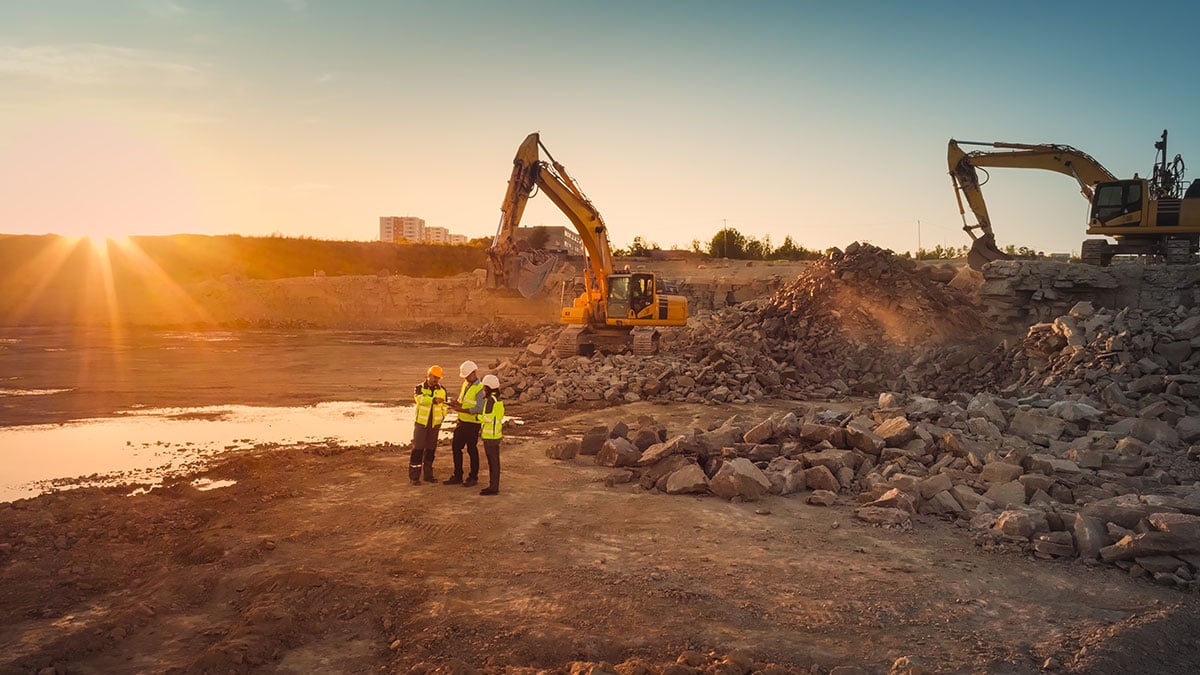
According to a new research report from Berg Insight, the installed base of connected mining solutions reached 1.5 million units in use across the equipment, people, and environment segments in 2025.
The equipment segment accounts for the largest share of the total, representing connected units deployed on machines and vehicles used in mining operations. This includes solutions ranging from OEM telematics systems on mining equipment to advanced connected solutions supplied by mining technology specialists. The people segment includes various solutions deployed to support the safety and productivity of mining personnel, while the environment segment consists of sensor technology implemented for environmental monitoring of the mine itself. Growing at a compound annual growth rate (CAGR) of 15.3%, the total connected mining installed base across all segments is forecasted to reach roughly 3.1 million units by 2030.
The top players active in the connected mining space include strikingly different types of companies, ranging from specialised independent technology suppliers of varying sizes to leading mining equipment manufacturers. Equipment manufacturers such as Epiroc, Sandvik, Komatsu, and Hitachi Construction Machinery have expanded their mining technology offerings largely due to high M&A activity in recent years. Many of the key players today serve both surface and underground mining customers. The surface segment is dominated by Komatsu-owned Modular Mining Systems, Hexagon Mining, Wenco International Mining Systems (owned by Hitachi Construction Machinery), and Caterpillar through its Cat MineStar suite. Modular, Hexagon, and Caterpillar all serve underground customers in addition to a primary presence in the surface segment, while Wenco is fully focused on surface mining. Other players focus on autonomous haulage solutions for open-pit mines. These include for example CiDi, Eacon, Pronto (owned by Atoms Mining), and Tage iDriver. The underground mining segment is in general less mature and more fragmented. Examples of key technology providers focused specifically on underground applications are Becker Mining Systems, MST Global (owned by Komatsu), Nerospec Group, and Strata Worldwide.
“The development of autonomous vehicles has been going on for many years in the mining sector and autonomous equipment has been deployed commercially for more than a decade,” said Veronika Barta, IoT Analyst at Berg Insight. As of Q4-2026, there were about 9,000 autonomous haulage trucks in operation across surface mines worldwide. Asia-Pacific hosts the majority of these deployments with the largest market being China followed by Australia. Today, the race between the OEMs to accomplish the highest number of autonomous mining activities is intensifying.
“The frontrunners, Komatsu and Caterpillar, now have more than 1,000 and 800 autonomous mining trucks in operation respectively,” continued Barta. Among technology providers, Eacon stands out as the leader of autonomous haulage system deployments, having reached a fleet of 4,000 active mining trucks using its system by November 2026. While a major share of the autonomy-related mining initiatives so far is focused on autonomous haulage systems (AHS), a wide range of other operational activities in the sector can also be automated, such as drilling and to a smaller extent blasting and dozing.
Download report brochure: The Connected Mining Solutions Market