

Gluware is extending its network automation platform to connected medical devices, aiming to automate the process of identifying and patching vulnerabilities in equipment such as infusion pumps, imaging systems and patient monitors. The US company said today that its new…

npm typosquat campaign linked to GPU cryptojacking operation
A large-scale npm supply-chain campaign has been linked to an emerging cryptojacking operation targeting rented GPUs, after researchers found both operations using the same command-and-control infrastructure. Cybersecurity researchers at CloudSEK said a single npm account, @prime0, published 85 typosquatted packages…

Onomondo secures €100m investment to scale global IoT infrastructure
Danish IoT connectivity company Onomondo is set to receive more than €100m in combined investment from private equity firm Aspirity Partners and Denmark’s EIFO as it expands its global infrastructure. Aspirity has agreed to acquire a majority stake in Copenhagen-based…

Ziggo deploys DOCSIS 4.0 across thousands of Dutch network nodes
Dutch broadband operator Ziggo is upgrading thousands of sites across its network to DOCSIS 4.0, a technology designed to deliver faster and more reliable broadband. Aurora Networks says it is the first large-scale deployment of DOCSIS 4.0 in a live…

Netmore and Itron validate LoRaWAN relay for hard-to-reach water meters
Netmore Group and Itron have completed interoperability testing of a LoRaWAN relay system designed to extend smart water metering coverage without requiring utilities to install additional gateways. The validation brings together Itron’s Cyble 5 RF communication module, the Abeeway LoRaWAN…
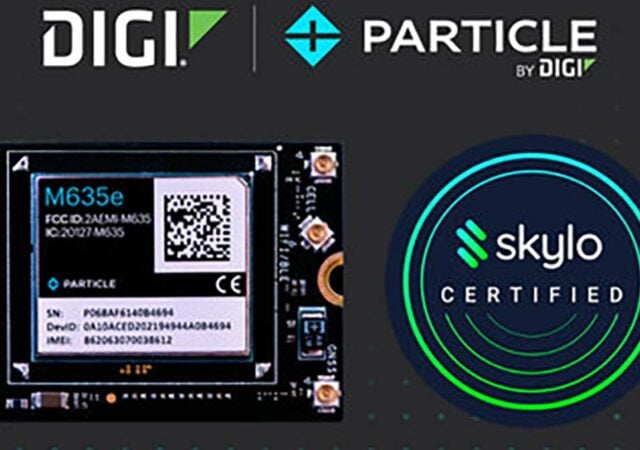
Particle M635e adds Skylo satellite connectivity to IoT devices
Particle by Digi has added satellite connectivity to its M635e cellular IoT module after the device received certification from satellite network operator Skylo. The certification validates the M635e for interoperability with Skylo’s standards-based Non-Terrestrial Network (NTN), giving developers a route…

Thales and Google Cloud expand security controls for AI agents
Thales is expanding its collaboration with Google Cloud to help businesses secure AI agents as they become increasingly capable of making decisions and taking actions across enterprise systems. The companies said the integration of Thales’ AI Security Fabric with Google…

Kigen certifies automotive eSIM for latest IoT specification
Kigen has achieved GSMA eUICC Security Assurance (eSA) certification for an automotive eSIM supporting the latest version of the GSMA’s SGP.32 specification, as vehicle manufacturers look to extend the security and connectivity of software-defined vehicles over longer service lives. The…

Ontario airport deploys private 5G for security and perimeter monitoring
Boldyn Networks has been selected to design, build and operate a private wireless network at Ontario International Airport in California, with the initial deployment focused on physical security and perimeter intrusion detection. The network will combine private 4G and 5G…

CSignum raises £2.6m to scale underwater and underground IoT connectivity
Scottish connectivity company CSignum has raised £2.6 million to expand commercial deployment of its EM2 wireless technology, with water quality monitoring among the applications targeted by the company. The Bathgate-based company uses electromagnetic field signalling to transmit data through water,…