
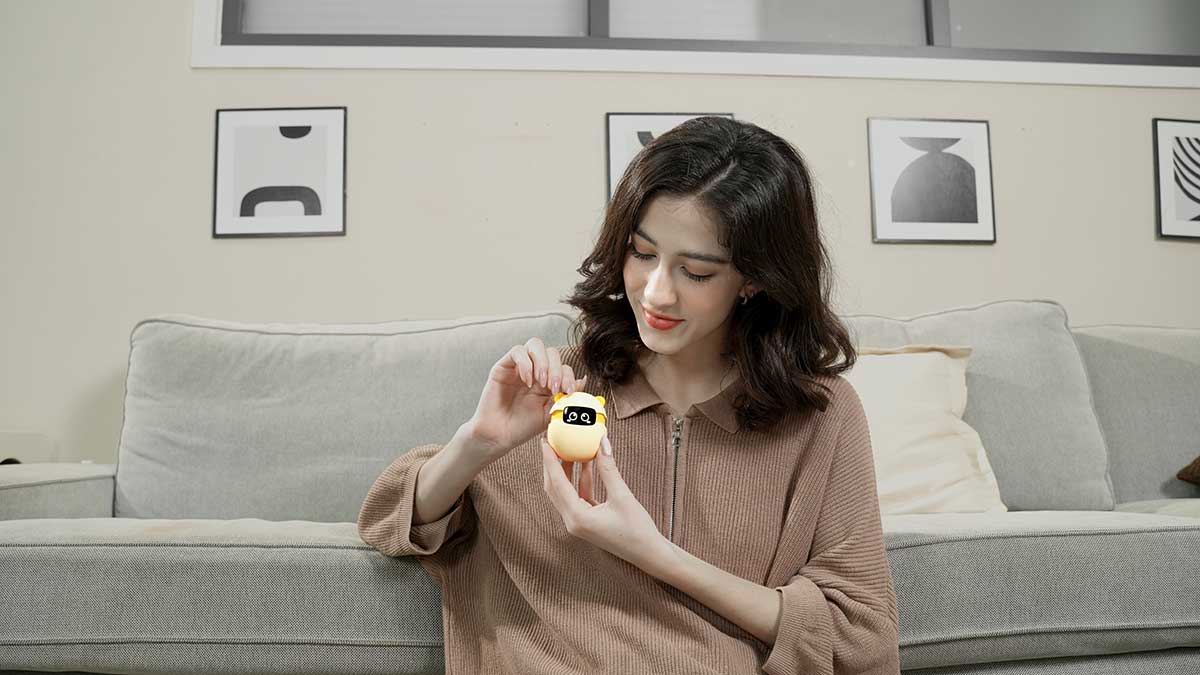
The latest generation of connected toys is aiming to do more than entertain. It is designed to remember, adapt and develop relationships with the people who own it.
A growing number of companies are betting that artificial intelligence can transform the humble toy into something closer to a companion – combining sensors, connectivity and generative AI to create devices that respond to users in increasingly personalised ways.
Among them is Shenzhen-based AI company Takway AI, which has this week been promoting Sweekar, a pocket-sized AI companion that the company says can grow, remember and change through interaction.
The concept draws on two of the defining toys of the 1990s: Furby and Tamagotchi. But while those products relied on programmed behaviours and fixed digital life cycles, a new generation of AI companions is attempting to create something more dynamic – devices whose behaviour evolves based on how they are used.
Sweekar begins life as a physical egg before progressing through Baby, Teen and Adult stages. Takway says interactions such as talking, touching and caring for the device generate experience points, unlocking new behaviours and triggering physical changes through an integrated stepper motor.
The company says the device uses voice recognition and long-term memory to retain information about its owner, allowing its personality to develop over time.
“We didn’t set out to build a smarter gadget. We wanted a small life that’s always with you, something that remembers the little things, grows because of how you show up, and never feels like software pretending to care,” says Hongzhi (Irving) Gao, Founder & CEO of Takway AI.
Sweekar is entering a market where manufacturers are exploring whether AI can create a new category of consumer technology: products that are not simply tools, but objects designed around ongoing interaction and emotional attachment.
Japanese electronics company Casio launched Moflin in 2024, a small robotic companion designed to develop a relationship with its owner through daily interaction. The device uses sensors and artificial intelligence to adapt its behaviour, with Casio positioning it as a companion rather than a conventional gadget.
Ropet, developed by Chinese startup Cute World Technologies, takes a similar approach by combining a furry physical design with AI capabilities. The company says the device can recognise faces, emotions and gestures, while using conversational AI to respond to users.
Creating the impression of companionship is not only a technical challenge. It also raises questions about how humans interact with machines designed to appear increasingly lifelike.
The history of connected toys has already shown the risks of adding microphones, wireless connectivity and cloud services without sufficient attention to privacy and security.
The My Friend Cayla doll became one of the most prominent examples. In 2017, German regulators raised concerns about vulnerabilities in the toy’s Bluetooth connection and the possibility that conversations could be intercepted, ultimately classifying the doll as an unauthorised surveillance device.
As AI becomes embedded into products that interact directly with consumers, regulators are beginning to examine whether existing safety frameworks are equipped to deal with the new risks created by increasingly intelligent devices.
In the UK, the Government launched a Call for Evidence on toy safety in July 2026, examining whether current rules are fit for purpose as technologies such as artificial intelligence become increasingly common in children’s products. The review included emerging risks linked to AI-enabled toys, alongside wider questions around product safety and consumer protection.
Kate Dearden, who was Minister for Consumer Protection at the time, said: “Every parent should be able to buy toys for their children with complete confidence that they are safe. But the way we shop, and the toys children play with, are changing rapidly as new technologies emerge and more purchases move online. It’s vital that our safety rules keep pace.”