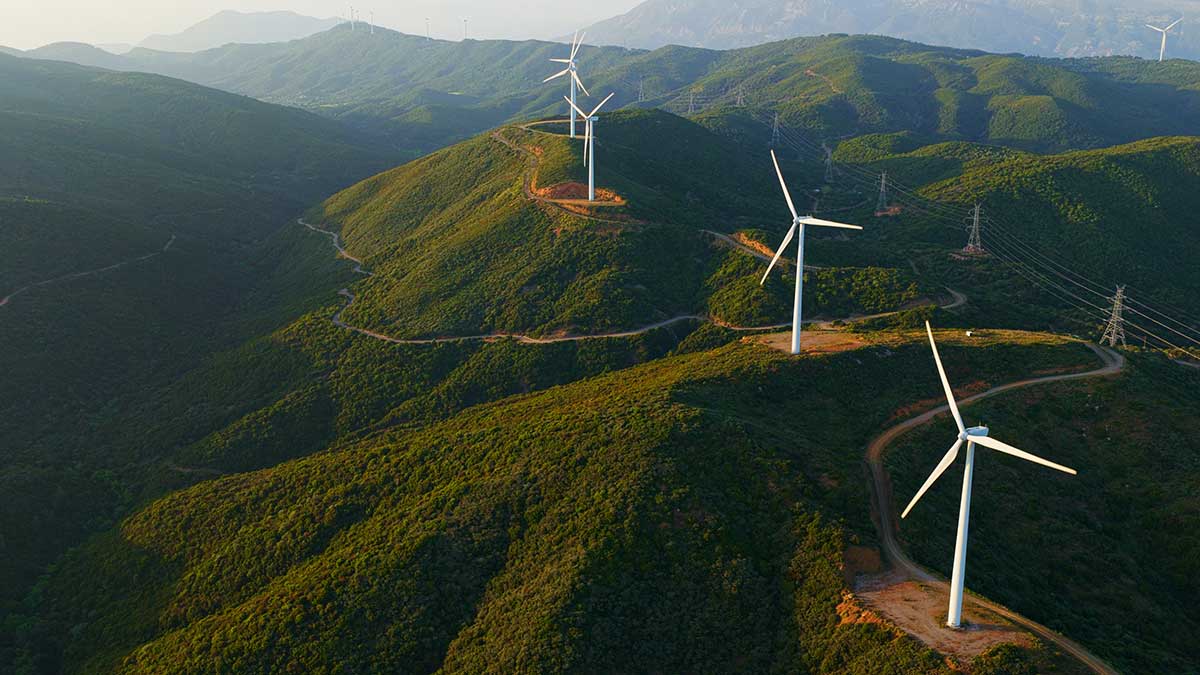
The energy transition is driving the global shift from fossil fuels to renewable power sources. It represents a change in how electricity is generated and delivered, since solar farms and wind turbines now feed the grid from more locations than traditional power stations did. Network operators therefore need to see and respond to conditions across the system in real time. The Internet of Things (IoT) supplies much of the data that makes this possible, and its role is becoming increasingly pragmatic.
How is the energy transition reshaping the power industry?
Renewable output depends on the weather, so supply rises and falls more unpredictably than that of fossil-fuel plants. Power also flows in both directions once households export solar generation, while electric vehicles and heat pumps add new demand in places networks were not built for. Operators have to balance supply and demand locally, often within minutes, which is difficult without live information from the network.
The industry behind this change is expanding rapidly. The International Renewable Energy Agency and the International Labour Organization estimated at least 16.6 million renewable energy jobs across the world in 2024. In the UK, the government expects clean energy employment to double to 860,000 jobs by 2030.
This pattern holds around the world as well. In the US, for example, rural areas have seen 8,000 more clean energy jobs since 2015. Likewise, in Brazil, IRENA estimates that solar photovoltaic employment rose to about 323,800 jobs in 2024, up from a revised 265,700 in 2023. More generation capacity and increasingly connected equipment point to a network that needs better data.
How IoT supports grid efficiency and renewable integration
IoT in the power industry requires sensors and smart meters that send readings over a network to systems that rely on this to act efficiently. Sensors on lines and at substations report load and faults in real time, enabling operators to connect new solar and wind capacity with greater confidence. Remote monitoring of turbines and solar sites also helps maintenance teams find faults early, which matters because renewable assets are spread across wide areas and often sit in harsh conditions.
Demand-side devices matter as much. Home batteries and electric vehicle chargers can shift their consumption when the grid is under strain, and operators can use that flexibility to avoid overloading the network. Forecasting tools combine live readings with historical data to predict renewable output, which helps operators decide how much reserve capacity to maintain.
UK Power Networks offers a practical example. Working with the Department for Energy Security and Net Zero, it ran what it described as the sector’s first disaggregated smart meter data trial in 2023, relaying half-hourly metrics to local substations. The data enabled the operator to model the network down to the level of individual substations.
Now, a machine-learning model predicts future substation use to guide investment and flexibility decisions. The stated aim was to enable customers to connect low-carbon technologies, such as heat pumps and solar panels, quickly and cheaply.
Analytics and dashboards turn device data into decisions
Raw readings are only beneficial when people can act on them intuitively. Operational dashboards track ongoing operations and prioritise the metrics that matter most. The same principle applies to the readings that connected devices produce on a power network. Poorly designed screens can bury the signal, so presentation affects how quickly an operator spots a constraint or a developing fault.
Analytics goes further than display. Models trained on sensor history can flag equipment that is drifting towards failure and estimate how much local solar will be exported on a given afternoon. Some operators also build digital twins, which are essentially virtual copies of physical assets that update with live data and support planning and maintenance decisions.
IoT and the future of energy
Connected devices will continue to multiply as more homes and businesses generate and store their own power. Networks will need systems that can integrate data from multiple manufacturers, and security will matter more because every connected device broadens the attack surface. Both are as much about governance and procurement as about technology.
Why IoT matters for the energy transition
IoT is becoming a practical foundation for the energy transition, giving power companies the visibility and control needed to manage cleaner, more distributed networks. As renewable generation, electrification and flexible demand grow, connected devices and analytics will play an increasingly central role in keeping energy systems reliable, efficient and resilient.