

6G networks are set to do more than connect devices. They are being designed to sense the physical world as well.
This capability, known as Integrated Sensing and Communications (ISAC), could turn existing cellular infrastructure into a distributed sensor network, enabling applications such as smart city monitoring, industrial automation, drone detection, and real-time movement tracking.
Instead of deploying separate sensing systems, operators could reuse existing radios, sites, and spectrum to both communicate with devices and observe their surroundings.
Sensing with 6G
The implementation of ISAC can be viewed in increasing levels of integration between sensing and communications systems, each with different implications for IoT deployments.
This effectively transforms cellular networks into a large-scale IoT sensing layer, extending visibility far beyond traditional device telemetry. By adding sensing capabilities to existing cellular infrastructure, 6G could provide a new layer of environmental awareness across cities, factories, and transport networks.
ISAC implementation
The implementation details for ISAC are still being determined. There are different levels of integration for sensing and communications [Fig. 1]. ISAC can be introduced at different levels of integration. Early implementations may combine existing cellular infrastructure with separate sensing equipment, while more advanced systems could share spectrum, hardware, and eventually the same waveform for both communication and sensing.
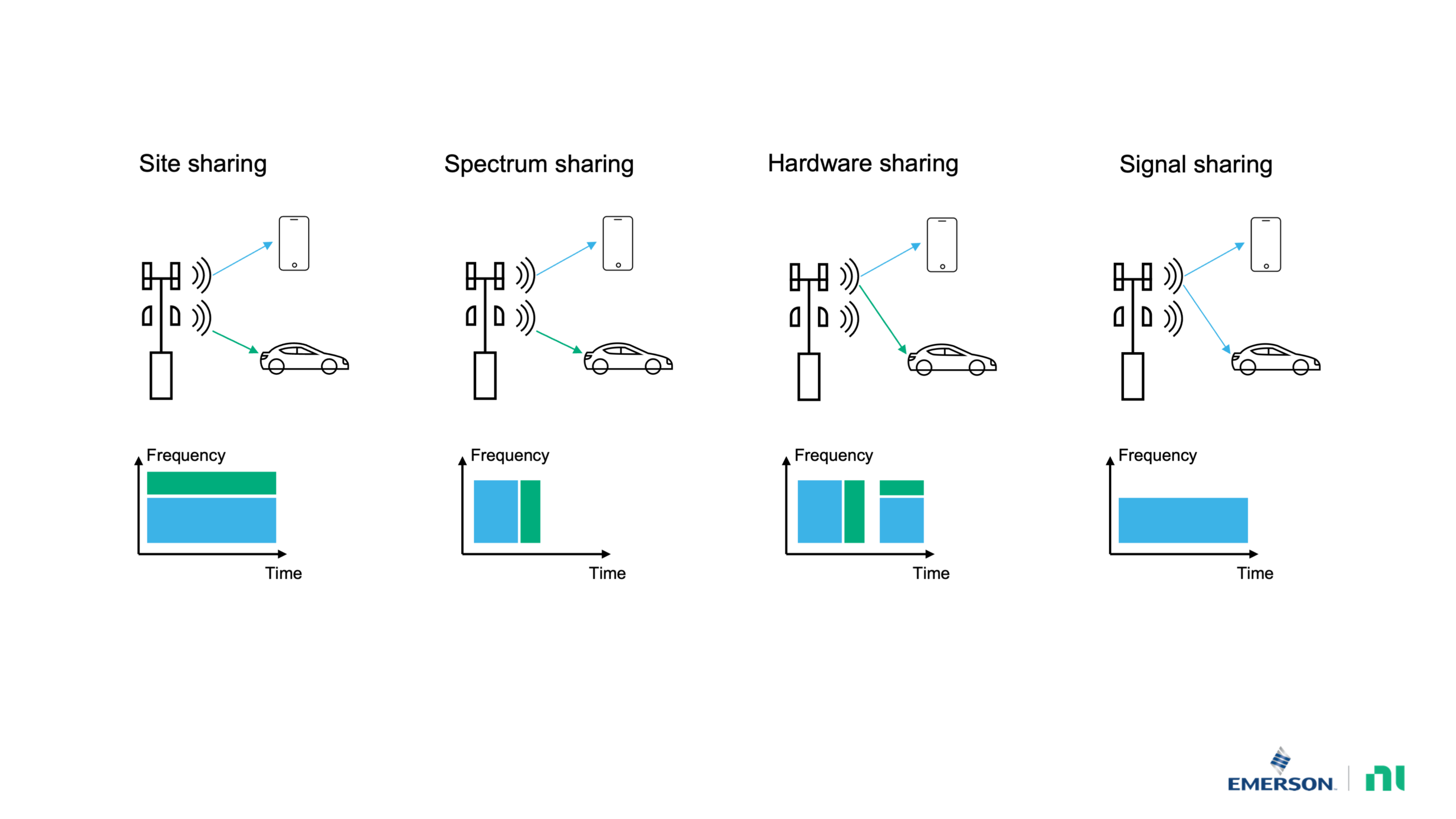
The greater the level of integration, the closer networks move towards becoming a native sensing platform rather than simply a communications system. As integration increases, sensing evolves from a separate capability into a native function of the wireless network itself. Sharing a signal for sensing and communications is a desired outcome for ISAC.
6G waveform standard
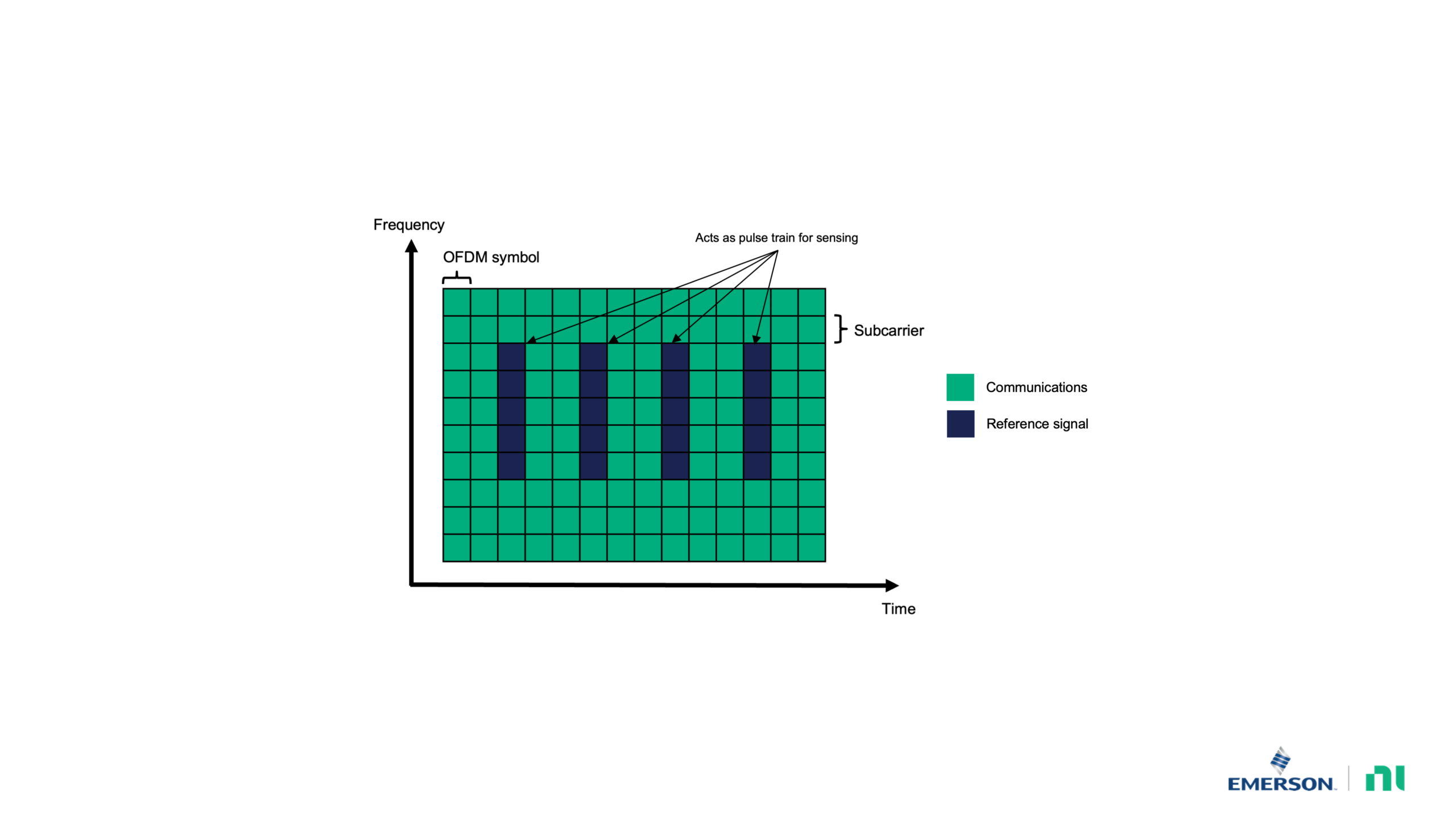
At this point in the standardisation efforts, it seems likely that 6G will continue to use an orthogonal frequency-division multiplexing (OFDM) waveform [Fig. 2]. The existing structure of OFDM with its repeating reference signals makes it an inherently sensing-friendly signal.
For IoT systems, this means sensing capability may come ‘for free’ from communication signals already present in the network, rather than requiring dedicated radar hardware.
An OFDM signal provides ways to look at the frequency, time, and special dimensions of a signal.
Current research suggests 6G may continue using OFDM based approaches, which are already widely used in cellular networks and have characteristics that make them suitable for sensing. This could allow sensing capabilities to be added without requiring entirely separate infrastructure.
However, there are trade-offs. Optimising a signal for communication does not always deliver the best sensing performance, meaning engineers will need to balance connectivity, accuracy, and cost.
OFDM is a good waveform choice for communications, and its structure makes it a natural choice for sensing too.
From connected devices to sensing networks
For IoT ecosystems, ISAC could enable entirely new classes of services. Industrial sites could monitor equipment movement and worker safety, logistics hubs could track assets and vehicles, and smart cities could infer pedestrian flows or detect drones using existing network infrastructure.
The technology could also complement existing sensors by adding a wider layer of awareness across environments where deploying dedicated hardware is expensive or impractical.
Designing ISAC systems
Beyond waveform design itself, there are implications of sharing hardware and waveforms for ISAC applications that must be considered in the design of an ISAC system.
As mentioned above, bandwidth, subcarrier spacing, antenna count, and modulation directly impact sensing resolution. Communication-oriented choices such as high-order modulation can degrade sensing performance, whereas simpler modulation schemes may be more sensing-friendly.
Communications algorithms have been highly optimised over decades to perform robustly and tolerate errors using lower cost transceivers and radio frequency (RF) equipment compared to the typical radar systems.
In practice, this means the sensing performance of a system is far more sensitive to hardware impairments, phase noise, and calibration errors than communications performance. These trade-offs matter because IoT deployments prioritise scale, cost, and robustness over theoretical sensing performance.
The radio frequency integrated circuits (RFICs) used in cellular devices, especially power amplifiers, are calibrated to perform optimally for communications, not sensing.
Residual impairments that can be tolerated in a communications application can destroy angle-delay maps needed for sensing, and the sensitivity to these impairments increases with frequency. But these impairments are learnable and AI can potentially provide a solution for managing them.
AI and ISAC systems
AI could help interpret complex sensing data and compensate for hardware limitations. However, IoT deployments will require efficient AI approaches that can operate within Edge constraints around power, processing, and latency.
A hybrid approach combining model-based methods with learning offers a practical way to use AI without excessive processing overhead.
AI is most valuable when channel or hardware behaviour is too complex to model accurately using conventional techniques. In IoT deployments, this hybrid approach is especially important because sensing will often run at the Edge, where compute, power, and latency constraints limit the use of large AI models.
System topology
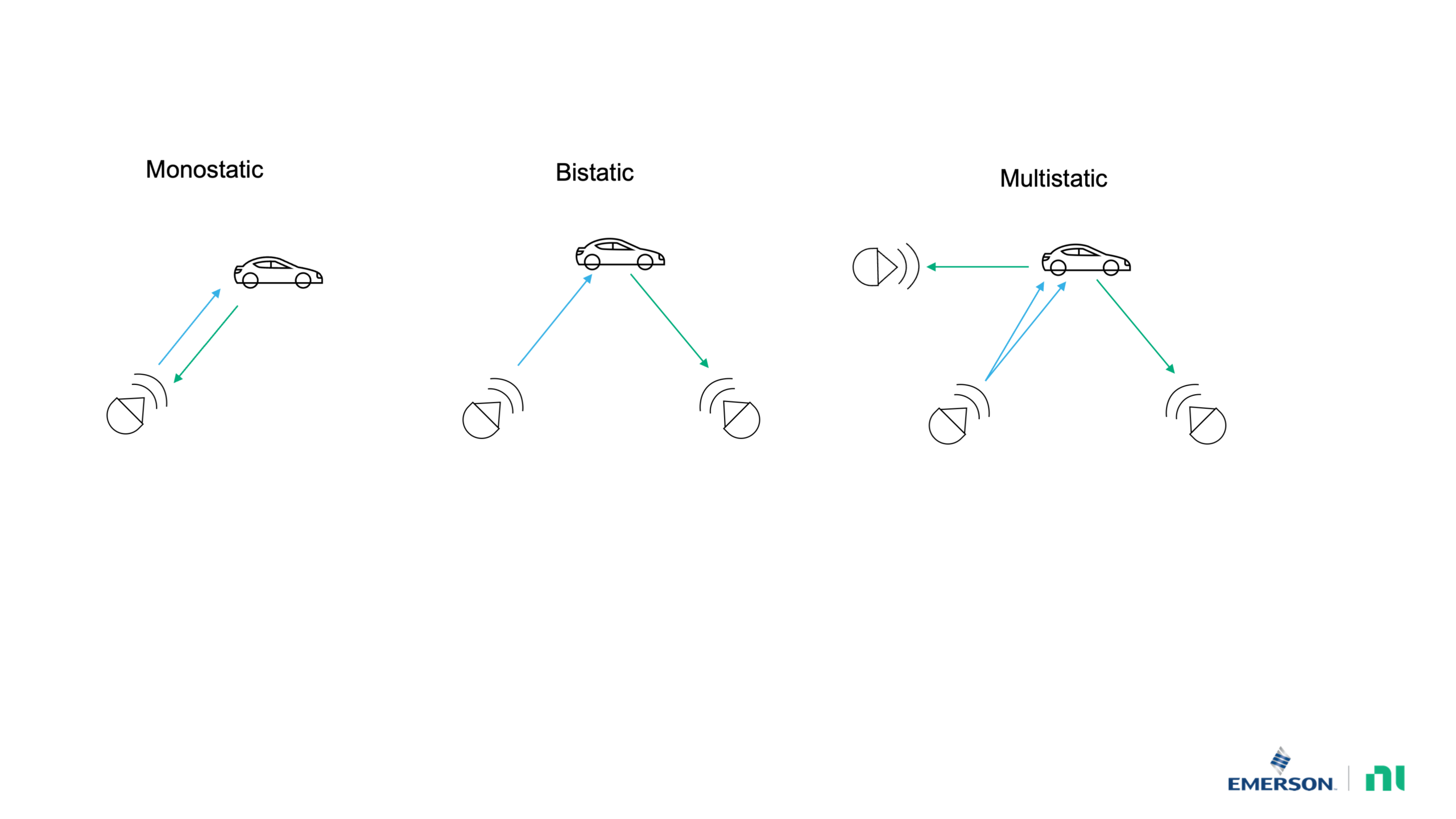
Another consideration is how sensing data is collected across a network. Future systems may use single sites or multiple cooperating base stations to improve coverage, positioning accuracy, and reliability. This distributed approach could be particularly valuable for large-scale IoT environments such as smart cities and industrial facilities.
Conclusion
As 6G standardisation progresses through organisations such as 3GPP, ISAC systems are moving from research into a practical network capability.
For IoT, this represents a shift from devices as isolated data sources to networks themselves becoming distributed sensing systems. The result is a convergence of connectivity and perception, where wireless networks become foundational infrastructure not just for communication, but for understanding the physical world.
This article originally appeared in the October issue of IOT Insider