
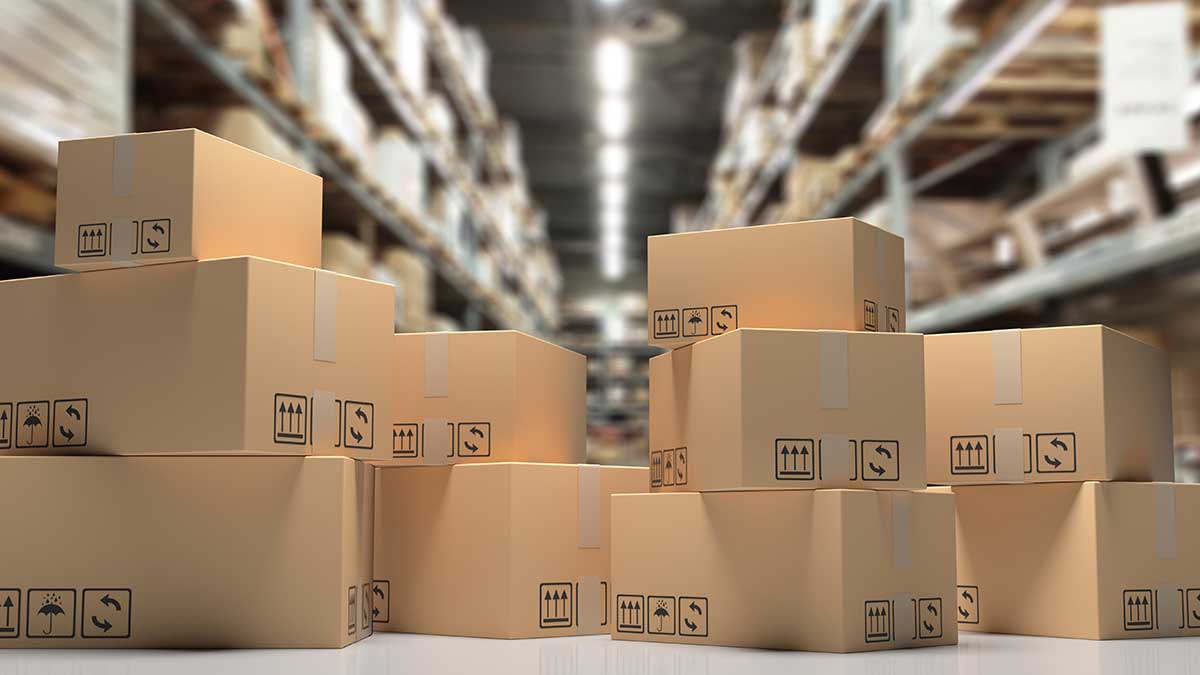
Monitoring the entire logistics operation from a single point was once in the realm of science fiction. Now, the Internet of Things (IoT) has made it possible. April Miller, Managing Editor at ReHack Magazine argues that, as the primary technology behind smart packaging, its outlook is promising. It could revolutionise supply chains worldwide.
Why is smart kraft packaging important?
Conventional kraft packaging is lightweight, recyclable and exceptionally durable. Market research projects its value will increase to $71.06 million in 2035, up from $43.21 million in 2025. This 5.1% compound annual growth rate is driven by a push for sustainability, which stems from evolving regulations and consumer demand.
While countless packaging innovations exist, many emerging options are impractical — they are often too expensive, difficult to scale or polluting. Kraft paper is different. This material is 100% biodegradable because the kraft pulping process is nontoxic and involves minimal chemical processing. Moreover, manufacturers can use any type of wood to create it.
Since this material is the ideal choice for packaging and shipping, it makes sense for industry professionals to concentrate their technological innovations in this area. Smart kraft boxes incorporate connected technology into the conventional shell, introducing novel data collection and monitoring capabilities.
Visibility is the cornerstone of decision-making, especially in a fast-paced field like logistics. With the transparency smart boxes provide, companies can improve everything from customer satisfaction to product quality.
The technology behind smart packaging
The many types of internet-connected sensors include near field communication (NFC), radio frequency identification and low-power Bluetooth. Long-range (LoRA) endpoints are ideal for supply chains since they were designed for the low-power, wide-area network protocol that wirelessly connects battery-powered devices to the internet over vast distances.
While LoRa is best suited for logistics operations, it is not the only reasonable option. With NFC, professionals can retrieve product information to conduct real-time audits, ensuring product quality or identifying counterfeits.
NFC and LoRA devices enable logistics professionals to track temperature, pressure, moisture, vibration and more. Many businesses use sensory arrays to track multiple metrics simultaneously. Thanks to advances in miniaturization, multiple nodes can be fitted into a small form factor.
Communication protocols, IoT gateways and data analytics platforms underpin these technologies. Companies need a way to exchange and analyse information to turn raw data into actionable insights.
The IoT enhances life cycle tracking and recyclability for kraft boxes. It facilitates end-to-end monitoring, enabling leaders to track the end-of-life journey of boxes. In other words, professionals can use the IoT to track whether materials are properly recycled or composted, providing valuable information for circular economy initiatives.
How smart packaging benefits companies
With smart kraft packaging, organizations gain oversight into the entire product journey. IoT-generated information enhances supply chain visibility and empowers decision-making. By helping ensure products arrive safely and on time, operational efficiency is improved and resource waste is reduced.
Smart boxes come in many forms. Since there is no definitive definition, professionals can explore various implementation opportunities to optimize returns. When leveraged in packaging manufacturing, IoT can improve cutting precision and production times. It enables high-volume production without sacrificing quality.
This technology’s shipping applications focus on traceability. Real-time visibility has upstream and downstream benefits. By enhancing product quality and improving supply chain efficiency, customer satisfaction and inventory management improve.
The IoT increases efficiency by facilitating process automation, which enables just-in-time inventory management and eliminates the need for manual intervention. As a result, it reduces carrying costs, product waste and delivery delays.
Sustainability is among the most significant benefits. It is crucial because the average company’s supply chain emissions are over 11 times higher than its direct emissions. In sectors relying heavily on e-commerce, this figure is often significantly higher. For instance, an estimated 80% of the consumer goods sector’s greenhouse gas emissions stem from logistics.
Steps to integrate IoT into kraft packaging
Often, the potential return on investment outweighs the implementation cost. In the United States, reverse logistics collectively costs businesses hundreds of billions of dollars annually. While IoT devices cannot eliminate return-related expenses, they can prevent damage and losses, helping lower that figure drastically.
Implementing smart kraft packaging is systematically straightforward, but can be technically complex. Decision-makers must first consider compatibility. Can their current data analytics platform handle an influx of sensor information? Does their chosen communication protocol align with the hardware they want to use?
Some IoT communication protocols are open, while others are proprietary. The former offers increased flexibility at a lower cost, while the latter provides simple device provisioning and is typically more secure.
Critical considerations include data security, interoperability and upkeep needs, which robust encryption standards, middleware solutions and predictive maintenance strategies can address. With careful planning, leaders can maximize uptime and streamline scaling.
Delivering better solutions with the IoT
Smart kraft packaging combines the best of the physical and digital worlds by leveraging a robust shell with a flexible connected network. Integrating sensor arrays into production lines, boxes or trucks enables real-time monitoring and management, allowing for meaningful process improvements. Businesses can use this solution to transform their supply chains.
Author biography:

April Miller is Managing Editor at ReHack Magazine, based in South Carolina, USA.