
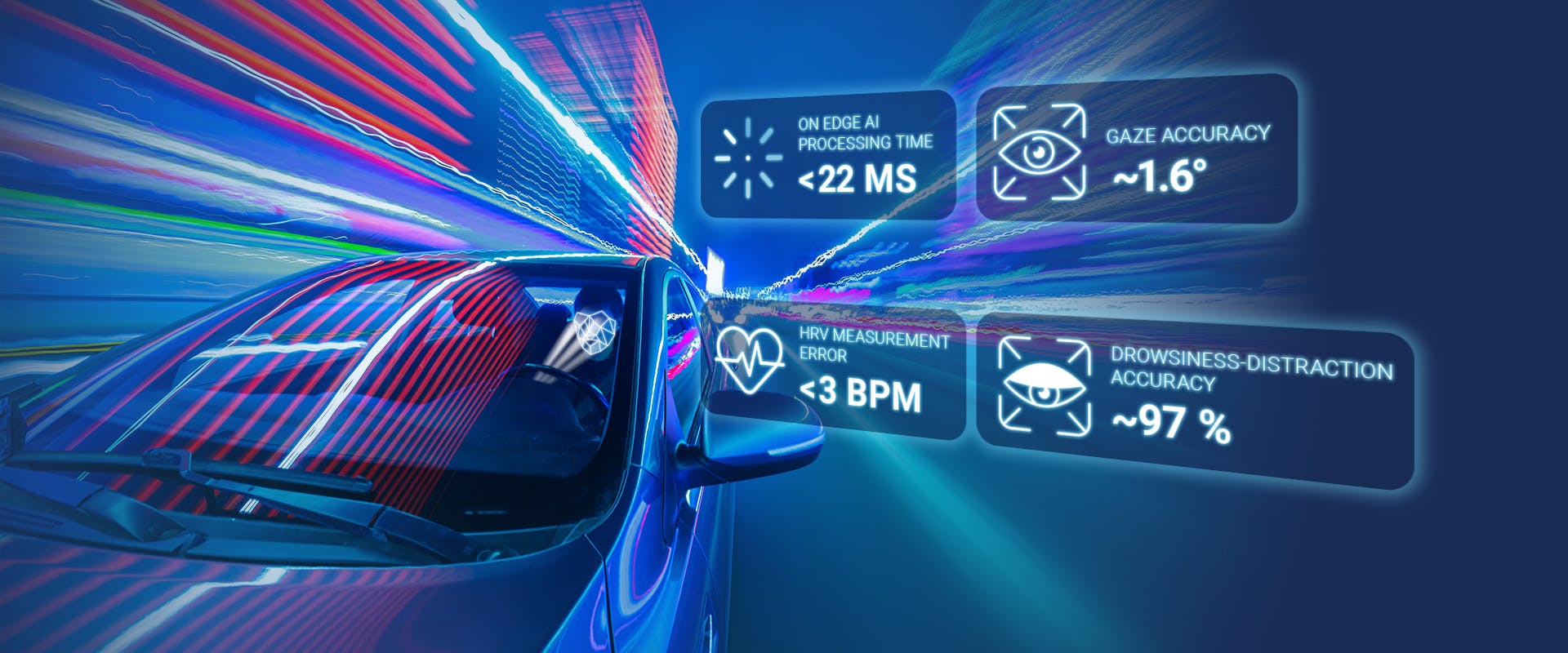
Swiss research and technology centre CSEM has unveiled a driver safety system designed to reduce accidents caused by sudden illness behind the wheel.
Known as DriverCheck, the system employs a miniaturised in-cabin camera and artificial intelligence to monitor heartbeat, breathing, and alertness in real time.
The technology can detect early signs of fatigue, stress, or sudden medical events. In testing, DriverCheck measured heart rate with an error margin of fewer than three beats per minute and detected drowsiness with over 95% accuracy.
If a driver experiences a health crisis, DriverCheck could trigger automatic responses such as slowing the vehicle, activating hazard lights, or steering to safety, complementing existing advanced driver-assistance systems.
Unlike wearable devices or cloud-based platforms, all processing occurs entirely inside the vehicle, with no data stored or transmitted.
While European regulators mandate safety systems such as emergency braking and driver attention monitoring, none currently assess the driver’s health.
“DriverCheck acts like a guardian angel — always watching, never intrusive,” says Nadim Maamari, Group Leader of Edge AI & Vision at CSEM. “Our goal is simple: to save lives by intervening 30 seconds before tragedy strikes.”
CSEM stresses that the system does not collect personal identifiers such as gender or ethnicity, nor does it generate biometric profiles. All processing occurs locally at 40–60 frames per second without cloud connectivity, ensuring compliance with Swiss data protection law and the EU’s GDPR.
DriverCheck is being offered as a hardware–software package for carmakers, suppliers, and fleet operators. CSEM has also launched a co-development programme to industrialise the system for commercial use.
There’s plenty of other editorial on our sister site, Electronic Specifier! Or you can always join in the conversation by commenting below or visiting our LinkedIn page.