By Allan Lagasca, Global leader of Smart Industrials Segment organisation at STMicroelectronics
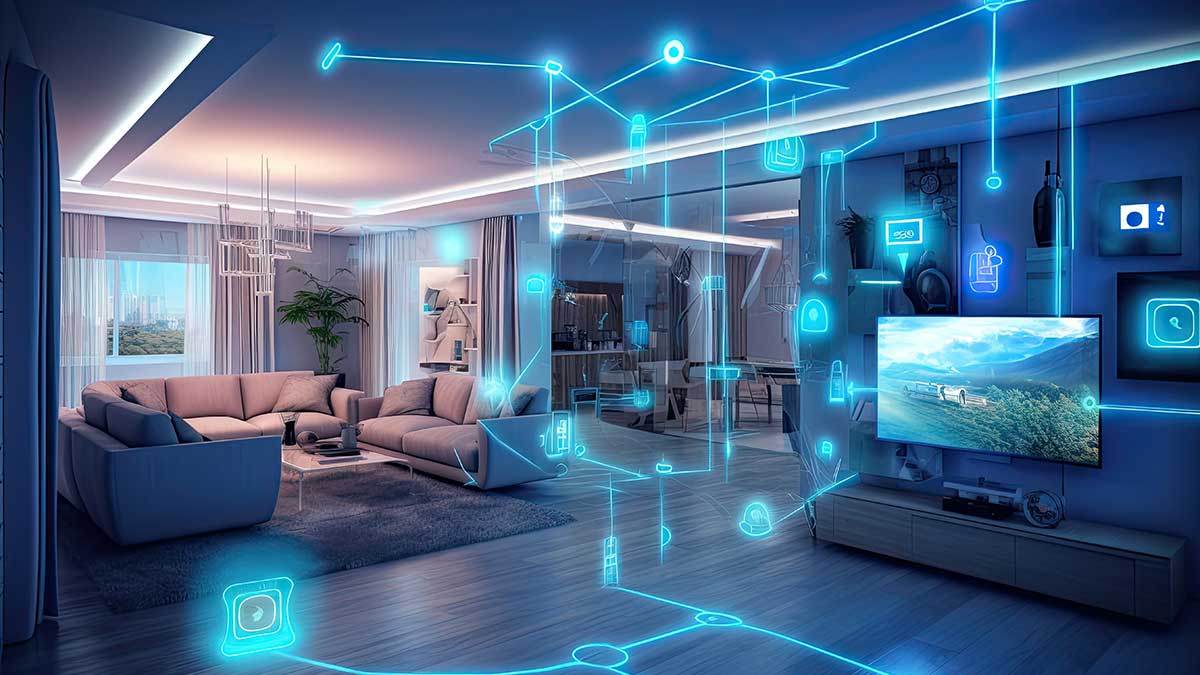
The concept of the “smart home” isn’t new. There can be few homes which don’t integrate connected technology to monitor and manage energy, entertainment, heating and lighting, cleaning, security, or any other aspect of the domestic environment. From doorbells that allow homeowners to interact with visitors from anywhere – to robotic vacuum cleaners and lawn mowers – connected “smart” technologies have become commonplace.
As long as these individual solutions remain independent of each other, however, the opportunity to gain maximum benefit from smart home technology remains somewhat limited. The next era will therefore see a move towards seamless integration between connected technologies and solutions in the home, bringing an increased level of “self-awareness” and, with it, greater efficiency and with connected homes higher level of security
Intelligent energy consumption powers up
The domestic energy system is becoming more complex. Traditional areas of energy consumption – heating and domestic appliances principal among them – are still present. Add to these the arrival of electric vehicles, sophisticated entertainment and security systems, robotic appliances, and the fact that for many the home has also become a place of work, and the increased need for the home to be an energy “hub” is clear.
Whether financially motivated or through a desire to reduce environmental impact – or often both – smart technologies are becoming central to the monitoring and management of domestic energy consumption. In addition, many homeowners are turning to domestic electricity generation through renewable energy solutions, most commonly the installation of solar photovoltaic panels.
In many cases, however, domestic renewable energy systems are insufficient to meet all of the energy needs of the household. Intelligently balancing the use of home-generated energy and dependence on the electricity grid is therefore essential. This dynamic management and optimisation of home energy consumption requires insight into the use of energy across the entire domestic environment, which can only come through integrated systems.
From individual devices to a smart home ecosystem
The evolution of the smart home will see numerous individual connected devices and appliances integrated into one unified smart home ecosystem. While this integration will bring benefits to every aspect of domestic life, more effective energy management and optimisation will be foundational.
Integrating devices from multiple manufacturers is never simple in any environment, but in relation to smart homes, positive steps have been taken. The Matter protocol is a technical standard for smart home and Internet of Things (IoT) devices that supports interoperability between products from a number of different manufacturers.
Created on the standard Internet Protocol (IP), Matter aims to allow smart home technologies of every type to work together seamlessly and securely. Similarly, KNX is the worldwide Standard for home and building automation. In fact, it is the only worldwide standard for home and building automation allowing complete building control including Lighting, HVAC, Security, audio/visual and Energy management.
Standardisation and interoperability delivered by protocols such as Matter and KNX are essential in the vision of a truly connected home. The basis for that vision is, of course, to add value to the people living in the smart home, through added convenience, control, and efficiency. The examples highlighted over recent years – where, for example, the home is made aware of the imminent arrival of the homeowner, activating heating and lighting and appropriate security settings – can only become a reality through truly connected systems and devices.
Interconnected devices and appliances are also key to more efficient energy management within the home. Sharing information about individual energy consumption will, when aggregated, allow energy optimisation across the entire home.
This optimisation will include the intelligent use of domestically generated renewable energy, along with that gathered from the electricity grid. For instance, it makes sense to lean on photovoltaic energy during daylight hours, with any need for electricity from the grid happening during lower cost times of the day or night.
It’s not too much of a stretch to imagine a domestic “sleep mode” whereby upon detecting that the house is unoccupied, the smart home systems apply a low power setting to the entire home. Such a setting would steer power from the most efficient sources to essential systems – for instance, security – and away from those less needed when the home is empty, such as lighting and heating/cooling.
Robotic vacuums and lawnmowers could also be activated at this time – therefore being less obtrusive in family life – with domestically generated energy used to charge batteries for devices likely to be used when the residents return.
Semiconductors as enablers
Semiconductors are the backbone of the intelligent home, with ultra-low power and wireless microcontrollers and Thread network chips enabling connected devices and appliances to communicate and manage energy usage more efficiently. By sharing real-time data on energy consumption, they help optimise usage across the entire home.
Microelectromechanical Systems (MEMS) and other sensors allow a more accurate understanding of the state of the home, including occupancy, temperature, humidity, air quality, and more. This data will enable the effective and efficient management of smart home systems, and, in turn, the energy used.
Microcontrollers provide the “intelligence” within the smart home, processing data from various sensors – such as thermostats, light switches, and doorbells – and using this data to control smart home appliances and systems. When integrated with communication modules such as Wi-Fi and Bluetooth, microcontrollers allow smart home devices to communicate with each other and be controlled remotely.
With more connected homes, secure microcontrollers provide the first line of defence against cyberattacks within smart home appliances. Secure boot, encrypted storage, memory protection units, and digital signatures for device software updates all help to keep smart home systems secure.
Edge AI – where AI processing takes place within devices themselves – will enhance capabilities of domestic devices, optimising their own activity and providing more valuable data to the home management hub. For instance, smart doorbells and security cameras now feature improved object recognition, allowing them to differentiate between people, vehicles, and packages. Thermostats and lighting can more accurately detect occupancy and motion, making adjustments locally to save energy.
With an increasing proportion of smart home appliances and domestic energy consumption itself making use of batteries, battery management systems and therefore, battery management integrated circuits (ICs), have become essential. These ICs use accurate current, voltage, and temperature data to increase battery runtime, lifespan, and safety.
Silicon Carbide (SiC) semiconductors offer superior efficiency and reduced losses for power supply units and inverters, essential in integrating solar photovoltaic systems, battery storage, and EV chargers into the home’s energy network with minimal energy waste. Power Management Integrated Circuits (PMIC) will also help manage bidirectional energy flow, handling the complexity of feeding domestically generated electricity back to the grid.
The self-aware home arrives
We are entering the next evolution in smart home automation. With greater integration between smart home devices and systems delivered by standardisation and interconnection, the self-aware home will become an active and intelligent participant in energy efficiency and optimization.
Smarter energy use, whether sourced from the national grid or generated domestically, will bring the dual benefits of reduced environmental impact with enhanced efficiency for homeowners.
It’s the definition of a win-win.
Author biography:
Allan Lagasca is Global leader of Smart Industrials Segment organization and driving the strategy of the Robotics Segment Strategic Program in STMicroelectronics. He joined STMicroelectronics in 2003 and started his career in Astec/Emerson with career experience of more than 25 years in Electronics and Semiconductor Industry. He took various roles from FAE manager to Application Director of the System Engineering and Strategic Programs and increasing its presence in Industrial Automation and Robotics, Smart Home & Building Automation and expanding to Medical and Healthcare systems.