
Satellite IoT connectivity promises to lower the cost and extend the reach of wireless connectivity to the entire planet, enabling new global use cases and applications, writes Martin Lesund, Technical Product Manager – Cellular IoT, Nordic Semiconductor.
The Internet of Things was originally conceived as an idea to resolve supply chain issues by having goods in transit and sensors automatically share data with each other. That idea snowballed into a grander objective to make the physical world of homes, factories and cities all smart by embedding sensing, networking, and computing into everyday objects, but the IoT has never lost its original links with supply chain management.
In 2024, the supply chain IoT market was valued at $21.36 billion, and is expected to reach $55.58 billion by 2031[1]. This growth is being fuelled by the need to establish intelligent, interconnected supply chains that can enhance productivity and cost savings for the provider, as well as customer demand for transparency and traceability. Ultimately getting the right product to the right place, at the right time, in the right condition, at the right cost is non-negotiable, and that can only happen if it’s underpinned by failsafe IoT technology.
Transforming supply chains
Cellular IoT has become a major driver of transformation in supply chain management by bringing new levels of visibility, efficiency, and responsiveness to what was once a largely opaque process. Before cellular IoT, supply chains were often slow, fragmented, and heavily dependent on manual record-keeping. Companies tracked shipments with paper documents, phone calls, and periodic updates, which created significant blind spots. Documents moved with the goods themselves, meaning visibility only existed at certain checkpoints—such as when a container left a port or arrived at a warehouse.
Cellular IoT has transformed this picture by bringing real-time visibility and continuous data flow into supply chain management. By connecting assets through connected devices and mobile networks, businesses can monitor and manage shipments across global distances instantly. These devices not only share precise location data but also measure conditions such as temperature, humidity, and vibration. This is crucial for industries like food, pharmaceuticals, and electronics, where spoilage or damage can occur if conditions stray outside safe ranges.
Operational efficiency has also improved dramatically. IoT-enabled fleet management tools optimise delivery routes, reduce idle time, and cut fuel consumption. Warehouses use connected devices to automatically update inventory levels, preventing overstocking or shortages that were once common under manual record systems.
Overcoming blind spots
As transformative as cellular IoT technology has been for supply chains and many other industries beside, it does have its limitations. While 4G/LTE covers 90 percent of the world’s population, geographically it only services around 15 percent of the Earth’s surface. While that increases to between 30-35 percent when you factor in 2G and 3G, that percentage is diminishing every year as operators phase out those networks worldwide.
This lack of cellular coverage is magnified for IoT solutions, that unlike people, may need to operate anywhere on the planet’s surface. One example are the bulk carriers and cargo ships that sail the South Pacific Great Circle route between South America and New Zealand and Australia. This shipping route passes near Point Nemo, a point in the ocean almost 3,000 km from any land mass, and so remote it is used as a graveyard for deorbiting satellites and space stations. The container ships that navigate this route carry amongst other things expensive mining and industrial equipment bound for South American mines, as well as luxury cars, electronics and other niche consumer goods, but near real time tracking of the end-to-end whereabouts and condition of such cargo was previously unthinkable, even with cellular IoT.
There are also examples of critical tracking and monitoring applications in remote corners of our land mass. Northern Canada, Australia, Patagonia and Central Asia are all home to large cattle farms far from cellular connectivity where tracking individual animals can be beneficial for livestock management. There are also up to 10 million km of high voltage transmission lines and 7 million km of oil and gas pipelines stretching in linear corridors across the planet, often in isolated or harsh environments, but where the need to monitor for leaks and faults is no less essential.
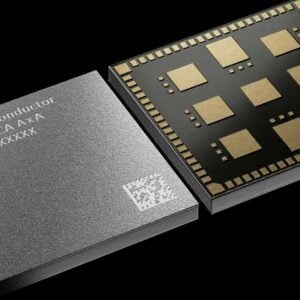
Cellular IoT devices such as Nordic Semiconductor’s nRF91 Series, paired with a Bluetooth LE transceiver and sensors, are tailor made for these asset tracking and monitoring solutions. They are reliable, secure, low power and economical enough to be employed at the individual parcel (or animal) level, or at regular intervals along a transmission line or pipeline, but there are limits. They provide connectivity across cities and countries and much of the populated globe, but not in the middle of the South Pacific Ocean or along a trans-Alaskan pipeline. So how do manufacturers of IoT tracking solutions provide customers with uninterrupted global coverage when 70 percent of the planet has no cellular IoT coverage?
A non-terrestrial solution
One solution is the 3rd Generation Partnership Project’s (3GPP) Non-Terrestrial Network (NTN) technology. While satellite communication has existed for decades, it operated independently of mobile network standards until 3GPP introduced NTN into its global cellular framework. NTNs support NB-IoT via satellites rather than relying on cellular infrastructure. The technology is serviced by a satellite constellation, complemented by cellular IoT infrastructure where it is available. The result is access to global cellular networks that are accessed in a similar way to terrestrial LTE-M/NB-IoT networks.
3GPP NTN providers offer two equally important parts, the satellites replacing the cell towers, and the cellular core network. The core network allows NTN and terrestrial networks to seamlessly interact, enabling mobile IoT devices such as asset trackers to roam from a ground network to NTN, in the same way roaming occurs on today’s terrestrial networks.
At the basic level, NTNs split into three main categories. The technology can be based on Geo synchronous/stationary Earth Orbit (GEO), Low Earth Orbit (LEO), or Medium Earth Orbit (MEO) satellites, although the latter is not widely used in the IoT. GEO satellites orbit at the same speed as Earth due to the large distance (almost 36,000 km) from the Earth’s surface. A GEO satellite is able to cover as much as a third of the globe meaning the satellite is always in sight of an Earth station located in the same region, and therefore available for your device.
GEO satellites generally reflect the signals sent from your IoT device back to earth without any processing. The satellite will be transparent to your device and communication happens between your device and an eNB (Evolved NodeB) or ‘cell tower’ also on the ground. So sent data can reach your Cloud service while the NTN connection is still active.
The high altitude and low number of GEO satellites means an IoT device must manage a tough link budget and the network capacity will be below that typically seen in terrestrial networks. The PHY layer (on air) bit rates you can expect in GEO NTN is 1-2 kbps, using a standard power class 3 (23 dBm) module and a 0 dBm antenna. It is the same NB-IoT protocol mechanisms that are used to maintain a stable NTN GEO connection as is used to extend coverage in a terrestrial network. NTN GEO throughput and power consumption will therefore be similar to a cellular IoT device operating at the edge of coverage in a terrestrial NB-IoT network.
Due to the relatively low effective data rate, but real time connection to the core network, NTN GEO satellites have so far mainly been used for emergency communication. The main use case being direct-to-device (D2D) services for mobile devices and other use cases that need instant delivery of important messaging. With more services coming, this is now broadening to IoT use cases which often also have very limited need of data but have important messaging, where constant coverage and relatively low latency is a must-have. For example where you have low amounts of data (bytes/day) or high importance messages like alarms that needs to be acted upon.
LEO provides higher throughput
LEO satellites, used by multiple emerging 3GPP NTN networks, are much closer to Earth at 600-800 km. This improves the link budget for your IoT device, allowing more flexibility in antenna designs and higher data rates, up to 20-40 kbps, using the same power class 3 module and antenna. The higher effective data rates substantially reduce time in connection with a satellite that again reduce the power consumption. The power profile of an IoT device using a LEO connection, will be comparable to a cat. NB1 or medium/poor NB2 coverage in a terrestrial network.
However, due to the lower altitude, LEO satellites are orbiting the Earth much faster than GEO satellites. An individual LEO satellite will therefore only be overhead a given location for a few minutes per orbit. The same is true for how often LEO satellites are in view of an Earth station, enabling communication with the NTN core network. This means the few satellites and simple transparent architecture used in GEO networks won’t work in LEO. To provide continuous, global coverage you will need a constellation of tens or even hundreds of satellites, and a backhaul relaying data through the LEO constellation to reach Earth stations in real time. Until then a ‘store and forward’ architecture is used.
In store and forward the satellite takes on the role of an LTE base station or eNB, managing the connection with the IoT devices and storing the data in the satellite until it can be relayed to another satellite or Earth station. While the 3GPP NTN LEO constellations are deployed, an IoT device will experience discontinuous coverage, meaning there isn’t always a satellite overhead, as well as longer end-to-end delays from the device to the Cloud. With the much lower power consumption, LEO networks are ideal for use cases where collected data doesn’t require immediate attention from the Cloud/system side.
As LEO constellations deploy more satellites, the time gaps in network availability as well as the end-to-end latency will go down and you get to a continuous, global and low latency service for your IoT devices.
The tech behind the tech
NTN will provide exciting new opportunities for cellular IoT developers, but it is important they start by looking at the use cases of their product, and decide where, when, and if NTN will add value. For some end product solutions NTN will be the only connection, for others it will be the ultimate cellular coverage extension. Using terrestrial networks will still give the most efficient connection where coverage is good, but NTN now provides an invaluable alternative where it doesn’t.
Most terrestrial network providers are already engaged with both GEO and LEO NTN networks to offer the broadest and best solution, and Nordic Semiconductor is ensuring developers have the technology platform to support any possible use case. Nordic has developed a low power, integrated solution that will support both terrestrial and non-terrestrial connectivity, in the nRF9151 SiP module.
The nRF9151 supports NB-IoT, LTE-M, and DECT NR+, and will add support for NTN in a future firmware release. The nRF9151 includes a dedicated 64 MHz Arm Cortex-M33 application processor with 1 MB Flash and 256 KB RAM, a multimode LTE-M/NB-IoT modem with GNSS, power management, and an RF frontend, all designed by Nordic. Application design is supported by Nordic’s nRF Connect SDK and nRF Cloud Services.
At the same time the company has also been actively partnering with multiple NTN providers including Iridium Communications, Skylo, Myriota, Omnispace and Gatehouse Satcom to offer its customers commercial options for their NTN deployments based on the nRF9151 SiP module.
To infinity and beyond
From a nascent technology even 10 years ago, the IoT is now thriving. Connected devices have surged to more than 15 billion today, and will double again by 2030 according to the Ericsson Mobility Report. Meanwhile Edge computing and AI integration has allowed in some instances near real time decision-making, reducing latency and Cloud dependence.
Cellular IoT has also evolved, enabling billions of high throughput, low latency applications where short range wireless connectivity is not an option. Now it is extending beyond land, sky and sea into space, via new network paradigms such as NTN, that will enable users for the first time to track critical assets or vital infrastructure no matter where it’s situated on the planet. The IoT hasn’t reached its final frontier, it is just getting started.
References:
1. Global Supply Chain IoT Market. Verified Market Research, 2024.
About the Author:

Martin Lesund is Technical Product Manager – Cellular IoT at Nordic Semiconductor.
There’s plenty of other editorial on our sister site, Electronic Specifier! Or you can always join in the conversation by visiting our LinkedIn page.