

New Relic, the intelligent observability platform, has released its “State of Observability for Industrials, Materials, and Manufacturing” report, offering a detailed analysis of observability adoption and its impact on business value. Based on insights from 285 technology professionals and aligned…

Singtel and Bridge Alliance partner to offer GPU as a service
Singtel, a communications technology group in Asia, has entered into a strategic partnership with Bridge Alliance, a global mobile alliance comprising 35 member operators, to extend Singtel’s GPU-as-a-Service (GPUaaS) offerings to enterprises across the region. Among the early adopters of…

Roll-out of intelligent fibre targets underserved rural areas
Adtran has announced that PhireLink has rolled out its open and intelligent fibre access technology to deliver high-quality broadband to some of the most underserved rural communities in Louisiana. This deployment uses Adtran’s Mosaic One software-as-a-service platform and Intellifi connected…
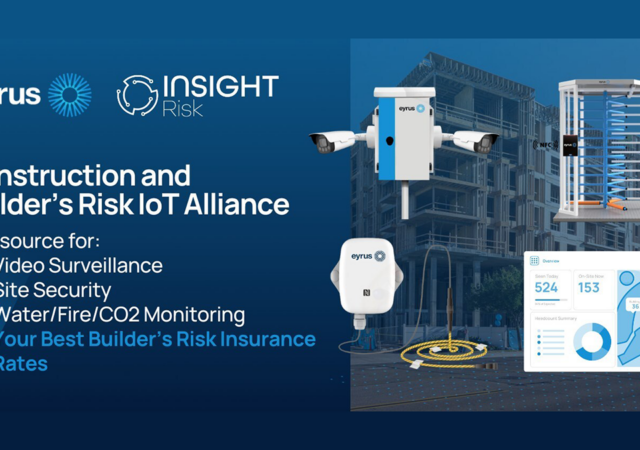
Eyrus and Insight Risk partner to bring IoT insights to insurance
Eyrus and Insight Risk Technologies are pleased to announce their partnership, combining Eyrus’ construction IoT platform with Insight Risk’s expertise in Builder’s Risk insurance and risk management services. This collaboration enables the swift implementation of technology and risk management strategies…

Calix enhances broadband platform capabilities
Calix has introduced new outdoor Wi-Fi enhancements to its broadband platform and SmartLife managed services, positioning itself to capture a share of the $7 billion outdoor Wi-Fi market, which is expected to grow by 60% over the next five years.…

Luminys, Foxlink and MediaTek partner on AI-powered security
Luminys Systems, along with its parent company, Foxlink, has announced a strategic partnership with global semiconductor company MediaTek. This collaboration is set to usher in the next generation of AI-driven video security solutions by integrating MediaTek’s state-of-the-art chip technology, Foxlink’s…

ICCID is at the “heart” of SIMs and eSIMs
Mobile connectivity is a continually shifting landscape, as developments in cellular technologies, new standards and devices to facilitate easy communication all add up to this. The SIM card has been one piece of technology that continues to evolve, as iSIMs…

Integration of sensor technology into platform brings “new dimension”
HelixIntel is delighted to announce its latest advancement: the integration of HSB IoT sensor technology with its advanced CMMS platform, PropertyOS. This merger provides users with real-time insights into environmental conditions, system performance, and automated work orders, significantly enhancing maintenance…

Smart railways are deploying high-speed connectivity
A smart railway may conjure up images of a sleek, bullet train capable of travelling hundreds of miles an hour. A smart railway is not just exclusive to the designs of the train, but takes into account the implementation of…

Partnership between CoreTigo and Raven.ai targets manufacturing
CoreTigo and Raven.ai are pleased to announce a partnership that introduces a powerful solution designed to enhance manufacturing efficiency and operational excellence. This collaboration equips manufacturers with user-friendly tools to boost Overall Equipment Effectiveness (OEE) and optimise machine performance. By…