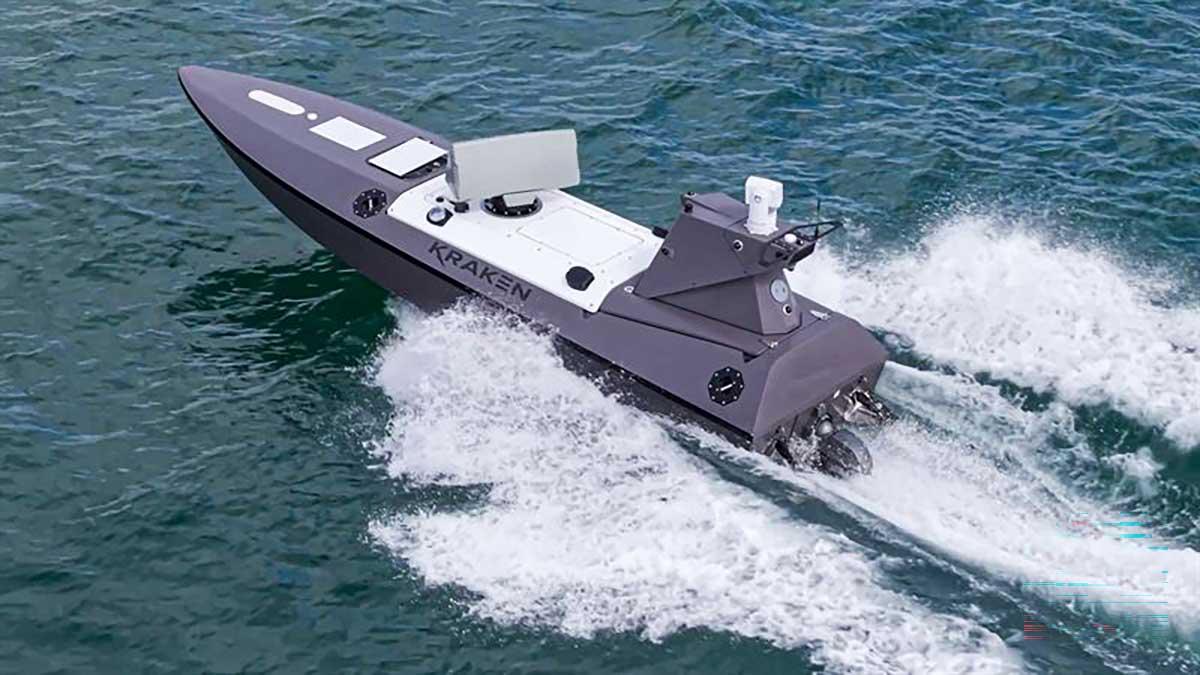
Saab UK and Kraken Technology Group have developed an autonomous surface vessel that combines maritime robotics with radar sensing to detect potential drone threats around shipping and critical infrastructure.
The experimental system integrates Saab’s Giraffe 1X 3D radar with Kraken’s K3 Scout uncrewed surface vessel, creating a prototype counter-drone detection platform for maritime environments.
The K3 Scout can operate autonomously and is designed to carry different mission payloads. The addition of the radar gives the vessel an ability to detect and track airborne targets, potentially allowing it to provide early warning of drone activity around ports, shipping and offshore infrastructure.
The companies said the prototype has moved from concept to working vessel in less than seven months, including sea trials to assess radar performance in maritime conditions.
“This is a pioneering, UK manufactured, deployable capability, that together with Kraken we’ve developed in less than seven months,” said Andy Fraser, Managing Director of Saab UK. “This reflects the strength of our partnership, the maturity and flexibility of our respective technologies, and our ability to respond at pace to the evolving threat landscape and needs of our customers,” he said.
The Giraffe 1X is a lightweight radar designed to detect and track airborne targets in real time. Integrating it with an autonomous surface vessel allows the radar to be deployed without putting personnel aboard a conventional ship.
Kraken said the K3 Scout had been designed to integrate mission-specific payloads and operate in demanding maritime environments.
“Kraken and Saab UK’s prototype ‘drone seeker’ vessel is exactly what the K3 SCOUT was designed to do: integrate with mission-relevant payloads to then operate in austere maritime environments,” said Mal Crease, Chief Executive and Founder of Kraken Technology Group.
The companies are positioning the system for potential use around ports, offshore energy installations, shipping and other critical infrastructure. However, the vessel remains at the experimental stage and the companies have not announced a commercial deployment or specific customer.
The development reflects the growing use of uncrewed platforms to extend the reach of sensing systems in environments where continuous monitoring can be difficult or costly. Rather than replacing conventional vessels, the companies envisage autonomous platforms operating alongside crewed maritime assets.
There’s plenty of other editorial on our sister site, Electronic Specifier! Or you can always join in the conversation by commenting below or visiting our LinkedIn page