
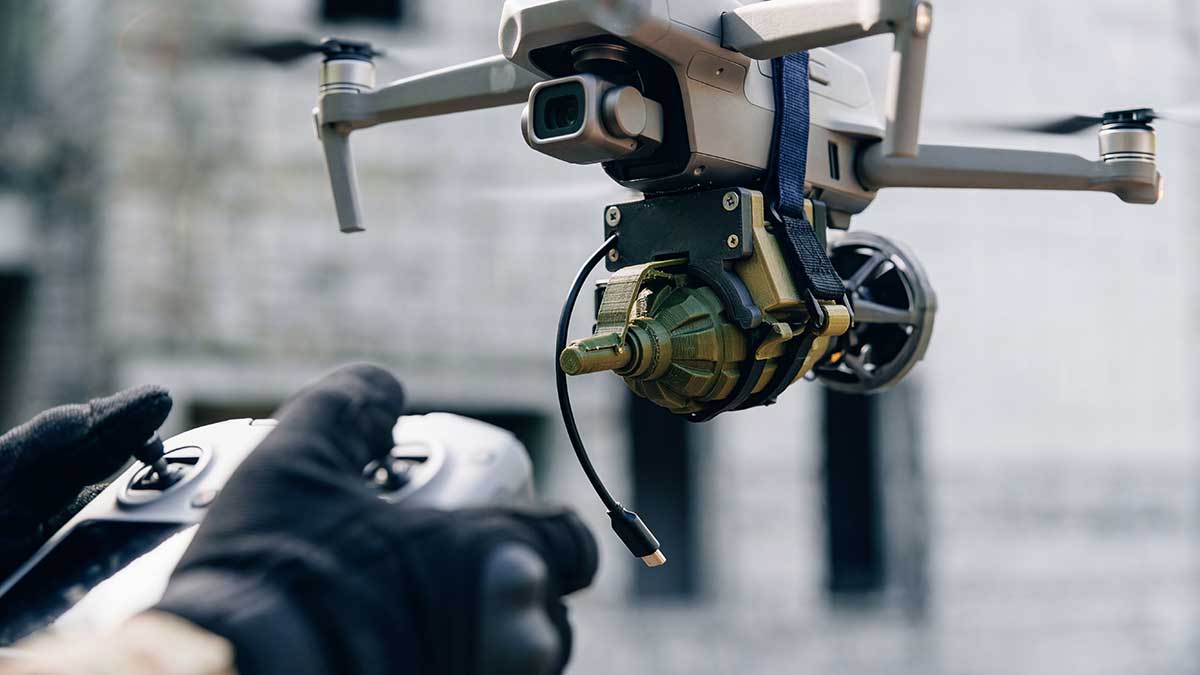
The UK Government has said it will spend £5 billion on drones and autonomous connected systems as part of the country’s long awaited Defence Investment Plan published today.
Speaking in Berkshire today, outgoing Prime Minister Kier Starmer announced a total package of £15 billion to be invested in the country’s armed forces which he said would fund key equipment and technology.
Starmer said defence funding would rise from £54 billion a year under the previous government to almost £80 billion a year by 2029 as the UK attempts to build up its defence capabilities at a time of an increasing global threats.
In parallel, UK Export Finance (UKEF) has announced a new £50 billion Defence Export Fund, increasing its overall capacity from £80 billion to £130 billion, the largest expansion in its 100-year history.
Together, the measures signal a strategic focus on modernising defence through systems that are increasingly autonomous, data-driven, and interconnected, rather than relying solely on traditional platform-based capability.
Speaking at the same event, Defence Secretary Dan Jarvis said he had secured more money and made different choices,” for defence.
“We will invest £298 billion over the next four years. That includes an additional £15 billion, of which most is extra day-to-day spending for training and improving availability of ships and aircraft to increase our war-fighting readiness,” he said. “By choosing to embrace new technology, I am equipping our forces with the autonomous systems which will give them the edge. This extra money and these choices send a clear signal to our allies and our adversaries alike: Britain is stepping up on security.”
Connected stealth drones, radar systems, surveillance platforms, and battlefield assets are increasingly expected to operate as part of wider digital ecosystems, sharing data in real time to support decision-making across land, sea, air, cyber, and even in space.
This shift is driving demand for technologies more commonly associated with IoT, including distributed sensor networks, Edge computing, secure communications, predictive maintenance systems, and integrated command-and-control platforms.
Industry experts warn that investment in technology alone will not be sufficient unless matched by a focus on the skills required to support it.
“Training is often an overlooked part of capability development, but equipment is only as effective as the people operating and maintaining it,” says Babak Jahanbani, Managing Director of Didactic Services. “Providing access to realistic learning environments is essential if organisations are to develop the technical skills needed for the future.”
The company argues that as defence systems become more connected and software-driven, the requirement for engineers and technicians with hands-on experience of real-world equipment is growing rapidly. This is particularly relevant in areas such as radar, signal processing, and fluid power systems, which underpin many modern military platforms.
Tim Reid, CEO of UKEF, said: “Security is a strategic priority for governments worldwide, and the UK’s defence sector offers pioneering capabilities that allies are actively seeking. With billions of pounds available in new export financing, we are strengthening the sector’s global competitiveness while backing skilled British jobs and supporting
long term economic growth.”
There’s plenty of other editorial on our sister site, Electronic Specifier! Or you can always join in the conversation by commenting below or visiting our LinkedIn page.