By Stephen Douglas, Head of Market Strategy, Spirent.
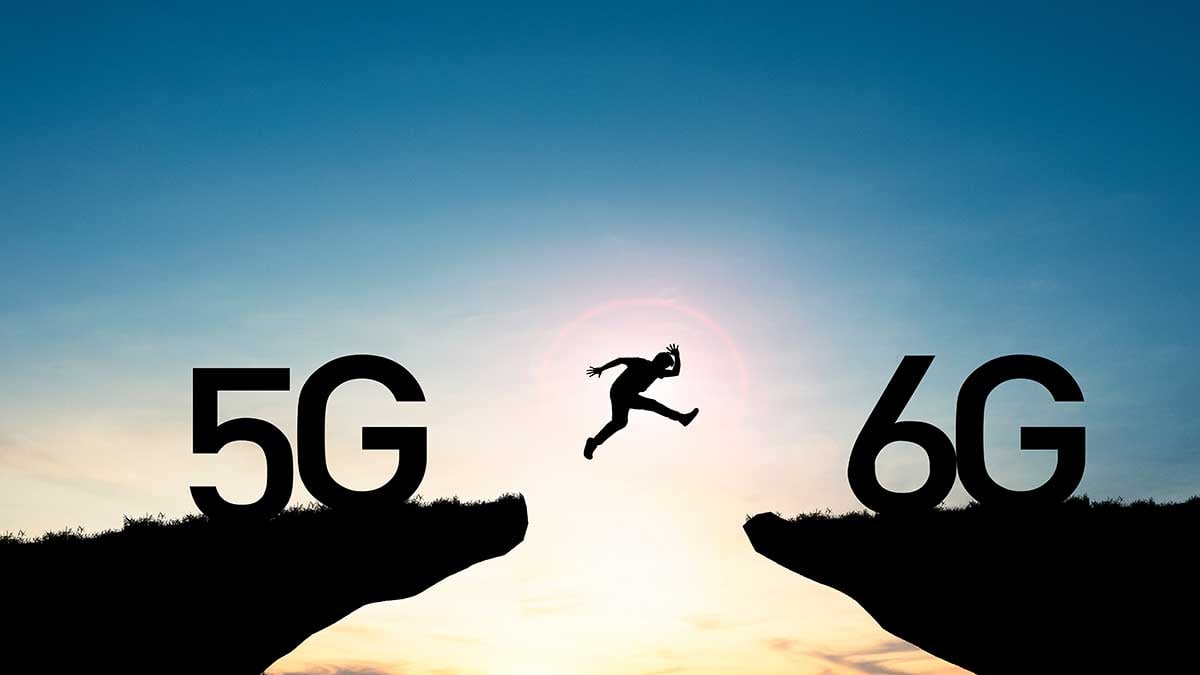
Now that 5G is in its maturation and densification phase in many places across the world, the race has begun to hit the next stage of telecommunications technology: 6G.
5G is already doing much – boasting lower latency, lower IoT device complexity, and the ability to host up to a million densely packed connections over small areas – however, that won’t be enough to bring about the “world of tomorrow” IoT technologies that we are so often told are just around the corner.
Transformational developments like smart city scale digital twins, holographic / immersive telepresence, collaborative autonomous drone swarms and ubiquitous coverage across land, air, sea and space will all need 6G to be realised.
5G is unfortunately still held back from those possibilities by a number of hard technical limits which 6G plans to overcome.
Latency
5G doubtlessly provides a huge latency improvement when compared to 4G. The best that 4G could muster was a latency of around 10 milliseconds, although under real-world conditions that number likely climbs to between 30 and 50 milliseconds.
For 5G, latency is about 1 millisecond one-way and ranges from 10 to 20 milliseconds in the consumer world, and in the low single-digit milliseconds in private 5G/Edge deployments. In the grand scheme of things, the difference might not seem that big – but it is vitally important for the IoT use cases that 5G meant to advance.
That includes industrial robotics, which generally require latency of less than two milliseconds, in order to coordinate the thousands of communications between the robots and their controllers that happen per second and to avoid them stacking up behind one another.
The same is true of live broadcast production, where camera feeds, audio, and remote camera control need consistently low latency, so camera movements do not feel laggy, and live production can be coordinated.
5G is capable of realising these use cases but struggles to guarantee them publicly and at scale. Unfortunately, latency is still often too high and unpredictable for even those use cases.
The problem that many 5G/IoT deployments experience at the moment is not just that real-world latency is still too high, but that the unreliability produced by jitter is still a significant problem. There are all kinds of factors that get in the way of a 5G signal including weather, geography and interference.
In turn, these will heighten latency, inconsistency and unpredictability between transmission and reception. For many mission-critical next-generation IoT use cases – it’s simply too much: The critical infrastructures, automated factories, and autonomous drone swarms that are waiting to be realised, need lower latency and greater reliability.
6G intends to get rid of that uncertainty with a concept called Deterministic Communications, designed to anticipate the exigent factors that heighten latency and result in even minor disruptions.
To achieve that, 6G will employ Hyper-reliable low-latency communication (HRLLC), Precise time synchronisation, and Time Sensitive Networking (TSN) integration to deliver reliable wireless links, shared timing, and scheduled traffic flows.
HRLLC provides the low-latency, high-reliability connection; time synchronisation keeps all network and application elements aligned; and TSN schedules critical traffic end to end, enabling predictable latency, low jitter, and guaranteed delivery. Together, they let the network move from “best effort” connectivity to deterministic communications, where latency, jitter, and packet delivery can be kept within defined bounds for industrial, transport, energy, and other mission-critical systems.
Device density
That brings us to another key necessity for which 5G can’t currently suffice. 5G can handle around a million devices per square kilometre, again representing a huge improvement on 4G and unlocking new use cases. Still, 6G intends to host up to 10 million devices over that same space – and it’s that potential for connection density which will be crucial to cross the technological horizon.
This is especially the case for smart cities, the huge glittering hubs of sensors and IoT devices embedded into urban environments that will make the classically chaotic administration of a city into a holistically automated mesh and real-time digital twin. Waste collection, energy provision, public security, environmental assessments, traffic management and much more will all be managed by 6G empowered massive IoT use cases, leveraging ambient IoT, integrated sensing and AI-native networking.
5G can get us part of the way there, but not fully. The sheer amount of resources required and complexity involved in its most advanced IoT use cases, as well as the dense communication between sensors, devices and base stations, is too much for 5G to handle.
6G, however, will be able to, by combining higher-capacity radio technology with smarter, more energy-efficient network control.
It will use techniques such as new spectrum bands using wider bandwidths and higher-frequencies to support more simultaneous connections, advanced massive MIMO antenna systems to focus signals more precisely and reuse radio resources more efficiently, AI-driven resource management to dynamically allocate capacity to millions of devices based on traffic type, priority, mobility, and energy needs, and lightweight IoT signalling to connect huge numbers of sensors, machines, tags, and devices in the same area without overwhelming the network.
Yet none of this is a given, and 6G’s promises – along with the use cases it is meant to empower – depend on the practical realisation of this technology. Many are already working on 6G, and there is much iteration, development and testing ahead. 6G technologies are intricate and complex and will undergo pressures unseen in the current generation of telecommunications technology.
We’re in the process of a complex multi-year research and development pathway. Prototyping and testing these new technologies needs to be a central focus for those that want to seize an early-mover advantage.
Replicating the future conditions of 6G networks will be difficult. That includes the energy demands, high throughputs and complexity of functions like ensuring deterministic latency in geographically complex areas or sustaining massive connection density in high-frequency radio environments. 5G might be a huge improvement on 4G, but for those players that want to bring about the IoT world of tomorrow, the prototyping and testing of 6G technologies has already started.
Author biography:

Stephen Douglas heads Spirent’s Market Strategy organisation, where he guides the company’s strategic direction, identifies future growth opportunities, and drives competitive market positioning. He also spearheads Spirent’s strategic initiatives for 5G-Advanced, AI, and 6G networks, while acting as an independent advisor to several industry and government boards.
With close to 30 years’ experience in telecommunications, Stephen has been at the cutting edge of next-generation technologies and has worked across the industry with service providers, network equipment manufacturers and start-ups, helping them innovate, transform, and shape the future of connected networks.