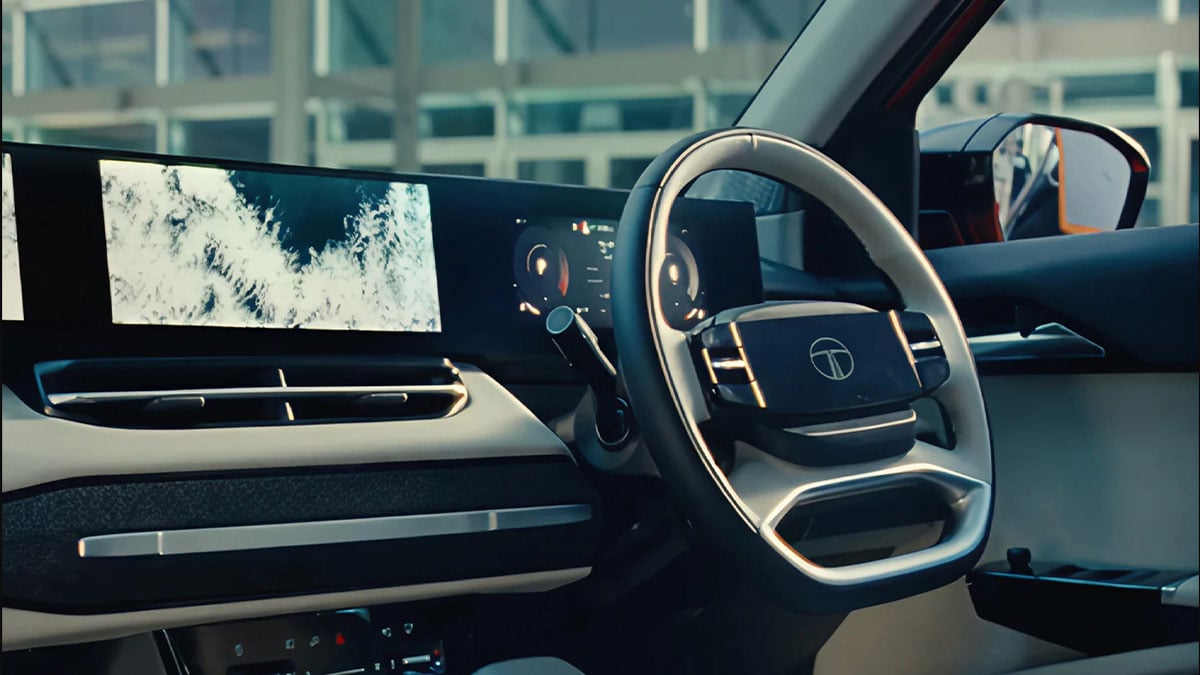
The global eSync Alliance has reached a major milestone after its specifications were adopted for production of the new Tata Sierra, marking the Alliance’s first deployment for a software-defined internal combustion engine vehicle in India. Delivered by Alliance member, Excelfore, in partnership with Tata Motors Passenger Vehicles, the program represents a landmark validation of open, standards-based OTA software updates and remote diagnostics.
The Tata Sierra has been engineered from inception as a software-defined vehicle, with OTA update capability and remote diagnostics embedded as core architectural elements rather than retrofit additions. Its OTA infrastructure is an implementation of eSync Alliance specifications, while remote diagnostics are enabled through an implementation of ASAM’s Service-Oriented Vehicle Diagnostics (SOVD) specification, reflecting the ongoing collaboration between the eSync Alliance and ASAM to develop and publish models for how the two standards can be deployed together.
“The Tata Sierra deployment is exactly the kind of outcome eSync Alliance specifications were designed to enable,” said Mike Gardner, Executive Director of the eSync Alliance. “When an OEM of Tata Motors’ scale chooses a standards-based approach for a production program, it demonstrates that open, interoperable specifications are a commercially viable, scalable foundation for the software-defined vehicle era.”
Tata Motors’ adoption of eSync specifications was driven by the recognition that standards-based OTA and diagnostics deliver transparency, interoperability and long-term sustainability, enabling vehicles to evolve continuously over their lifetime, rather than remain fixed at the point of launch. The implementation supports secure firmware and software updates, differential delta delivery, rollback and recovery, and coordinated multi-ECU campaign management, with bidirectional cloud-to-vehicle communication enabling continuous monitoring and optimisation.
The program also carries significance beyond the deployment itself. The Tata Sierra demonstrates that software-defined vehicle capabilities can be delivered on internal combustion engine platforms through intelligent OTA orchestration of distributed ECUs. For the wider industry, it offers a practical path to continuous improvement and remote diagnostics today, while preparing architectures for the transition to next-generation, data-centric compute platforms.
The eSync Alliance continues to expand its membership and the scope of its specifications to address the evolving requirements of software-defined vehicles across passenger, commercial and off-highway segments.