
For years, the conversation around fibre-to-the-home (FTTH) and 5G was dominated by ‘the digital divide’ – a race to get glass in the ground. But this is 2026, the narrative has shifted. With the explosion of Generative AI, the densification…
IoT Insights
IoT Insider’s exclusive input from industry covers a range of topics, trends, case studies and analysis so you can stay informed of the updates in the IoT sphere.

Precision timing requirements in consumer wearables and screenless IoT devices
Consumer wearables have evolved from basic step counters into sensor rich AI-enabled compute devices that provide biometric monitoring, motion analysis, and real-time contextual interaction. Popular categories include smartwatches, fitness trackers, earbuds, and AR/VR devices, with an emerging class of screenless…

What role does IoT play in the power industry’s energy transition?
The energy transition is driving the global shift from fossil fuels to renewable power sources. It represents a change in how electricity is generated and delivered, since solar farms and wind turbines now feed the grid from more locations than…

Why you cannot vibe code your way to a successful connected product
AI coding tools are genuinely changing how fast product teams can work. Prototyping is faster and interfaces can be generated in hours rather than days, so the barrier to producing something that looks and behaves like a real product has…

Two lessons from building Edge AI cameras: look beyond component cost and prototype failures
As cameras increasingly become intelligent Edge devices, the engineering challenge is no longer simply about capturing higher-quality images. Processing, connectivity, software and AI capabilities are increasingly being brought together at the device, creating new opportunities for industrial and IoT applications.…
Why utilities need grid-edge visibility to plan for a more dynamic energy future
For decades, utilities have measured grid investment largely by what could be seen and built: transmission lines, substations, transformers and power plants. Those assets remain essential, and utilities will continue to need more of them. But as demand grows and…

Why AIoT devices are learning to choose their own network connections
The Internet of Things (IoT) has traditionally depended on a simple model — devices connect to an available network, transmit data and wait for instructions or analysis. The artificial intelligence of things (AIoT) is changing that model. By combining AI…

Why IoT systems fail at scale – and why Edge vs Cloud is the wrong debate
For many years, embedded system design followed a relatively stable pattern. Engineers selected hardware, chose an operating system, and built application logic on top. Systems were typically self-contained, and architectural decisions could be made within clearly defined boundaries. As connectivity…

EMASS collaborates with Bosch to deliver tracking solutions
EMASS announced a collaboration with Bosch Sensortec to develop an intelligent asset-tracking reference design that combines advanced sensing with ultra-low-power Edge AI. The jointly developed platform enables battery-powered asset trackers to process data locally and transmit only meaningful events instead…

Using and testing wireless communications in automatic transport robots for manufacturing and logistics
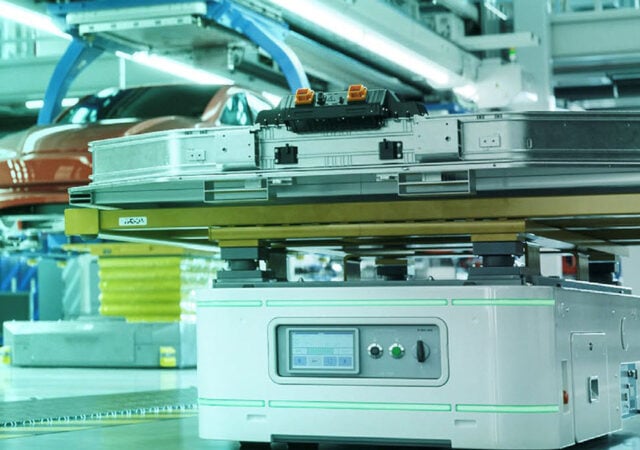
Automated guided vehicles (AGVs) and autonomous mobile robots (AMRs) are becoming central to smart factories and warehouses as manufacturers look to tackle labour shortages and improve productivity. In factories and warehouses, transport robots move parts, pallets, and finished goods between…