
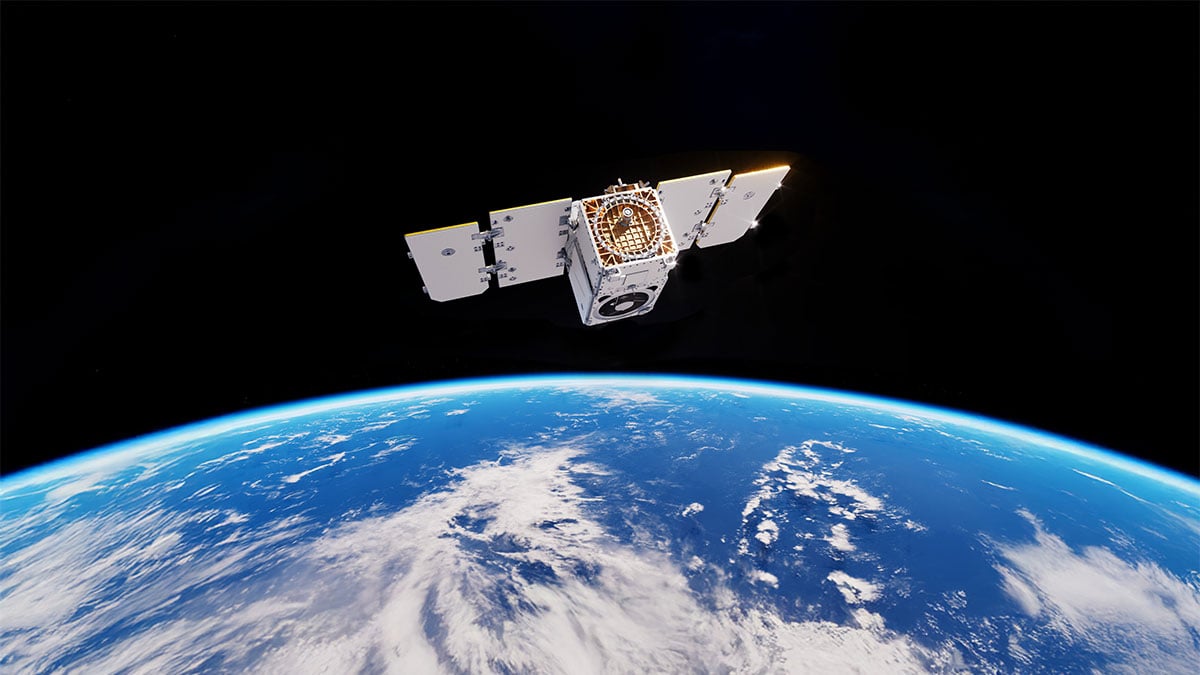
From smartphone navigation to climate research, the demand for fast, high-quality satellite data continues to grow. A new facility for this future technology is now being developed in Berlin: German American space company Planet Labs is building a state-of-the-art manufacturing facility for satellite components and telescopes in Berlin-Charlottenburg. Drees & Sommer, a global consulting company specialising in real estate, infrastructure, and industry, is providing project management services for the ambitious project.
The new site will comprise approximately 5,000 square meters of laboratory, cleanroom and office space for the assembly, integration and testing of next generation satellites. At the heart of the facility are highly specialized ISO Class 6 and Class 7 cleanrooms. Here, Planet Labs will manufacture and test high-tech components for its new Pelican satellites.
The technology delivers high-resolution imagery at short intervals, providing users with near real-time access to critical data. This makes changes on Earth visible much faster – whether in the case of natural disasters, environmental developments or infrastructure projects. The level of detail enables users to detect damage to bridges, dams and energy infrastructure, for example. The data also helps document marine pollution and assess the impacts of climate change, wildfires and flooding.
“The expansion of our European headquarters through the creation of our new European Space Hub in Berlin marks an important milestone in Planet’s European growth strategy,” says Martin Polak, Managing Director of Planet Labs Germany. “Our European Space Hub brings together satellite manufacturing, engineering, mission operations and business operations under one roof. This will help us turn innovation into operational capabilities more quickly while strengthening Europe’s long-term technological and industrial capabilities in space.”
Teamwork across continents
The project is highly complex. To create the new manufacturing and laboratory environment, international project teams in Germany and the United States are working closely together across multiple time zones. Drees & Sommer is responsible for overall project management, including cost, schedule and quality management throughout all project phases. Its services also include technical consulting, coordination of all planning and construction stakeholders, and interface management to ensure optimal alignment of the laboratory, cleanroom and production requirements.
“With highly specialised facilities and ambitious timelines, success depends on the precise coordination of all parties involved,” says Rojda Emre, Team Lead at Drees & Sommer. “Our experience with laboratory, cleanroom and high-tech manufacturing projects ensures that ambitious quality targets, project schedules and technical requirements are brought together successfully.”
A good example is the cleanroom environment: Drees & Sommer coordinates all trades to ensure that factors such as humidity, temperature and particle concentration consistently meet the stringent requirements of satellite manufacturing. This enables Planet Labs to assemble and test components such as sensors, electronics and optical systems, including telescopes and cameras, under tightly controlled conditions before they begin their journey into space.
Berlin as a hub for the European space industry
Founded in 2010 in San Francisco by three former NASA scientists, Planet Labs is now listed on the New York Stock Exchange (NYSE). The company has maintained its European headquarters on Berlin’s Kurfürstendamm for more than a decade. It is now expanding its workforce in the German capital from around 150 employees by adding up to 70 new positions. In 2025, Planet Labs signed a €240 million satellite intelligence contract with the German federal government.
Planet Labs operates the world’s largest Earth observation satellite fleet. Applications range from monitoring supply chains and agricultural land to analysing refugee movements during humanitarian crises. The satellite data can also support civil security and defence applications, including the identification of military installations.
One notable example dates to August 2022, when Planet Labs’ satellite data helped identify the causes of the massive fish die-off in the Oder River. Using the data, experts discovered elevated chlorophyll concentrations near the Polish city of Opole as early as the previous month.
“The earlier environmental changes are detected, the sooner appropriate countermeasures can be taken,” emphasises Martin Polak. “Our satellites provide the critical information needed to make that possible.”
New markets: The race for space
Planet Labs’ project in Berlin reflects a broader global trend. As demand grows for satellites, launch systems and robotics for space missions, the New Space economy is emerging as a major growth market. According to a recent Roland Berger study, the global space market is expected to quadruple by 2040, growing from around €500 billion today to €2 trillion.
The study identifies investments in highly specialised facilities such as the one in Berlin as a prerequisite for Europe to secure its long-term position in the market. It argues that Germany will need a new mindset and greater enthusiasm for the opportunities offered by New Space if it is to compete successfully with the United States and China.
“The New Space industry requires highly specialised facilities, including cleanrooms and laboratories that meet the industry’s most demanding standards,” says Rojda Emre. “With our expertise, we are committed to helping shape these future-ready environments – from site analysis and concept development through to implementation and commissioning.”