
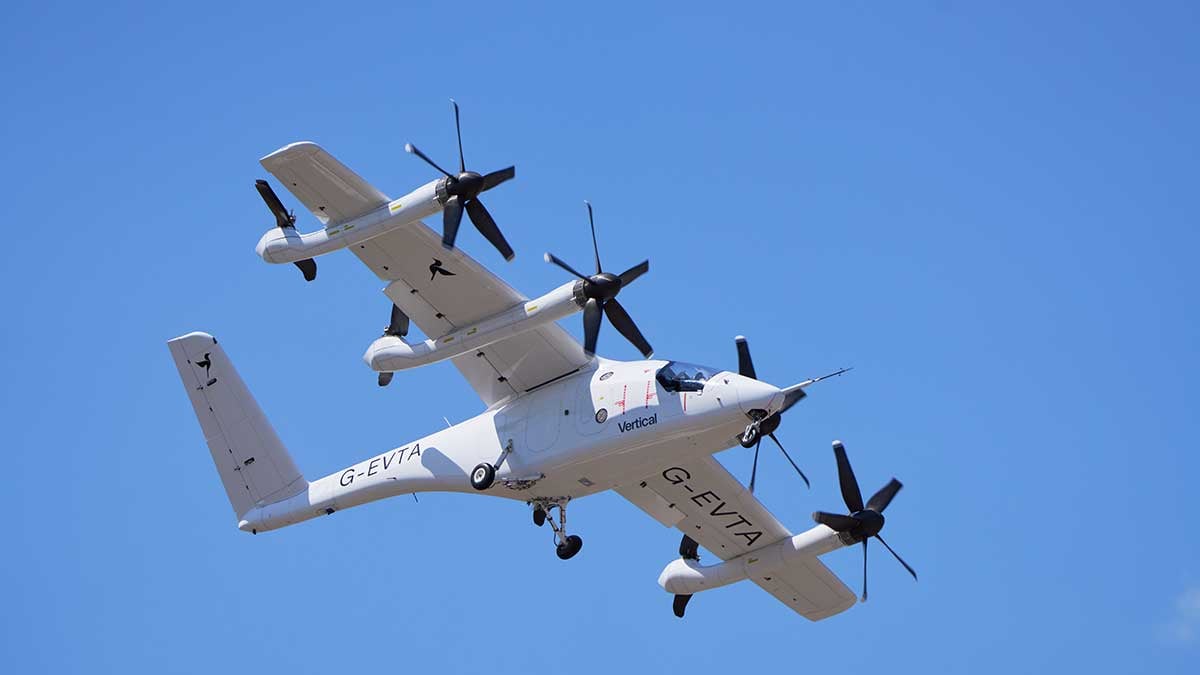
Electric air taxis are moving from prototypes towards real-world trials as governments in the US and Europe back programmes designed to test how these aircraft can be integrated into existing aviation systems.
Electric vertical take-off and landing (eVTOL) aircraft are being developed as a new category of transport, combining electric propulsion with vertical flight capabilities to enable short-distance passenger and cargo services without traditional runways.
Often described as flying taxis, they are being positioned as a potential solution for reducing congestion, cutting emissions and creating new urban and regional transport links.
But with eVTOL and drone networks relying heavily on continuous data exchange between vehicles, operators, airports, vertiports and air traffic systems, governments are rushing to create the connected infrastructure needed to allow a new generation of electric aircraft and autonomous drones to operate safely alongside conventional aviation.
In Europe, the EU-backed SESAR Joint Undertaking has launched VERTI-GO, an industrial research project focused on the safe integration of innovative air mobility into current air traffic management (ATM) and U-space operations.
What is VERTI-GO?
Led by Honeywell Aerospace, the €6.8m project brings together 12 partners including UK-based eVTOL company Vertical Aerospace, NATS, EUROCONTROL, ENAIRE and AENA.
The consortium will develop and validate technologies covering digital flight planning, vertiport reservation management, complex airspace operations and automation supporting air traffic management services.
“Integrating new aircraft types into already busy airspace requires new procedures, new levels of automation and new ways of managing traffic,” said Jolana Dvorská, senior technical manager at Honeywell Aerospace.
“The question is no longer whether these aircraft can fly and perform, but how they can operate safely at large scale within Europe’s existing airspace.”
The project will include demonstrations of piloted eVTOL operations using Vertical Aerospace’s Valo aircraft in southern Spain, with aviation authorities monitoring flights to help build confidence in future operations.
“Advancing electric aviation requires more than just an advanced aircraft. It requires an ecosystem of trusted partners working together to enable safe, seamless operations in an increasingly complex airspace,” said Michael Cervenka, chief commercial and strategy officer at Vertical Aerospace.
“This kind of collaboration is essential to building confidence in the technology and accelerating the industry’s path forward.”
VERTI-GO will also explore remotely operated cargo drone operations, with Odys Aviation serving as the project’s demonstration partner in Germany. The work aims to contribute to future standards and regulations for advanced air mobility across Europe.
What is the US doing?
The US is pursuing a similar approach. Last week, the Federal Aviation Administration (FAA) announced a milestone in its Electric Vertical Takeoff and Landing (eVTOL) Integration Pilot Program (eIPP), after BETA Technologies and United Therapeutics Corporation, in partnership with the Pennsylvania Department of Transportation, tested electric aircraft for medical transport.
The demonstration saw BETA’s ALIA electric aircraft transport an animal organ from Virginia to Maryland, testing the reliability of electric aircraft for critical medical deliveries.
“The eIPP gives us a real-world environment to safely test and integrate the next generation of aircraft into our airspace system,” said FAA Administrator Bryan Bedford.
“From urban and rural transportation to lifesaving medical and search-and-rescue missions, these aircraft have virtually unlimited potential and we’re grateful for the partnerships that are helping turn that potential into reality.”
The FAA said the programme creates one of the largest real-world testing environments for next-generation aircraft. The US Department of Transportation selected eight projects across 26 states to test operational concepts including urban air taxi services, emergency medical response operations and cargo logistics.
The parallel efforts highlight a common challenge: before electric aircraft can become a mainstream transport option, governments and industry must build the digital infrastructure required to manage them safely.
The challenge mirrors the development of autonomous vehicles on roads. Companies such as Waymo have spent years building sensor networks, simulation platforms and data infrastructure to enable driverless transport.
For electric aircraft, however, the complexity is multiplied by the need to manage connected vehicles moving through three-dimensional shared airspace, bringing together aircraft manufacturers, regulators, airports, air navigation providers and technology companies.
Connected air taxis
Digital flight planning, automated traffic management, remote operations and vertiport coordination will require secure connectivity and real-time data processing – bringing advanced air mobility closer to the wider industrial IoT ecosystem.
Vertical Aerospace is among the companies seeking to commercialise the technology in Europe. The UK-based company is showcasing its Valo eVTOL aircraft at the Farnborough International Airshow as it moves towards potential commercial operations.
Designed to carry four passengers, Valo can travel at speeds of up to 150mph. It takes off vertically like a helicopter before its propellers tilt forward, allowing it to fly more like a conventional aircraft. Its motors are powered by eight battery packs, providing a range of around 100 miles.
Vertical has previously outlined potential UK routes connecting Canary Wharf with destinations including Heathrow and Gatwick airports, as well as Cambridge, Oxford and Bicester.
The company is also in advanced discussions with the UK government over potential additional support of up to £10m, alongside other benefits including confirmed interest from the Ministry of Defence.
Stuart Simpson, CEO of Vertical Aerospace, said: “Today’s proposed support helps create a clear pathway from innovation to industrial scale-up. It means we will continue to create high-value jobs, strengthen Britain’s advanced manufacturing base, and build aircraft that will be exported to customers around the world.”