
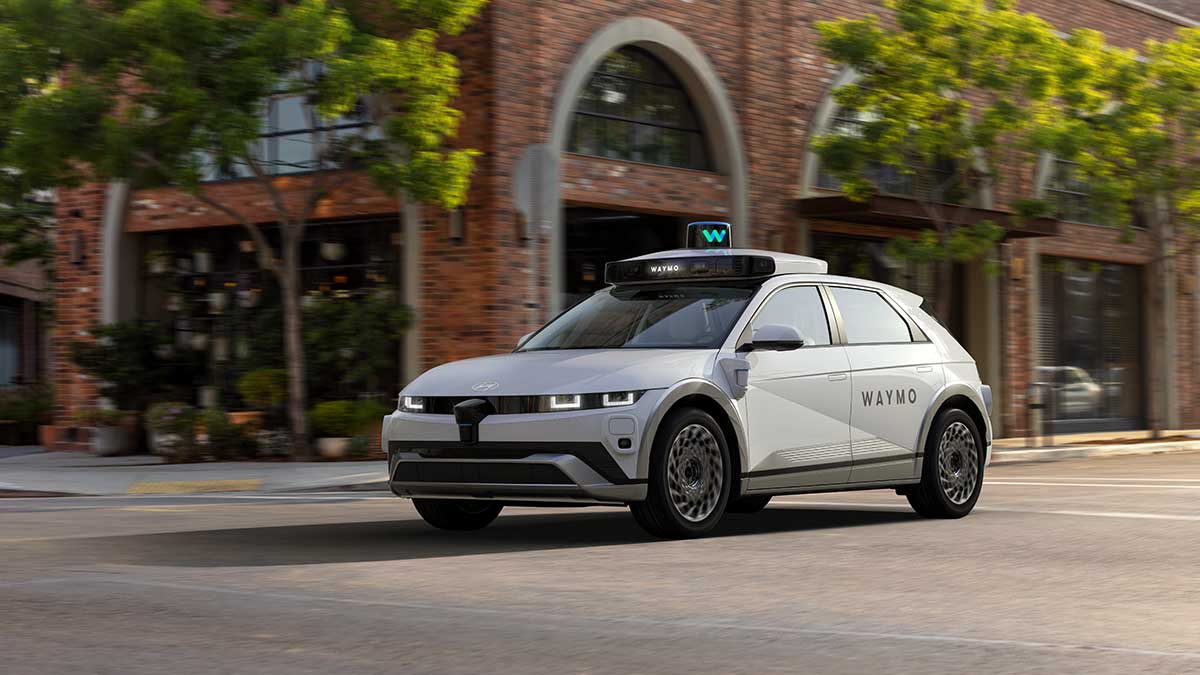
Waymo has recalled 3,791 autonomous driving systems after US regulators warned that the company’s software could allow driverless vehicles to enter flooded roads — highlighting a critical IoT and sensor fusion challenge facing the autonomous mobility sector as connected vehicle deployments accelerate globally.
The recall, filed with the US National Highway Traffic Safety Administration (NHTSA), affects Waymo’s fifth- and sixth-generation automated driving systems and centres on how the platform interprets environmental and roadway data under adverse weather conditions.
In a letter addressed to Matthew Schwall, Senior Director of Safety at Waymo, regulators said the software “may allow the vehicle to slow and then drive into standing water on higher speed roadways”.
According to the filing, “entering a flooded roadway can cause a loss of vehicle control, increasing the risk of a crash or injury”.
The issue is particularly significant for the wider IoT-enabled mobility ecosystem because autonomous vehicles rely on continuous real-time data ingestion from interconnected sensors, Edge compute platforms, HD mapping systems, and Cloud-based operational intelligence networks.
Waymo’s autonomous stack integrates lidar, radar, cameras, onboard compute, telematics, mapping infrastructure, and AI-driven perception systems — all functioning as part of a highly distributed IoT architecture designed to interpret and respond to changing road environments autonomously.
Floodwater and standing water scenarios remain one of the most difficult Edge cases for connected autonomous systems. Reflections, uncertain depth perception, obscured lane markings, and degraded road surfaces can compromise sensor confidence levels and challenge machine-learning models trained primarily on predictable roadway conditions.
In response, Waymo said it had already introduced temporary operational restrictions across the fleet.
“As an interim remedy, Waymo modified the scope of vehicle operations to increase weather-related constraints and updated the vehicle maps,” the company stated in the filing. “All affected vehicles received the interim update by April 20, 2026.”
The reference to updated mapping data underscores the growing importance of dynamic geospatial intelligence within autonomous IoT systems, where vehicles increasingly depend on constantly refreshed environmental data layers to support decision-making in real time.
The recall arrives just months after Waymo announced plans to launch its fully autonomous ride-hailing service in London in 2026 – the company’s first major expansion beyond the United States and Japan.
The planned rollout is expected to place renewed focus on the resilience of connected vehicle infrastructure operating within dense urban environments characterised by heavy rainfall, ageing road networks, complex traffic systems, and variable visibility conditions.
The UK expansion is also strategically important from an IoT infrastructure perspective. Waymo already operates engineering hubs in London and Oxford focused on simulation and autonomous systems validation, while its partnership with Jaguar Land Rover integrates the Waymo Driver platform into connected all-electric Jaguar I-PACE vehicles.
These vehicles operate as rolling Edge-computing nodes, continuously generating and processing vast volumes of sensor and telemetry data to support autonomous navigation.
Waymo says its autonomous fleet has now accumulated more than 100 million fully autonomous miles and completed over 10 million paid rides, making it one of the largest real-world deployments of connected autonomous vehicle technology globally.
There’s plenty of other editorial on our sister site, Electronic Specifier! Or you can always join in the conversation by commenting below or visiting our LinkedIn page.