IoT firms are increasingly expanding beyond their home markets to offer global coverage — driven by both customer demand and data sovereignty laws.
As multinational clients scale fleets of connected devices, providers face growing pressure to ensure that data remains local, comply with regional regulations, and maintain secure, reliable operations.
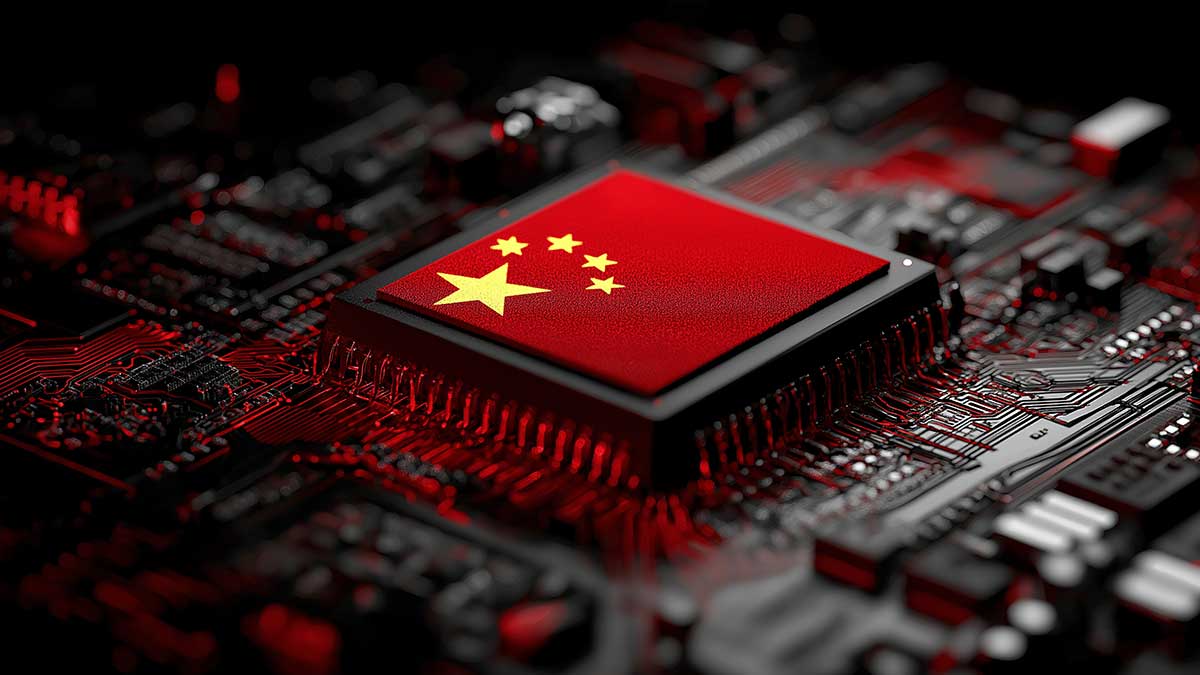
Earlier this month Norway headquartered Northern.tech, a company which specialises in helping companies maintain control, security and compliance across fleets of IoT devices, announced plans to establish a new subsidiary in China’s Shanghai Jing’an District.
Speaking exclusively to IoT Insider about the move, Thomas Ryd, CEO and co-founder of Northern.tech said that the move was, at least in part, driven by China’s increasing role in the global economy.
“The strategic thinking is quite simple,” he said. “China is a big, growing market for connected devices. Clearly for us it’s strategically important to be in such a big market that is going to be ever more important to this industry. But for us, the main opportunity is to help our European and American clients succeed in China.”
Ryd says that one of the key drivers is complying with strict data sovereignty laws, both in China and elsewhere in the world. These regulations increasingly require that data generated within a country must remain within that country’s borders. For IoT companies like Northern.tech, which manage software updates and device fleets remotely, this is crucial: they cannot simply serve Chinese clients (or the China-based operations of global clients) from servers in Europe or the US.
“When you’re managing devices you have very strong data control mechanisms or data serenity regulations,” Ryd says. “So that means, in order to do this properly, everything has to be inside mainland China. The big Western companies, they have 20% or 30% of global revenue in China. The same thing is happening in Europe with new rules like the Cyber Resilience Act. So we can also help Chinese OEMs succeed in European markets. We think makes sense.”
Data localisation is central to Northern.tech’s offering. The company maintains regional clusters around the world that allow clients to comply with local laws while managing global operations via its flagship platform Mender.
“Mender has different deployment architectures. So if, let’s say, I have an excavator, and there are some devices or excavators that can connect directly to a backend, that means they get the software update and the device inventory and stuff like that from that backend, that backend can be hosted by us,” Ryd says.
As part of its new move, Northern.tech has established a local collaboration framework with the Guangdong Innovation Centre of Smart Homes (GICSH), a regional industry and innovation organisation focused on smart homes and connected device ecosystems. Nonetheless, Ryd says Northern.Tech is aiming to attract more business customers rather than consumers due to the higher margins achievable.
Security and compliance are intertwined. Ryd highlighted the limitations of homegrown solutions and the importance of visibility and control over devices. “Our main approach is stability and security. So if you really value a solution that you can trust, meaning when you deploy something you know for sure that is the right person that deployed the right software to the right device.”
Looking ahead, Northern.tech aims for a balanced global footprint. “Long term, I think, for a company like us, if you have a third of the business in Asia, a third in North America, and a third in Europe as a revenue distribution. That’s something to aspire to, and probably represents the value created as well among these smart products. But how to get there and how long it will take that’s something I have no idea about.”
Northern.tech’s move reflects a wider industry trend. Vodafone IoT has created a dedicated Americas division to meet local data and connectivity requirements, while Cisco operates its IoT Control Center globally. In both cases, the focus is on enabling clients to manage devices in compliance with regional laws while maintaining global operations.
Ryd emphasised that Northern.tech’s expansion philosophy is fundamentally about solving regulated problems for customers. “I think a lot is in the DNA of our company. We have operations in the US. We have operations in Europe. We have people from all over the world. There’s one problem that we’re solving. And we just go where we think this problem is the biggest. We don’t think about politics. That’s absolutely not on our agenda.”