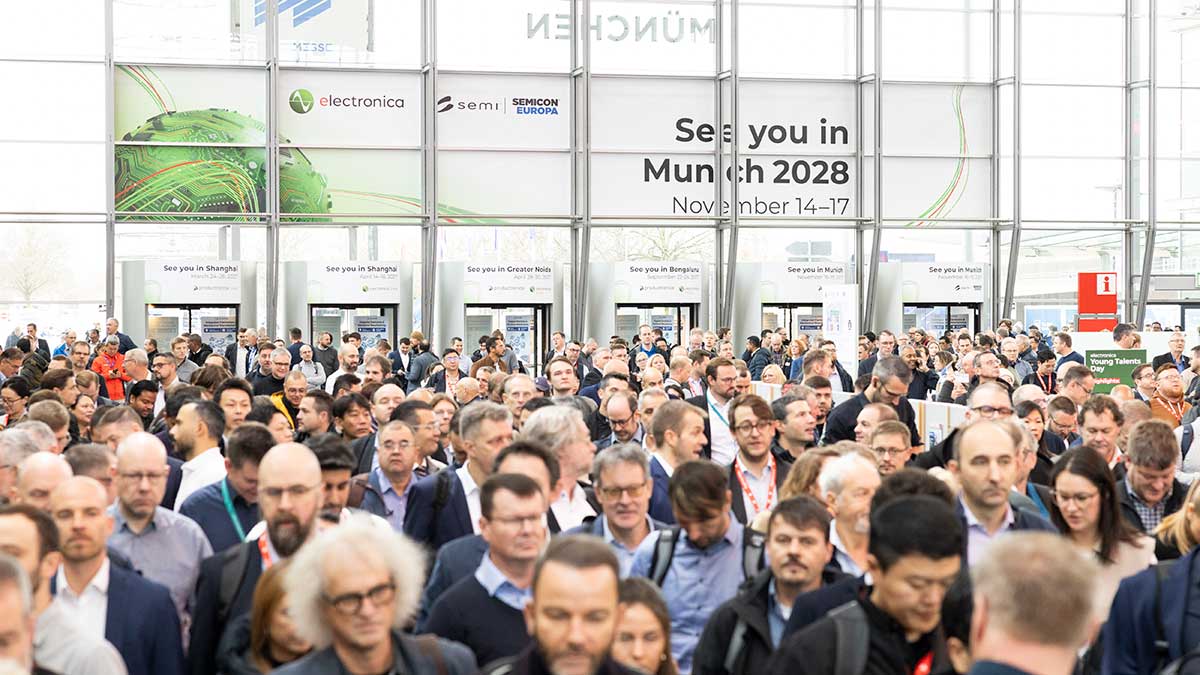
From LoRa connectivity and Edge AI to Physical AI and intelligent embedded systems, exhibitors at electronica 2026 had a lot offer in terms of the technologies shaping the next generation of connected devices.
The growing convergence of connectivity, artificial intelligence and embedded computing was a recurring theme at the show, as semiconductor manufacturers and technology suppliers explored how intelligent systems are moving beyond the data centre and into industrial equipment, infrastructure and connected products.
Held in Munich, the exhibition brought together companies working across the electronics supply chain, from wireless communications and embedded processing to power management and sensing.
For IoT Insider readers, five conversations stand out for their relevance to connected devices, industrial intelligence and the infrastructure needed to support increasingly autonomous systems.
1. Skyworks: extending the possibilities of LoRa connectivity
Wireless connectivity remains fundamental to IoT deployment, particularly in applications where devices must operate over long distances while keeping power consumption low.
In an interview with Steve Belletete of Skyworks, Electronic Specifier explored the company’s LoRa technology and the role of RF front-end components in supporting wireless IoT applications.
The discussion is relevant to sectors including smart metering, asset tracking and industrial monitoring, where range, battery life and dependable communications can determine the practicality of a deployment.
As connected-device networks expand, the underlying RF technology will remain an important consideration for engineers balancing coverage, energy consumption and system performance.
2. NXP: building trust into Physical AI
As AI moves from digital environments into physical machines, the requirements for embedded intelligence are changing. Systems must increasingly interpret their surroundings, make decisions and interact with the physical world while meeting demanding requirements for safety and security.
Electronic Specifier spoke with Daniel Basler of NXP about Trusted Physical AI and the technologies needed to support intelligent systems.
The conversation is particularly relevant to the development of connected industrial equipment, robotics and automotive systems. In these applications, AI cannot operate in isolation: it depends on embedded processing, sensing, connectivity and secure system architectures.
The shift towards Physical AI also raises questions about how intelligence can be deployed reliably at the device level, rather than relying exclusively on remote computing resources.
3. Renesas: simplifying development for connected products
The complexity of developing connected devices is increasing as engineers integrate more processing, sensing, wireless connectivity and software into embedded products.
In its conversation with David Renno of Renesas, Electronic Specifier explored the company’s Xplore Developer Hub and its approach to supporting embedded developers.
Development platforms and software resources are becoming increasingly important as manufacturers look to shorten product development cycles and bring more sophisticated functionality into connected devices.
For IoT developers, the challenge is not simply selecting the right microcontroller or processor. It is integrating hardware and software into a functioning system that can be developed, tested and maintained efficiently.
The Renesas interview provides a useful perspective on the development infrastructure underpinning the next generation of embedded and connected products.
4. Farnell: bringing Edge AI closer to engineers
Edge AI is becoming an increasingly important part of industrial IoT, enabling connected devices to analyse information locally rather than sending every measurement to the Cloud.
This can reduce latency, limit bandwidth requirements and allow systems to continue operating when connectivity is intermittent. However, translating the technology into practical applications requires engineers to navigate hardware selection, software development and deployment challenges.
Electronic Specifier spoke with Ankur Tomar of Farnell about Edge AI and the resources available to engineers exploring its adoption.
The discussion is relevant to IoT developers looking to move beyond proof-of-concept projects and integrate intelligence into commercial products. It also highlights the importance of accessible development tools and component availability in supporting wider adoption.
5. Murata: developing new ways for machines to understand people
The development of more natural human-machine interfaces is another important part of the move towards intelligent connected devices.
In an interview with Andreas Kürzdörfer of Murata, Electronic Specifier explored sensing technologies including camera-free hand tracking and a voice sensor that detects vibrations through a mask.
These approaches point towards new possibilities for human-machine interaction, particularly where conventional cameras or microphones may be impractical.
The technologies have potential relevance across wearable devices, robotics and healthcare applications, where systems need to interpret human movement or speech without relying on traditional sensing methods.
There’s plenty of other editorial on our sister site, Electronic Specifier! Or you can always join in the conversation by commenting below or visiting our LinkedIn page.