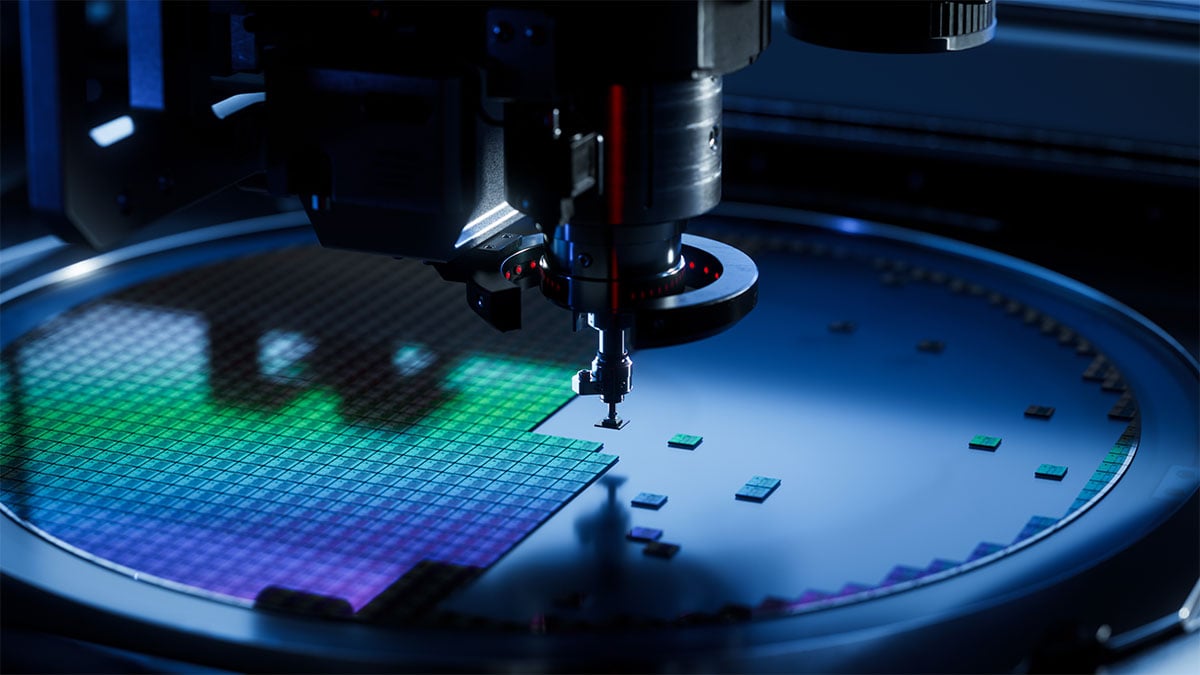
KIOXIA Europe a subsidiary of KIOXIA Holdings Corporation and Sandisk Corporation unveiled their next-generation Quad-Level-Cell (QLC) 3D flash memory technology, which delivers up to 60% increase in bit density compared to their 8th-generation, surpassing 37 Gb/mm² and setting the industry benchmark for bit density, performance and power efficiency.
Leveraging the companies’ revolutionary CMOS directly Bonded to Array (CBA) technology which fabricates CMOS logic and the memory array on separate wafers before bonding them together with high-precision wafer-to-wafer alignment, the new generation improves read and write bandwidth compared to the 8th-generation 3D flash memory and becomes the industry’s first QLC 3D flash memory technology to reach a 4.8Gb/s interface.
Additional interface enhancements improve I/O data-out transfer power efficiency. These large power efficiency upgrades directly address the power and cooling challenges of modern AI and cloud infrastructure.
“As AI becomes increasingly embedded across society, its applications are evolving beyond generative AI into agentic and physical systems, creating new demands for how data is stored and managed,” said Axel Störmann, Vice President & Chief Technology Officer at KIOXIA Europe GmbH. “KIOXIA 10-generation QLC 3D flash memory will play an important role in addressing the rapid growth of data by enabling greater storage efficiency, capacity and scalability for next-generation AI infrastructure.”
Chief Technology Officer at Sandisk, Alper Ilkbahar, said, “As AI training, inference, and hyperscale datacentre workloads drive unprecedented growth in data generation, the storage industry faces increasing pressure to deliver greater capacity, higher performance, and improved energy efficiency. By redefining the performance and efficiency envelope of QLC NAND, our 10th-generation QLC 3D flash memory delivers simultaneous gains in density, bandwidth, and energy efficiency and establishes a new paradigm for high-capacity flash storage to provide a scalable foundation for next-generation infrastructure applications.”
There’s plenty of other editorial on our sister site, Electronic Specifier! Or you can always join in the conversation by commenting below or visiting our LinkedIn page.