A nation unprepared
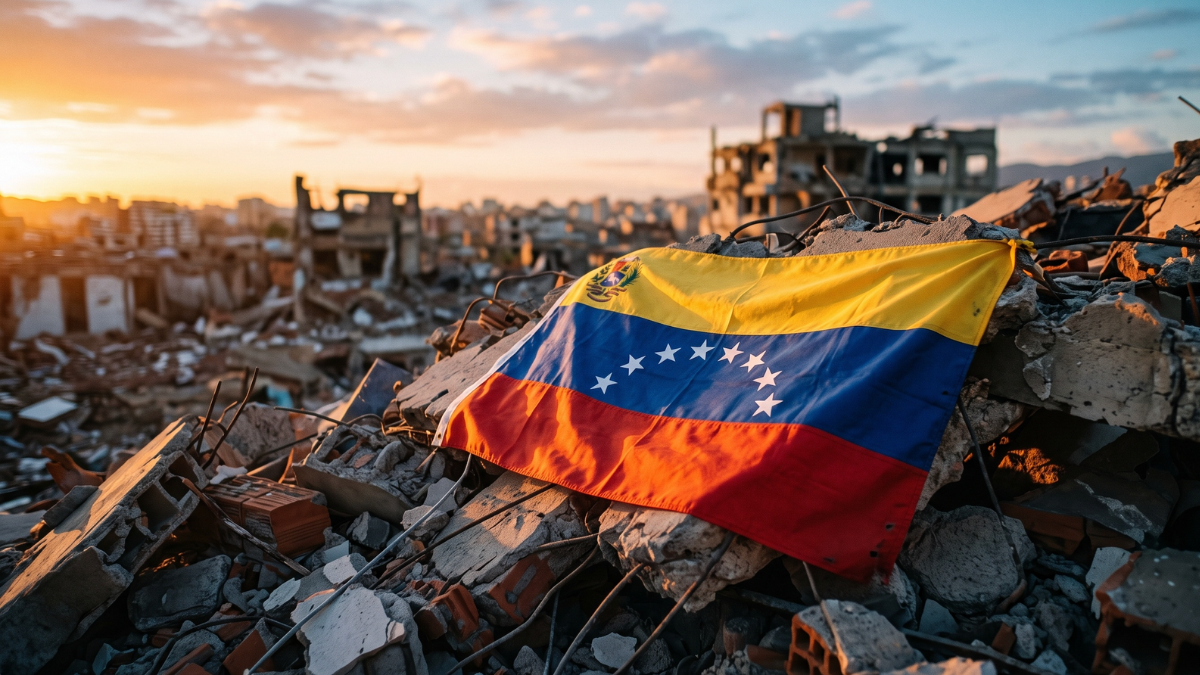
On the 24th of June 2026, Venezuela experienced two catastrophic earthquakes, leaving the country, infrastructure and economy devastated. The earthquakes, which started at 6.04pm local time and struck within a minute of each other, have caused over 1,900 confirmed deaths so far, though the United Nations warns that the final death toll could reach up to 10,000.
As one of Latin America’s poorest and least earthquake-prone nations, Venezuela lacks a lot of the infrastructure and ‘earthquake culture’ that other richer and more geologically unstable countries have. Whilst places like California and Japan have strict building regulations, frequent nationwide earthquake drills and highly advanced Early Warning Systems, Venezuela remains unprepared for the grim realities of a large-scale earthquake.
A pocket-sized seismograph
Despite the lack of a government-run Early Warning System, ordinary smartphones began alerting Venezuelans of the upcoming disaster during the recent June earthquake. According to the New York Times, 11.4 million people in Venezuela received warnings via their phones – warnings that were, in many cases, lifesaving.
Like many of his compatriots, Pericles Sánchez, a 39-year-old Venezuelan citizen and writer, stated that the warning on his phone gave him and his loved ones enough time to run outside before the earthquake began. Speaking to AP News, Sánchez stated that “it wasn’t until we were already outside that we started to feel it [the earthquake]”. The alert he received from his phone provided critical seconds that allowed him and his family to reach safety before the earthquake even began.
Primarily, Venezuelans were alerted via Google’s Android Earthquake Alerts system. Google began rolling out this alert system in 2021 and, by the end of 2023, it was active in 98 countries. As reported by the July 2025 Google Research Report, the number of people with access to Early Warning Systems (EWSs) due to their alert system increased tenfold from 250 million people in 2019 to 2.5 billion in 2025.
Seconds between life and death …
This technology utilises a phone’s built-in accelerometer – the sensor that detects a phone’s movement – to identify the P-waves, S-waves and L-waves generated by seismic activity. If the accelerometer detects this wave, a signal is sent to Google’s detection centre and, if enough phones send signals, a notification of seismic activity is sent to all Android phones in the region. These potentially lifesaving alerts provide residents with critical seconds to evacuate unstable structures before earthquake shaking begins. They offer a vital window for protective action that can be the difference between life and death.
When compared with more traditional methods of earthquake detection, the primary benefit of Google’s Android Earthquake Alerts (GAEA) system is its ability to provide rapid and widespread early warnings using infrastructure that already exists in billions of people’s pockets.
However, this technology does also have limitations, meaning that it cannot entirely replace national seismic detection networks. For instance, users close to the epicentre of seismic activity will almost always receive no warning as earthquakes arrive before data can be processed – and those who don’t use Android phones will miss out on alerts altogether. In addition, smartphone accelerometers are far less sensitive than professional seismometers and the system fails completely in areas with low telephone density, poor cellular infrastructure or network or internet blackout.
But what does the Venezuela earthquake tell us about the future of global disaster technology?
The use of Google’s Android Earthquake Alert system in Venezuela shows two things. As the effects of climate change become clearer over the coming years, this technology could potentially save thousands of lives by acting as a budget-friendly alternative to detect earthquakes in developing countries that cannot afford expensive, traditional equipment. However, as noted above, at this point in time, Google’s Earthquake Alert system does have some inherent limitations. Moreover, it highlights that during earthquakes even five or ten seconds is enough time for someone to take critical precautions such as moving away from a glass window or getting into the ‘drop and cover’ position.
At the same time, organisations ranging from tech company Grillo.io to the Berkeley Seismology Lab are developing technology that is pioneering the future of earthquake detection. Grillo.io, for example, focuses on building ultra-affordable IoT seismic sensors that stream live data to the Grillo Cloud, which then can push out mobile notifications to those in an affected area before an earthquake hits. The Berkeley Seismology Lab, on the other hand, conducts research on earthquakes in California and was a core partner in building the MyShake app which, similar to Google’s Alert system, leverages smartphones to crowdsource seismic detection.
By shifting from multi-billion-dollar hardware to consumer devices and more affordable IoT sensors, these technological advances promise to popularise earthquake detection, bringing life-saving seconds of advanced notice to developing nations and regions that historically could never afford costly, but crucial, earthquake detection systems.
Ultimately, the events of the 24th of June show that effective infrastructure is no longer solely about concrete and steel, but rather connectivity. However, whilst the Android alerts saved thousands of lives, they are a safety net and not a substitute for national seismic detection networks. For true long-term survival – especially given the increasing prevalence of earthquakes due to global warming – developing nations must combine this IoT technology with high-level earthquake detection infrastructure in order to ensure that vital seconds of warning are backed by an effective and organised state response.
About the author:

Emily Stoddart is a BA Spanish and Russian student at St Cuthbert’s Society, Durham University. As a student journalist, she is particularly interested in international relations, as well as the culture, history and politics of the post-Soviet space, and has written for The Palatinate and The Rana whilst at university. Outside of her studies, she enjoys travelling, getting stuck into a good book, and is currently preparing to move abroad as part of her degree!