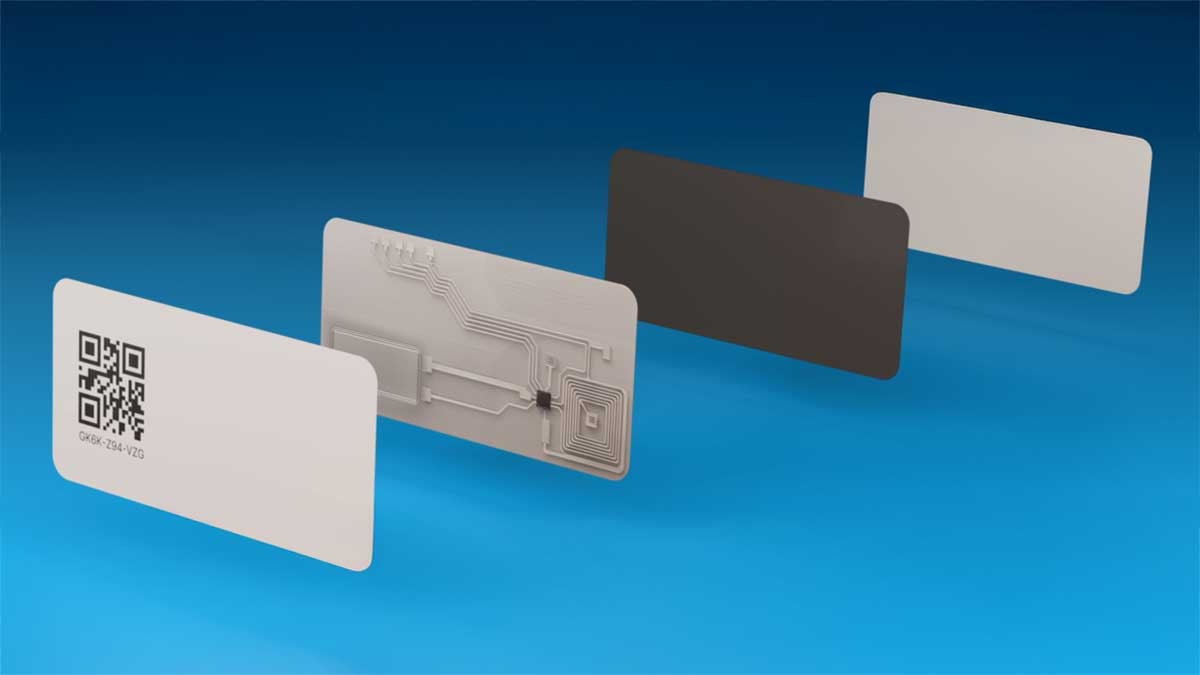
Samsara has unveiled a disposable Bluetooth tracking label designed to provide near-real-time visibility of individual shipments, marking the company’s latest expansion beyond fleet management into supply chain tracking.
The paper-thin adhesive label, announced at Samsara’s Beyond 2026 event, is designed to track boxes, pallets, and other shipments for up to 45 days without relying on GPS or cellular connectivity. Instead, it uses the company’s existing Connected Operations network, which consists of millions of Samsara-connected vehicles, trailers, warehouse devices, mobile phones, and other endpoints that can detect Bluetooth signals as goods move through the supply chain.
The launch reflects growing demand for lower-cost tracking technologies as cargo theft and supply chain disruption continue to challenge logistics providers. Samsara cited estimates that cargo theft costs US businesses around $35 billion annually, with incidents increasing by around 60% year on year.
Unlike conventional shipment tracking, which typically depends on barcode scans at collection and delivery points, the new Tracking Label provides location updates whenever it comes within range of a device connected to the Samsara Network. The company says the network covers 99% of major US roads and tens of thousands of worksites, enabling continuous shipment monitoring without requiring shipping carriers to install additional infrastructure.
The product also represents an attempt to overcome one of Bluetooth’s longstanding limitations in logistics: fragmented network coverage. While Bluetooth Low Energy (BLE) asset trackers have traditionally offered a lower-cost alternative to GPS and cellular devices, they have generally depended on organisations deploying their own readers or gateways, limiting visibility once assets leave company premises.
According to Zoe Roth, Senior Research Analyst at 451 Research, more than half of organisations continue to rely on GPS or cellular technologies for tracking non-powered assets despite the higher hardware costs, while BLE and RFID solutions remain constrained by infrastructure requirements.
“If a persistent, wide-area Bluetooth network becomes widely available, it has the potential to change the economics of shipment tracking,” she said.
Alongside the hardware, Samsara introduced a Shipment Center dashboard that uses AI to identify delayed or at-risk shipments, monitor carrier performance, and provide geofence-based proof of delivery. A companion Shipment App allows workers to activate labels, associate them with existing shipment identifiers, and integrate tracking data with transport management and enterprise resource planning systems.
David Gal, Vice President of Connected Equipment at Samsara, said customers had requested a purpose-built disposable tracker rather than repurposing reusable asset tags for shipments.
“What they’ve been asking for is a label they can slap on a box and walk away,” he said.
Among the early users is third-party logistics provider DCL Logistics, which is deploying the labels to track high-value cargo, including consumer electronics, enterprise hardware, and AI infrastructure components.
There’s plenty of other editorial on our sister site, Electronic Specifier! Or you can always join in the conversation by commenting below or visiting our LinkedIn page.