By Alper Yegin, CEO of LoRa Alliance
After decades of fits and starts in the effort to build a global Internet of Things, there are now billions of connected devices, worldwide infrastructures of awareness that are ready to do much more than just collect status data. Physical AI holds the key to making that happen by supporting new capabilities and applications that can lead IoT deployments toward greater autonomy.
Global IoT coverage, which could surpass 21.1 billion this year for the most part has been built on the four major pillars of wireless connectivity technology – cellular, Wi-Fi, Bluetooth, and LoRaWAN. Connectivity got us this far, but connecting devices in lots of places was never supposed to be the end-game for the IoT sector.
What has been achieved so far represents just the initial phases of a much bigger goal – making IoT even more ubiquitous and more essential with a broad variety of industrial use cases and applications targeted at solving some of the most challenging problems facing its users.
How does IoT achieve that goal? How can IoT connected things have a more proactive, intelligent, insightful, and valuable impact on their infrastructures and the world that surrounds them?
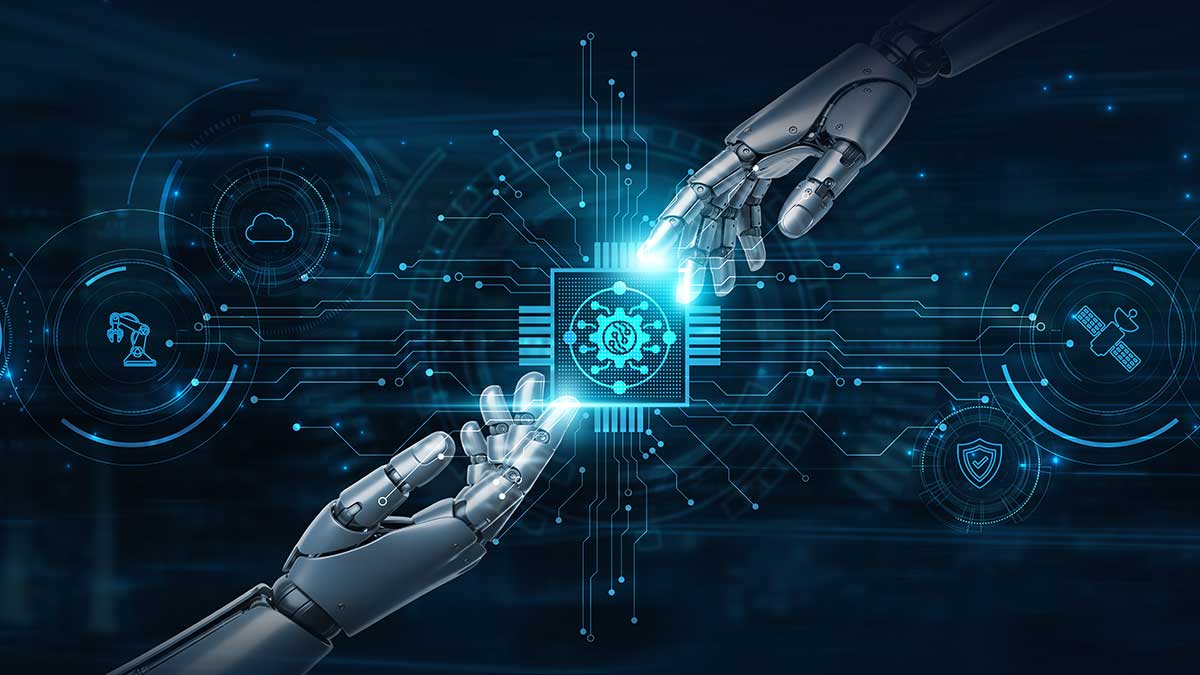
The answers to these questions can be found in the rapidly advancing convergence of IoT and AI, where IoT’s connected physical infrastructure is meeting AI’s digital intelligence and helping to stoke a new movement: physical AI.
What is physical AI?
There are different ways to think about physical AI, but to provide a concise definition, Physical AI refers to AI systems that are fed real-world data through sensors and whose decisions can trigger actions in the physical world. If that makes it sound like a good match with IoT, well, it is.
At this point in 2026, everyone has heard of physical AI. Some of the biggest and most successful companies on Earth — Nvidia, SpaceX, Tesla, Amazon, Broadcom, to name a few – have started to shift billions of dollars of investment into physical AI. For these companies, physical AI tends to be associated with plans for humanoid robots and autonomous vehicles.
These scenarios represent a literal merging of the physical and the digital – providing a physical body for AI’s digital brain.
But there is also great applicability for Physical AI across a variety of business and industrial IoT use cases that exist today, and in some cases physical AI capabilities are already being implemented today.
In addition, there is a growing opportunity to leverage the convergence of IoT and AI to create even more physical AI applications and bring a new wave of AI-driven capabilities to the next generation of connected devices.
How physical AI benefits IoT (and vice versa)
The integration of IoT and AI began well before physical AI reached the height of hype. Early-generation AI has been used to process digital data, in many cases historical data collected and stored in Cloud databases for analysis to feed trend reports. In such cases, that is where AI’s job in IoT deployments began and ended.
With the emergence of physical AI, however, AI is touching the physical world by extracting real-time data from IoT-connected sensors, and processing it at the far edge, on the connected device itself or an application server, and initiating near-immediate physical actions and responses.
This is already happening today. Real-world examples of physical AI are already operating in IoT networks around the world. For example, IoT-connected surveillance cameras in some deployments now leverage AI to process images of physical movements and then send notifications.
For example, cameras deployed in a remote forest setting could trigger alerts based on the presence of a wildfire or certain forms of wildlife. Or, in a retail setting, connected cameras with on-device AI could count the number of people coming into a store and send a notification when a specified threshold is reached.
Other examples can be found in industrial settings. For instance, vibration sensors deployed on IoT-connected devices and machines in locations like factories and oil refineries can use on-sensor AI to process signals that can help predict that a machine is about to break down. Companies such as Honeywell, Advantech, Watteco, and TE Connectivity already offer products with these capabilities.
For IoT users, the real benefit lies in moving beyond static awareness of conditions to enabling AI-driven actions in the physical world that add measurable value to deployments. physical AI can trigger outcomes that improve operational efficiency, increase cost savings, or perhaps even inspire opportunities for revenue growth.
AI’s processing of physical world signals and trends also can inform IoT strategy. Generated insights can help operators and users figure out when and where to expand their sensor coverage, meaning that the next 21 billion IoT-connected devices could come online with assistance from physical AI.
Also, the benefits of physical AI travel a two-way street. While the benefits for IoT are operational and financial, IoT connections can help AI become smarter and perform better by feeding the real-time, ever-changing data extracted from the physical world into large language models (LLMs) and chatbots.
The role of LoRaWAN in physical AI
As one of the four main pillars of wireless IoT connectivity, LoRaWAN has a major role to play in the physical-digital convergence that is leading us into the era of Physical AI. In fact, LoRaWAN is in a crucial position that helps AI touch the physical world. With more than 125 million connected devices, LoRaWAN has the widest global adoption of any LPWAN connectivity technology.
Its strength, however, is not only in sheer numbers of connected devices, but also the fact that LoRaWAN supports the widest variety of applications among all wireless IoT technologies. Wherever it is deployed and whatever the application may be, LoRaWAN brings the advantage of long-range and deep indoor connectivity and low-power consumption, both of which allow Physical AI processes to run virtually autonomously and very close to the source of the data, helping to ensure rapid outcomes.
In whatever remote or confined corner of the world where an IoT-connected sensor and its data live, there is a good chance LoRaWAN, which is available around the globe both through terrestrial and satellite-mounted base stations, can reach it there. This high level of accessibility is backed by a robust ecosystem supplying low-cost, certified devices that fit into any number of settings.
The transition to physical AI has only just begun, but IoT devices connected via LoRaWAN are providing some of the earliest proving grounds for this technology movement. What happens over these connections, and what results from AI’s increasing ability to intimately interact with the physical world, will influence the next generation of IoT deployments and the value that they can provide for their users.
Author biography:
Alper Yegin is the CEO of the LoRa Alliance. He oversees the organisation’s strategic direction and supports the development and global adoption of LoRaWAN technology, a key standard for low-power wide-area networks (LPWAN) in the Internet of Things (IoT). Before becoming CEO, he chaired the LoRa Alliance Technical Committee for eight years and served as Vice-Chair of the board for seven years. With more than 25 years of experience in the IoT, mobile, and wireless communication industries Yegin has held senior roles, including CTO at Actility, and various positions at Samsung Electronics, DoCoMo, and Sun Microsystems. He has contributed to global standards development in organizations such as IETF, 3GPP, ETSI, Zigbee Alliance, WiMAX Forum, and IPv6 Forum, where he also had leadership responsibilities. In addition, Yegin holds 16 patents and has authored numerous technical standards and papers.