Charles H. Bennett and Gilles Brassard have been named recipients of the 2025 ACM A.M. Turing Award for their ground-breaking work in quantum information science, a field that is reshaping secure communication and computing and has major implications for the Internet of Things (IoT).
Often called the “Nobel Prize in Computing,” the award carries a $1 million prize funded by Google. It recognises the pair’s transformative contributions, from pioneering quantum cryptography to discovering quantum teleportation—advances that underpin the next generation of secure, connected devices.
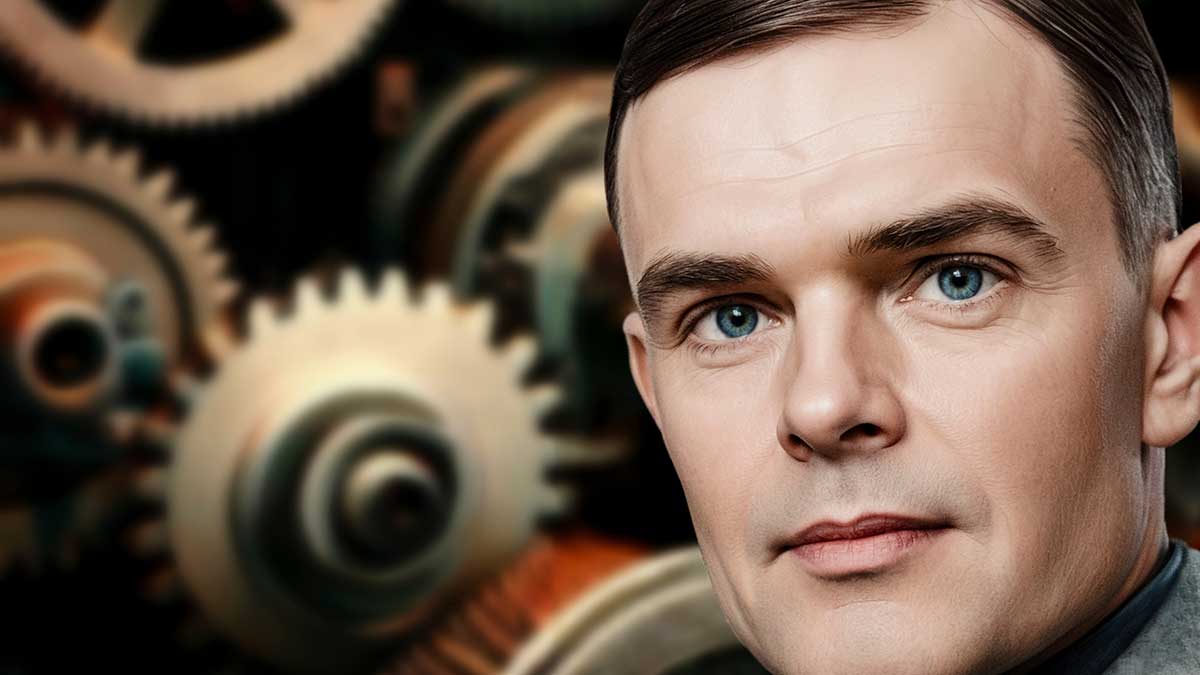
The Turing Award honours Alan Mathison Turing (1912–1954), the British mathematician and codebreaker whose work laid the foundations of modern computing and artificial intelligence.
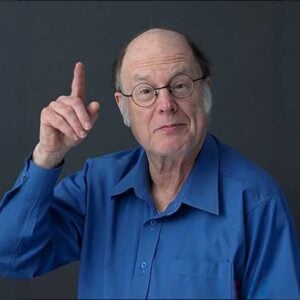
Bennett, a physicist at IBM Research, and Brassard, a computer scientist at the Université de Montréal, are widely recognised as founders of quantum information science. Their 1984 BB84 protocol, “Quantum Cryptography: Public Key Distribution and Coin Tossing,” introduced the first practical method for establishing a secret key with security guaranteed by the laws of physics rather than assumptions about an adversary’s computational power.
For IoT networks, which often operate with millions of interconnected devices transmitting sensitive data, this breakthrough is especially relevant. Classical public-key cryptography—the backbone of today’s digital security—may be vulnerable to future quantum computers.
By contrast, BB84 and related quantum cryptographic protocols provide information-theoretic security, ensuring that IoT devices could exchange keys without risk of compromise, even in a post-quantum world. BB84 has already been implemented in operational networks globally, including satellite links, laying the foundation for secure, long-distance IoT communications.
Bennett and Brassard’s work also introduced entanglement-based protocols and quantum teleportation. Teleportation enables the transmission of quantum states between distant devices using entanglement and classical communication, while entanglement distillation converts imperfect connections into high-quality quantum links. These concepts are central to building secure quantum networks, which could protect IoT infrastructure in smart cities, industrial automation, and critical national infrastructure.
Their collaboration over decades has bridged physics and computer science, influencing cryptography, algorithm design, computational complexity, and learning theory.

For IoT, these advances are not purely theoretical: they provide the basis for resilient key distribution, secure device authentication, and the secure orchestration of large-scale sensor networks—critical as IoT adoption grows in sectors ranging from manufacturing to healthcare.
“Bennett and Brassard fundamentally changed our understanding of information itself,” said Yannis Ioannidis, President of ACM. “The global momentum behind quantum technologies today underscores the enduring importance of their contributions—especially for IoT and connected infrastructure.”
“Charles Bennett and Gilles Brassard’s visionary insights laid the groundwork for one of the most exciting frontiers in science and technology,” added Jeff Dean, Chief Scientist at Google DeepMind and Google Research. “Their work continues to influence both fundamental research and real-world innovation.”
Bennett holds multiple honours, including the Wolf Prize, the Micius Quantum Prize, and the Breakthrough Prize in Fundamental Physics. Brassard, an Officer of the Order of Canada and the Ordre national du Québec, has received similar accolades. Both are members of leading national and international scientific academies.
There’s plenty of other editorial on our sister site, Electronic Specifier! Or you can always join in the conversation by commenting below or visiting our LinkedIn page.