
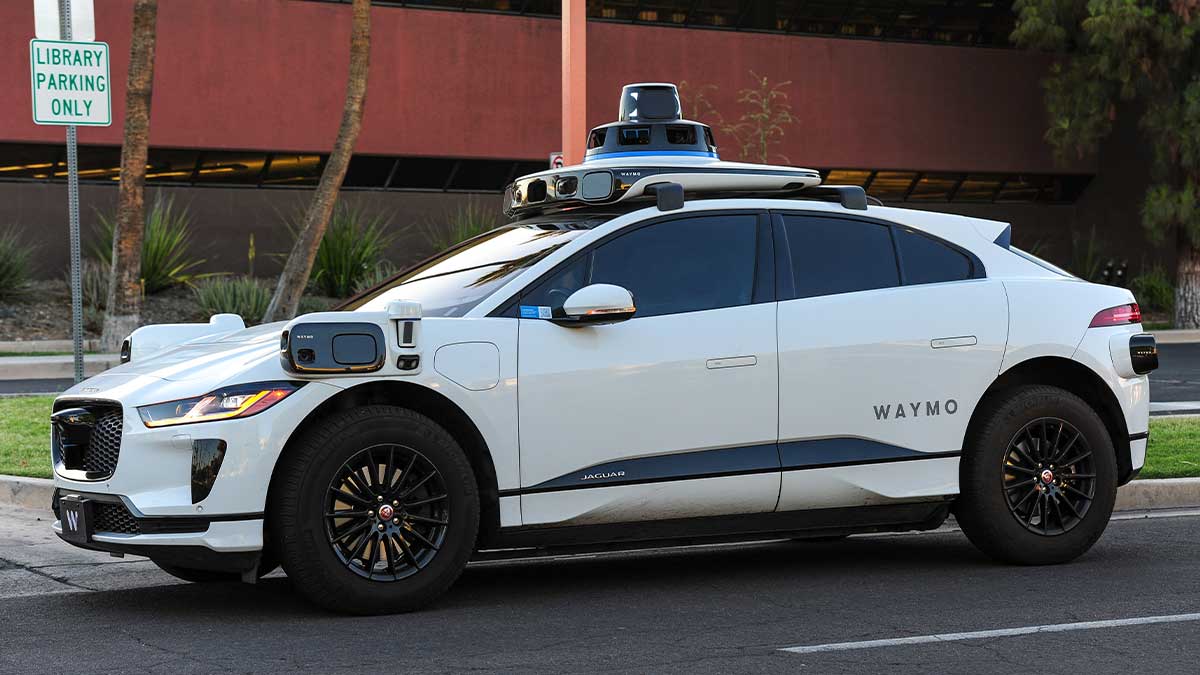
In the future, driverless vehicles, buses and cars will glide through city streets, paving the way for healthier, less congested cities, but to arrive there requires a change in thinking about the sensors used to pilot truly self-driving vehicles. Today, the vision-based camera sensors and LIDAR sensors that underpin many self-driving systems are already showing off that they have distinct limitations – performing less well in weather conditions such as fog and snow, and even at night. Radar will help autonomous car designers move towards a truly autonomous future, offering LIDAR-like accuracy without the limitations, with ‘4D’ sensors that can note the speed, shape and elevation of hundreds of vehicles at the same time.
Today’s radar sensors offer a ‘4D’ view by combining distance, velocity, and position with vertical resolution, meaning that objects have a shape, movement and altitude within space. In use, this means that the sensors, and vehicles which use them, can not only sense where and how quickly an object is moving, they can rapidly categorise that object as one of several different classes of vehicle (for example, a truck, a pedestrian or a motorbike). This will be foundational for the journey towards truly self-driving vehicles. The automotive radar market is forecast to grow from $5.32 billion this year to $22.83 billion by 2032, at a compound annual growth rate (CAGR) of 23%.
In the emerging robotaxi and driverless vehicle market, 4D radar is set to play a vital role in enabling vehicles to move safely through crowded streets. We are already seeing 4D radar sensors used as a matter of course in emerging robotaxis, some of which ship with more than 20 advanced 4D sensors. Robotaxis and the adoption of Advanced Driver Assistance Systems (ADAS) in consumer vehicles will be central to the rise of advanced 4D radar systems. According to analysis by ResearchAndMarkets, 169 million radar sensors were shipped globally in 2024, making for an average of 0.8 long-range radars per vehicle: by 2030, this will have risen to one per vehicle, driven by consumer demand for robotaxi services, alongside demand for safety and compliance with emerging safety regulations.
We are already seeing the advantages of radar technology play out both inside vehicles in the form of advanced radar sensors delivering ADAS functions, and in roadside sensors used in smart cities to measure traffic flow. The time for radar is now.
The radar advantage
So why radar? It’s a safe, cost-effective and proven technology which has key advantages over both LIDAR and camera sensors, which struggle with weather conditions such as fog as well as with longer ranges. Radar sensors, which are now being incorporated into ADAS systems, offer the velocity accuracy required for ADAS functions such as automatic emergency braking (AEB) and Smart Cruise Control, keeping drivers safe on the move.
The latest radar systems are already helping to reshape AEB, with long-range, high-resolution detection that works at ranges beyond 200 meters. New radar systems work perfectly in any weather or lighting conditions and integrate seamlessly with camera systems to keep drivers safe. With stringent new safety regulations mandated in both the E.U. and the U.S. requiring advanced safety systems to be built into cars, this is the moment for radar to shine.
Radar systems have low power consumption and can easily be integrated into modern vehicle safety architectures. Off-the-shelf radar kits are already enabling manufacturers to deliver cars that comply with regulations, built to save lives: vehicles can detect hazards earlier, allowing for safe, early braking interventions.
Safer fleets
One can already get a sense of how vital radar will be to the future of autonomy, with commercial fleets in Korea now adopting radar-based ADAS kits, transport company Korea Wide Group planning to expand the system to more than 500 buses. Modular radar systems make it simple to roll the technology out to commercial fleets, and the ‘weatherproof’ nature of radar technology makes it appealing to companies with many vehicles on the road.
The pilot launched in late 2025, with ADAS-equipped vehicles testing on routes in downtown Daegu, the heart of Daegu Metropolitan City, with plans to expand to intercity and bus routes. The ADAS systems offer functions such as automatic emergency braking (AEB) and forward collision warning and will enable precise detection of vehicles and pedestrians even in demanding commercial environments.
Sensing cities
Radar is also proving its worth in ‘smart city’ radar sensors on busy junctions, highlighting how the technology can be the basis for truly driverless vehicles that need to ‘understand’ the world around them in real-time. In Verona, Italy, radar is helping city planners to understand and manage traffic in a complex intersection that has historically seen high traffic congestion.
Built between 1532 and 1540, Porta Nuova is the main artery for the bustling Italian city with more than 700,00 sensors, and radar sensors paired with advanced AI algorithms are now helping city leaders to understand the traffic, cut congestion, increase safety and help reduce pollution. Verona, famous as the setting of Shakespeare’s tragedy Romeo and Juliet, has seen congestion become problematic at the junction in recent years, and the new hi-tech radar solution is helping city leaders understand what is causing jams at the Porta Nuova, while also homing in on issues such as speeding drivers and illegal lane changes. These insights, delivered as visualisations of hourly, daily and weekly traffic are helping city leaders’ home in on how to tame the traffic at Porta Nuova. Over the longer term, this will enable city leaders to make Porta Nuova safer for both drivers and pedestrians and even enhance sustainability over the long haul. By optimising traffic signals to reduce idle times, radar sensors can even play a role in sustainable urban development.
A smarter future
It’s already abundantly clear that the driverless future will depend in no small measure on radar sensors and their key advantages in terms of cost and all-weather effectiveness. This is not some wild science-fiction prediction: we can already see the radar-enhanced future taking hold all around us. The seeds of tomorrow’s driverless world are already here, in modular systems that can offer an instant upgrade to the safety of cars, in fleets of buses equipped with radar-based sensors and in roadside detectors which help manage traffic. The streets of tomorrow’s cities will be safer, cleaner places, with driverless cars gliding to their destinations safely – and the way they ‘see’ the world will be through radar sensors, working perfectly in any weather, whatever time of day. The driverless future belongs to radar sensors.
There’s plenty of other editorial on our sister site, Electronic Specifier! Or you can always join in the conversation by visiting our LinkedIn page.