
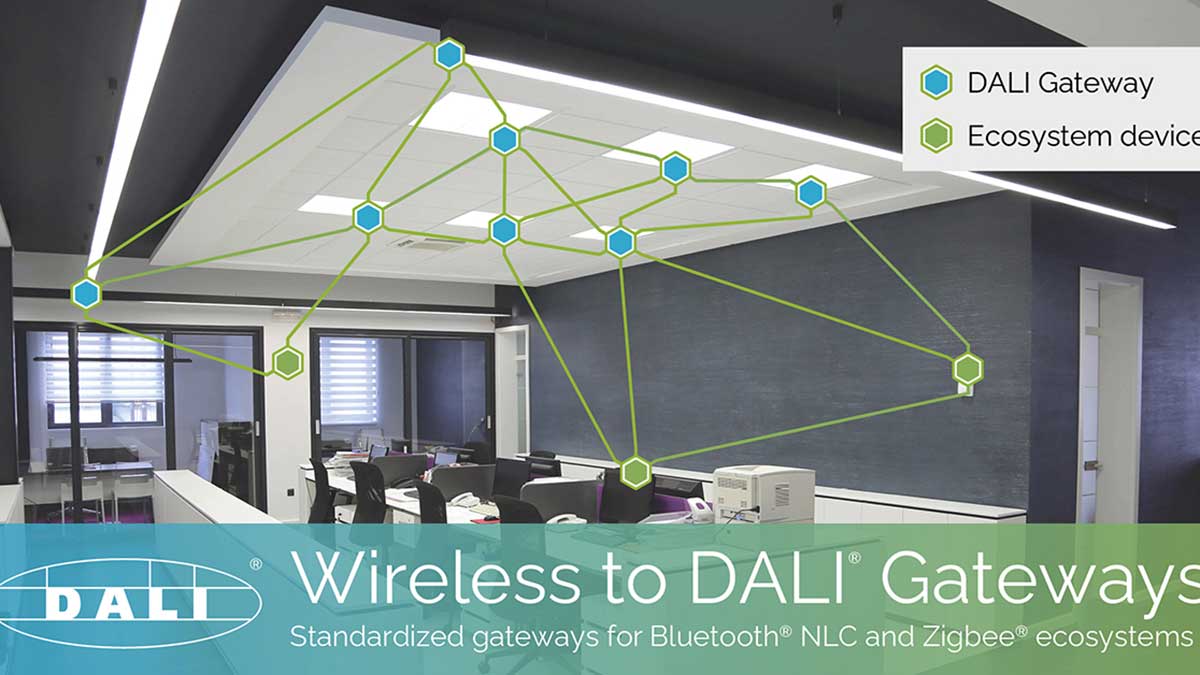
The DALI Alliance has introduced new test and certification specifications designed to link its wired lighting-control technology with leading wireless systems, in a move aimed at boosting interoperability across the smart-building sector.
The specifications, announced today, set out how so-called Wireless to DALI Gateways should translate between the Digital Addressable Lighting Interface on wired networks and two major wireless ecosystems: Bluetooth NLC and Zigbee. The gateways will allow building-management platforms to control DALI-2 and D4i devices over wireless networks, and to tap into data generated by those luminaires, including power, energy, and diagnostics information.
The Alliance said the standards would give manufacturers and developers greater flexibility in combining wired and wireless infrastructure, while helping to accelerate the adoption of DALI-based systems.
Paul Drosihn, General Manager of the DALI Alliance, said the publication of the specifications represented a significant step forward. “It opens up new possibilities for integrating DALI with wireless systems, creating a broader range of solutions for the industry,” he said. “By standardising these gateways, we are promoting interoperability and providing a path forward for developers, manufacturers, and professionals in building automation.”
Neville Meijers, Chief Executive of the Bluetooth SIG, said the completion of the Bluetooth NLC to DALI specification suite underscored the value of open standards. The gateways, he argued, would support “seamless integration between DALI’s trusted wired systems and the leading wireless lighting standard”, helping the market realise the full potential of intelligent lighting.
Tobin Richardson, President and Chief Executive of the Connectivity Standards Alliance, said the combination of Zigbee and DALI offered “a pivotal moment in the evolution of smart lighting and building automation”, blending Zigbee’s mesh-network capabilities with the precision of DALI’s digital control.
The Alliance emphasised that open, industry-defined specifications, rather than proprietary systems, were essential to ensuring consistent performance and avoiding compatibility issues.
There’s plenty of other editorial on our sister site, Electronic Specifier! Or you can always join in the conversation by visiting our LinkedIn page.