

Scotland is rapidly emerging as a key growth market for large-scale data centre development, driven by its abundant renewable energy, land availability, and skilled workforce, according to new research by planning and development consultancy Lichfields.
The firm’s analysis suggests that the UK’s data centre industry currently contributes about £4.7 billion annually to the economy, with an additional £44 billion expected by 2035 from construction and operations. Scotland, which generated 113% of its electricity consumption from renewable sources in 2022, is well placed to capture a significant portion of this expansion.
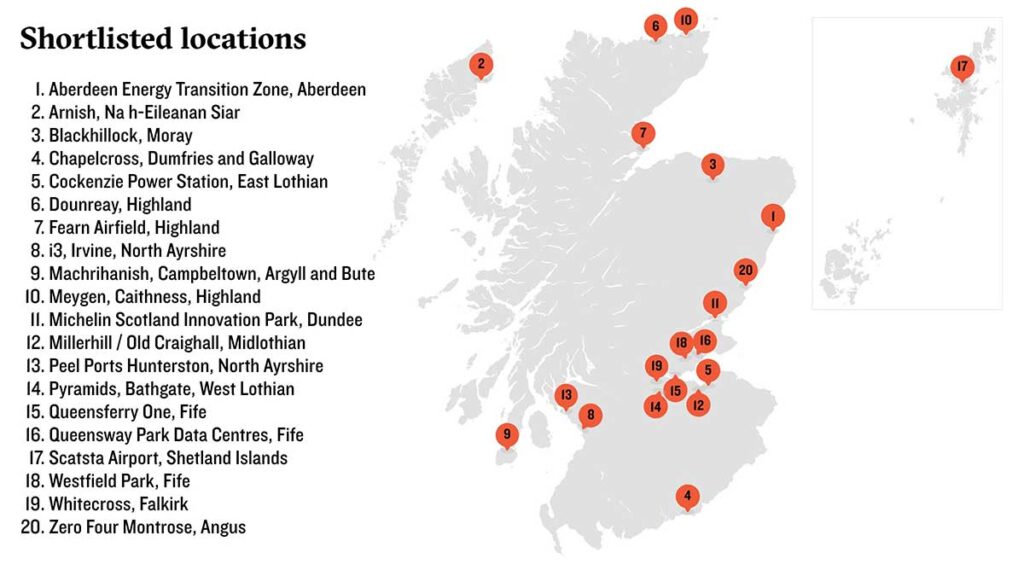
A previous site-shortlisting exercise by Scottish Futures Trust, Crown Estate Scotland and Scottish Enterprise identified a number of promising locations including Aberdeen, Dundee, Fife, and parts of the Highlands. These areas combine renewable capacity, available land, and technical expertise. However, most major data centre projects remain concentrated in southern England, where grid capacity and planning support are more developed.
Dan Evans, Associate Director at Lichfields, said that Scotland offers “something few regions or countries can match — abundant low-carbon energy, space for expansion, and a strong engineering base”. The combination of renewable generation, cool climate, and technical skills, he added, creates “ideal conditions for sustainable data centre operations”.
Evans noted that investor interest is rising nationwide, with operators seeking sites that balance performance, cost, and environmental responsibility. “Scotland’s renewable strength and land availability tick those boxes,” he said, “but delivery confidence remains key. Developers need clarity on where projects will be supported and how long approvals will take. A consistent national position, backed by local planning frameworks, would make a real difference in turning interest into investment.”
Lichfields’ report recommends several policy measures to accelerate progress, including designating land for data centre use in Local Development Plans, using Masterplan Consent Areas to streamline complex applications, and promoting early coordination between developers, planners, and energy providers.
Evidence of growing investor confidence includes the £3.9 billion regeneration of the former Ravenscraig steelworks in North Lanarkshire, which will feature one of the UK’s largest AI-ready data centres. The project is expected to create about 2,000 long-term jobs and add £1.2 billion in construction value, contributing around 0.4% to Scotland’s annual GDP once operational.
“Scotland has an opportunity to position itself as a genuine alternative to traditional UK data centre clusters,” Evans said. “By aligning renewable capacity with a more agile planning approach, it can attract long-term global investment, create skilled employment, and strengthen its reputation for sustainable growth.”
He added: “Developers are ready to commit where policy, infrastructure and delivery are properly coordinated. With the right signals from government and local authorities, Scotland could move from potential to performance very quickly.”
There’s plenty of other editorial on our sister site, Electronic Specifier! Or you can always join in the conversation by visiting our LinkedIn page.