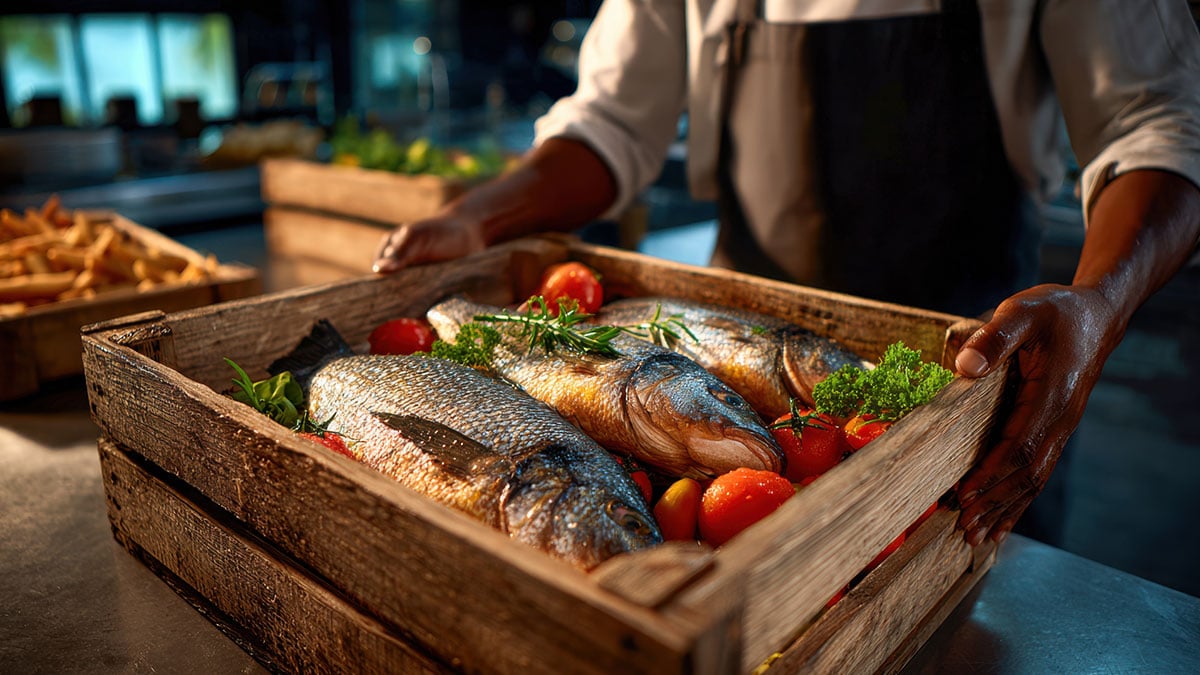
Demand for fresh and natural food is reshaping how fish and seafood reach Indian plates. This expectation is no longer a consumer luxury but a decisive market force, compelling the seafood industry to modernise. Bolstered by policy support, private investment, and technological innovation, stakeholders are deploying AI and IoT to transform the cold chain to ensure freshness, reduce waste, and meeting both domestic and export quality standards. This is substantiated by a 2025 Q4 survey†, which found that 82% of consumers regard ‘natural/fresh’ tags in products as either essential or nice to have, while 81% consider the same for “organic” aspects, according to GlobalData, a leading intelligence and productivity platform.
Sainul Abidin, Consumer Analyst, GlobalData, comments: “With consumers firmly placing freshness at the core of their food values, especially for seafood, the industry’s old supply chain model – dependent on ad hoc cooling and manual oversight – p is no longer viable. The transition to end-to-end cold chains powered by AI and IoT is essential, not optional.”
Changing consumer preferences are forcing manufacturers to rethink cold supply logistics. In fisheries and aquaculture, this means improved ice and chilling methods on boats, temperature-controlled transport, better storage, and prompt processing – all supported by monitoring and automation to keep freshness intact. Exporters are under pressure as international regulations demand stringent controls on temperature, traceability, and food safety.
To support this paradigm shift, Indian policymakers are stepping up efforts. Under the Pradhan Mantri Kisan Sampada Yojana (PMKSY), the Integrated Cold Chain & Value Addition Infrastructure component has allocated funding specifically for cold chain infrastructure that includes seafood processing zones, refrigerated transport, and storage facilities.
In FY 2024-25 and 2025-26, states such as Gujarat, Tamil Nadu, West Bengal, and Andhra Pradesh have led the way in establishing new facilities near catch zones to reduce time and temperature abuse. Simultaneously, the National Centre for Cold-chain Development (NCCD) updated its engineering and operational guidelines in 2025 to mandate sensor-based monitoring, alarm systems, sustainable refrigeration, and energy efficiency in cold storage and transport units.
Private sector innovators are rising to the challenge. Firms like IIoTNext have launched end-to-end IoT platforms, outfitting cold rooms, blast freezers, and even fishing vessel holds with real-time environmental sensors, alerting operators to deviations that could compromise product quality. Startups like CaptainFresh use AI-driven demand forecasting and route optimisation to align harvests with market intake – reducing overfishing, spoilage, and excess inventory. Solar-powered cold storage units are being deployed in off-grid coastal villages to deliver the first chill immediately after harvest.
Abidin continues: “Nonetheless, challenges remain. Many remote and artisanal fishing communities still lack reliable electricity, access to capital, or the technical know-how to adopt advanced monitoring systems or predictive analytics. Ensuring regulatory compliance across different jurisdictions – domestic and international – remains complex. There is also the matter of establishing trust among consumers; transparency and traceability – from catch, through transport, to retail shelf – are no longer optional but are demanded.”
Abidin concludes: “The cold chain revolution in India’s seafood sector is likely to sharpen around several critical areas: blockchain-enabled traceability systems; predictive AI that integrates weather, transport, and demand forecasts; renewable energy-powered cold storage in off-grid zones; and the scaling of affordable, rugged IoT solutions for small-scale operators. With consumers defining fresh as essential, industry and government need to collaborate to translate demand into delivery.”
GlobalData 2025 Q4 global consumer survey was conducted with 22,613 respondents across 42 countries.
There’s plenty of other editorial on our sister site, Electronic Specifier! Or you can always join in the conversation by commenting below or visiting our LinkedIn page.