

Imagine this: you reach for your daily medication, but then get distracted by a call, a message, or a cat demanding attention—and suddenly you can’t remember whether you actually swallowed it.
For millions of people on long-term treatments, this small moment of uncertainty happens every day – and it can have serious consequences.
Researchers at the Massachusetts Institute of Technology are now working on a solution: a smart pill that can confirm when it has been taken and send a signal beyond the body.
What is a ‘smart pill’?
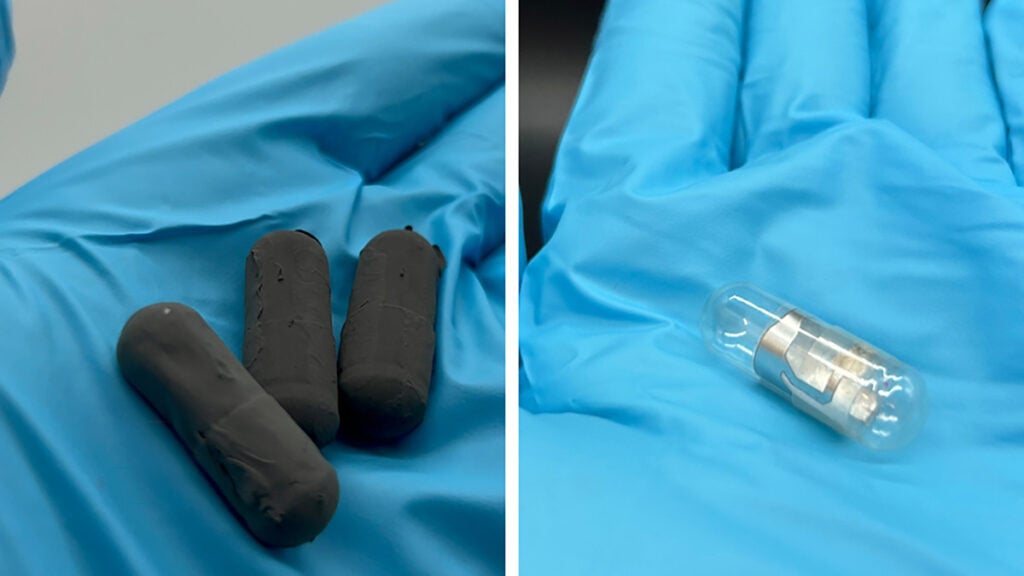
According to the MIT study, published today, the smart pill contains a tiny radio frequency, or RF, system alongside the medication. At its core is a biodegradable antenna made from zinc and cellulose, materials chosen for their established safety and ability to break down in the body.
Before swallowing, the pill’s outer coating blocks any signal from being transmitted. Once it reaches the stomach, the coating dissolves, activating the antenna. Working with a small RF chip inside the capsule, it sends a short signal confirming that the pill has been taken. The signal can typically be detected within about 10 minutes and may, in future, be read by a wearable device that transmits the information to healthcare professionals.
Giovanni Traverso, an Associate Professor of Mechanical Engineering at MIT, a Gastroenterologist at Brigham and Women’s Hospital, and an Associate Member of the Broad Institute of MIT and Harvard says it’s not just absent minded cat lovers who stand to benefit.
Why could it be useful?
As the senior author of the new study, he estimates that nearly half of people on long-term treatments do not follow their prescribed regimens, contributing to preventable illness, premature deaths, and billions of dollars in wasted healthcare spending each year. For some conditions, such as organ transplantation or chronic infections, missing doses can have serious or even fatal consequences.
“The goal is to make sure that this helps people receive the therapy they need to help maximise their health,” he says. “We’ve developed systems that can stay in the body for a long time, and we know that those systems can improve adherence, but we also recognise that for certain medications, we can’t change the pill. The question becomes: what else can we do to help the person and help their health care providers ensure that they’re receiving the medication?”
What are the challenges?
Safety has been a major challenge in ingestible electronics. Previous attempts at smart pills relied on components that did not degrade easily and had to pass intact through the digestive system, raising concerns about long-term accumulation or blockage.
The MIT design is largely bioresorbable. Most components dissolve in the stomach within days. Only a tiny, non-biodegradable RF chip, about 400 micrometres across, remains intact and is excreted naturally. Animal tests show that the signal can be read from up to around two feet away, suggesting the approach could work reliably without significant risk to patients.
Who could it help?
The technology is not intended for all medicines. Researchers say it is most useful for drugs where missing doses carries high risks, including immunosuppressants taken by transplant patients, long-term treatments for tuberculosis or HIV, and medications to prevent blood clots after stent insertion.
It may also help people with neuropsychiatric conditions, whose symptoms can sometimes make it harder to take medication consistently.
What’s next?
The smart pill is still at an early stage. Researchers are planning further preclinical testing and hope to begin human trials soon. Regulators will also need to assess long-term safety and patient privacy, given the potential for digital monitoring.
There’s plenty of other editorial on our sister site, Electronic Specifier! Or you can always join in the conversation by visiting our LinkedIn page.