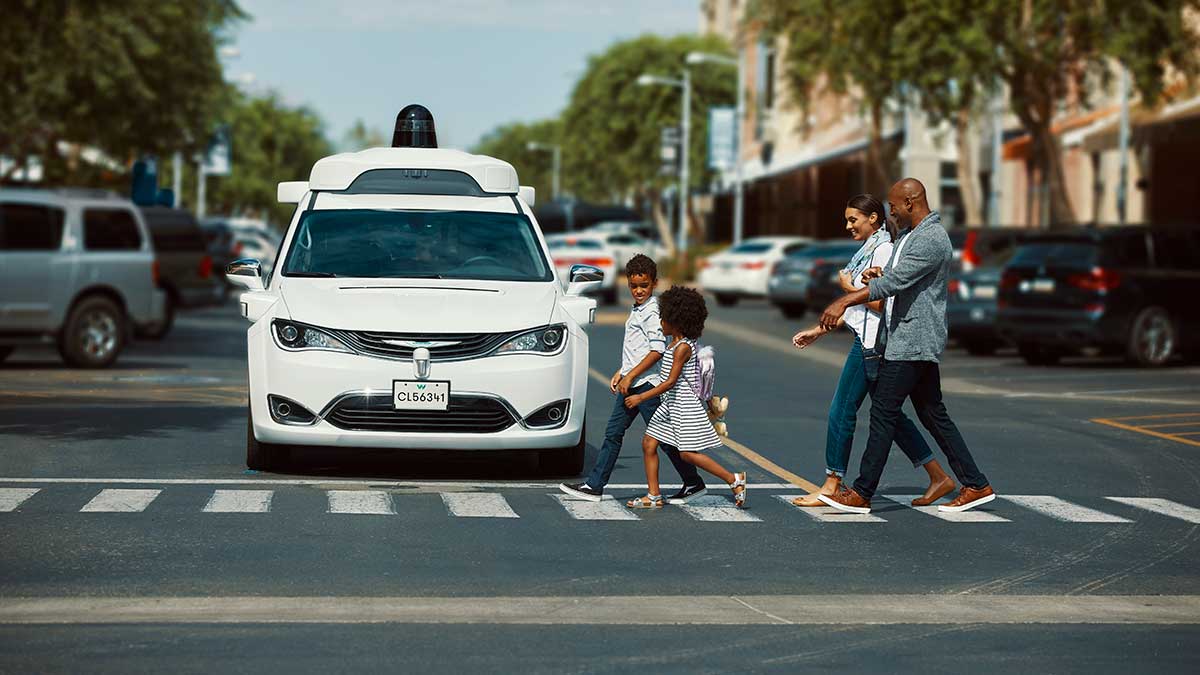
A widespread power outage that plunged nearly one-third of San Francisco into darkness earlier this month has become an unexpected stress test for the city’s rapidly expanding robotaxi industry, raising questions about how autonomous fleets cope when urban infrastructure fails at scale.
The outage, triggered by a fire at a PG&E substation, disabled traffic signals across major corridors, contributing to gridlock severe enough for the San Francisco Department of Emergency Management to advise residents to stay at home. Law enforcement officers were deployed to manually control intersections as congestion rippled through the city.
Waymo, Alphabet’s autonomous driving unit and the dominant robotaxi operator in San Francisco, said the disruption exposed limitations in operational processes designed during its early deployment phase. Videos circulated on social media showed driverless Waymo vehicles halted at intersections with hazard lights flashing as traffic lights went dark.
In a blog post published on December 23rd, the company said its vehicles are designed to treat dark signals as four-way stops, but may occasionally request a confirmation check from human support teams to ensure a safe manoeuvre. During the outage, Waymo vehicles successfully traversed more than 7,000 unlit intersections. However, the scale and concentration of disabled signals triggered a surge in confirmation requests, overwhelming response capacity and contributing to congestion on already overstretched streets.
“These confirmation protocols were established out of an abundance of caution during our early deployment,” Waymo said, adding that the strategy had proved effective during smaller outages. The company acknowledged that the event demonstrated the need to adapt those safeguards to a larger, denser fleet operating during a city-wide emergency.
As the blackout persisted and officials urged residents to stay off the roads to prioritise first responders, Waymo temporarily paused its service. Vehicles were instructed to pull over and park safely before being returned to depots in waves, a move the company said was intended to avoid obstructing emergency vehicles or worsening traffic conditions.
Waymo said it is now rolling out fleet-wide updates that give its vehicles more context about regional power outages, enabling them to navigate decisively without generating excessive requests for human confirmation. It is also revising emergency response protocols and expanding coordination with city officials, including Mayor Daniel Lurie’s office, as well as updating training programmes for first responders. To date, more than 25,000 emergency personnel globally have received guidance on interacting with Waymo vehicles.
The incident has renewed debate among regulators and safety experts over how much reliance autonomous vehicle operators place on remote human oversight, known as teleoperation, and whether existing safeguards are sufficient during large-scale emergencies such as earthquakes or floods.
California’s Department of Motor Vehicles and the California Public Utilities Commission said they are reviewing the outage and discussing emergency response practices with Waymo and other autonomous vehicle developers. The DMV said it is formulating rules to ensure remote operators meet high standards for safety, accountability, and responsiveness.
Waymo, which operates more than 2,500 vehicles across the San Francisco Bay Area, Los Angeles, Metro Phoenix, Austin, and Atlanta, said it remained committed to building public trust through incremental improvement. “We’ve always focused on developing the Waymo Driver for the world as it is, including when infrastructure fails,” the company said.
In October, the company announced plans to introduce its fully autonomous ride-hailing service in London in 2026.
Backed by more than 100 million miles of fully autonomous driving, Waymo said it viewed the blackout not as a setback, but as a prompt to accelerate refinements as robotaxis become a permanent feature of city streets.
There’s plenty of other editorial on our sister site, Electronic Specifier! Or you can always join in the conversation by visiting our LinkedIn page.