Anritsu has launched a new acoustic evaluation system for next-generation automotive emergency call technology, as the industry prepares for the introduction of mandatory NG eCall over 4G and 5G networks across Europe from 1st January, 2026.
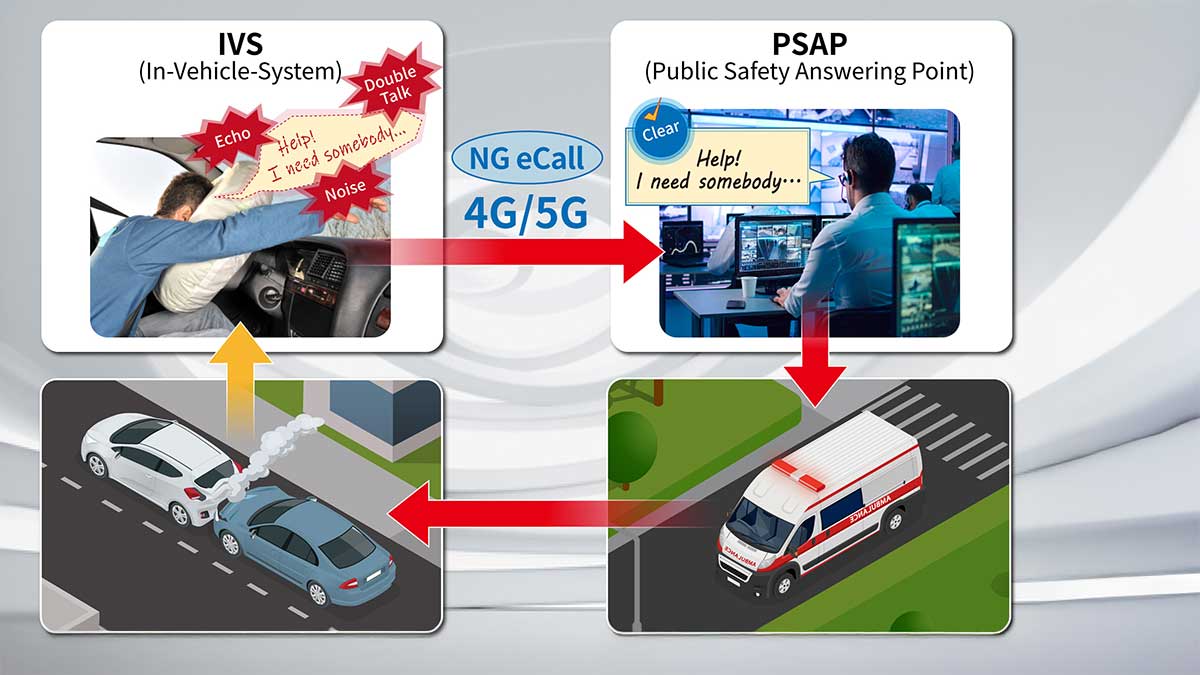
The Japanese test and measurement company said today in Vienna that the system, developed with German acoustics specialist HEAD acoustics, is designed to ensure clearer in-vehicle voice communication between motorists and Public Safety Answering Points during emergencies. NG eCall, which replaces the legacy 2G/3G system, relies on high-quality, low-latency audio to relay critical information after a collision, when hands-free calls must be made amid cabin noise, echoes, and other acoustic interference.
The solution combines Anritsu’s MD8475B LTE test platform and MT8000A LTE/5G simulator with HEAD acoustics’ ACQUA analysis software. The firms said the set-up, compliant with ITU-T P.1140, allows carmakers and suppliers to test both transmitted and received audio under realistic scenarios, including double-talk situations and simulated road, wind, and engine noise.
Engineers have long warned that poor speech intelligibility inside a damaged or noisy vehicle can impede emergency services’ ability to assess incidents quickly. Anritsu said the new system offers a repeatable method for assessing performance, supporting manufacturers as they adapt to NG eCall requirements and develop next-generation in-vehicle audio systems.
Anritsu, which employs about 3,500 staff in more than 90 countries, has been expanding its portfolio of automotive-focused testing solutions as connectivity becomes central to vehicle safety systems. HEAD acoustics, based in Herzogenrath near Aachen, provides audio, vibration, and speech-quality measurement tools to the automotive and telecoms sectors.
There’s plenty of other editorial on our sister site, Electronic Specifier! Or you can always join in the conversation by visiting our LinkedIn page.