
Imagine the scene: you are finally ready to move in with the love of your life. You pack up your things, step over the threshold of her beautifully automated home, and reach for your phone to turn on the lights.
Except you cannot. Her entire home runs on an iOS-based smart-home ecosystem, and your Android device might as well be a torch with a calculator attached. You cannot adjust the heating, open the blinds, or even switch on a lamp without asking Siri nicely.
This domestic dilemma is no longer a comedy skit, but a growing reality as smart-home technology becomes the latest battleground in the long-running rivalry between Apple and Android. The tug-of-war between ecosystems is shaping not just personal tech choices, but the very walls, switches, and sensors of our homes.
It is a conflict that Munich-based smart-home pioneer Eve Systems confronted early and, ultimately, is attempting to rise above.
A decade ago, Eve Systems stepped firmly into the Apple camp. Its early HomeKit experiments were exciting but plagued by familiar frustrations.
“You had to wait for like 12 seconds until the light would turn on after passing the motion sensor,” recalls Lars Felber, Eve’s Head of PR. “Not that great of an experience.”
Bluetooth
The villain was Bluetooth: low-power, but limited in range and speed. For Apple loyalists, it meant sluggish lights and temperamental sensors. For Android users, it meant something worse — a complete inability to join the party at all.
“Sometimes stuff would be unreachable,” Felber says. “Reliability and responsiveness were big issues.”
Then came Thread, a low-power, IP-based mesh networking protocol designed to free smart homes from the slow, restrictive chains of Bluetooth.
“Thread catapulted us into a world of happy customers,” Felber says. “Everything became super snappy.”

Eve’s adoption of Thread marked a crucial turning point, both for the company and for the broader smart-home market. It offered something neither Apple nor Android’s ecosystems alone could guarantee: the promise of genuine interoperability.
Founded within a company best known for Apple TV tuners, Eve initially doubled down on the Apple universe. “We were among the first to focus on Apple HomeKit,” Felber says. “It is our 10-year anniversary now for Eve products.”
Three years ago, the company joined the ABB family, gaining industrial muscle and a global footprint. But its most strategic decision came earlier, in 2020, when it adopted Thread the very month Apple released the HomePod mini with a built-in Thread border router.
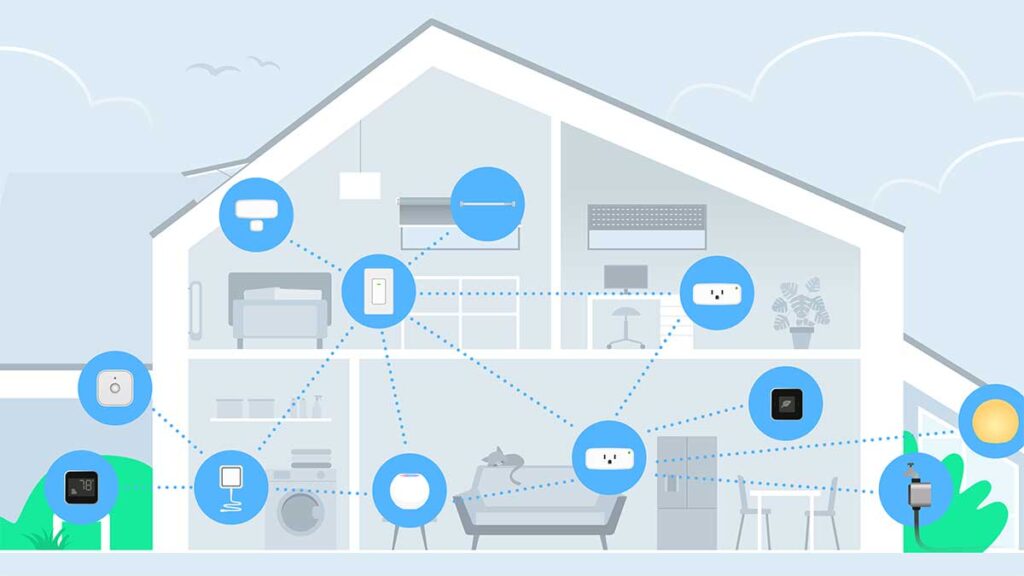
Thread creates a mesh network in which devices support one another, improving speed and reliability. Battery-powered sensors sip energy while mains-powered devices act as routers, extending coverage throughout the home.
“It was all fixed right away with Thread,” Felber says. “Everything became super responsive.”
Thread operates locally
Crucially, Thread operates locally, without relying on a Cloud service. It avoids the power drain of Wi-Fi and the single-point fragility of Bluetooth. More importantly, it opened the door to a smart-home future that is not determined by whether one partner prefers Apple and the other prefers Android.
“What we do not have in place is a Cloud,” Felber notes. “The security is handled by the platforms.”
That step away from Cloud reliance placed Eve in the perfect position for the next evolution in cross-platform harmony: Matter.
Matter, jointly developed by Apple, Google, Amazon, Samsung, and others, is the industry’s attempt to end the Apple-versus-Android smart-home divide. For Eve, long entrenched in Apple’s ecosystem, it was nothing short of a liberation.
“As you know, we come from the Apple world,” Felber says. “So following Apple into Matter was a logical step.”
For years, choosing Eve meant choosing iOS. Android users were simply locked out. Thread and Matter changed everything. Eve devices can now work directly with Google Home, Amazon Alexa, Samsung SmartThings, and even Home Assistant — without needing Cloud translation.
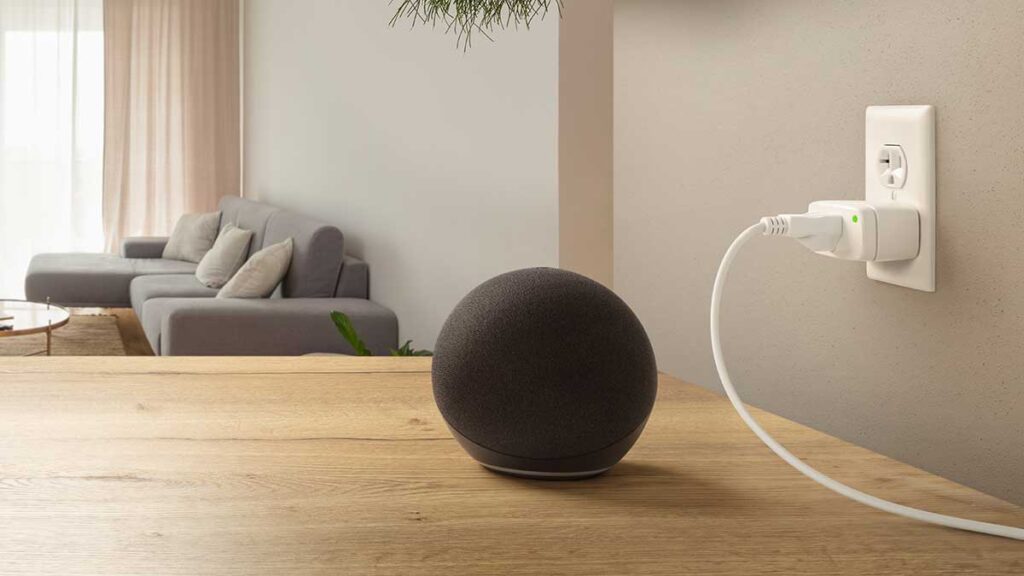
“After having been limited for years into the Apple platform, we were now able to transfer all the values — like local communication and no Cloud — to those additional platforms,” Felber says.
Eve had quietly prepared for this future. Many of its products already contained inactive Thread chips that could be enabled via free firmware updates, giving customers across ecosystems an unexpected upgrade.
“Some lucky customers got two leaps into new technologies for free,” Felber says.
Still, there were hurdles. Eve’s app was iOS-only for years, leaving Android users once again on the sidelines. “Products would have different feature sets depending on the platform,” Felber admits. The Android app finally launched in 2023, unifying the experience.
The matter with matter
Matter itself is still developing. Not all product categories were supported immediately, and some features arrived faster than others. Yet Thread’s resilience smooths over many gaps.
“If your Wi-Fi goes down, turning a light on and off from your phone will just work,” Felber says. “And many devices store schedules locally, so if you are on holiday and the Wi-Fi drops, your home still behaves intelligently.”
Competitors are advancing quickly, but Eve continues to see itself as a leader — albeit a collaborative one.
“We are humble and thankful for what all the others contribute,” Felber says.
Bluetooth remains a useful companion, particularly for portable devices like lamps taken on camping trips. But the future is threaded — quite literally. Thread radios are already embedded in modern routers, TVs, and smart speakers. Soon, Felber predicts, people will not even know which device in their home hosts their Thread network. It will simply be there, like Wi-Fi.
For IoT companies trying to navigate the Apple versus Android divide, Felber emphasises three priorities: scalability, security, and future compatibility. Thread’s architecture avoids Bluetooth’s bottlenecks and Wi-Fi’s power hunger. Its security model keeps data local. And the company invested heavily in chipsets with enough memory to keep evolving.
“We are in a great position with Thread for the future,” he says.
Eve’s journey from Bluetooth-induced lag to Thread-powered responsiveness is more than a tale of technical refinement. It is a clear sign of where the smart-home industry must head if it is ever to rise above the platform wars that have defined the past decade of consumer technology.
In Eve’s view, the connected home of the future is one where neither Apple nor Android has the upper hand — because the technology simply works for everyone.
“Thread will just be everywhere,” Felber says. “And people will not even notice.”
There’s plenty of other editorial on our sister site, Electronic Specifier! Or you can always join in the conversation by visiting our LinkedIn page.
Tags Slider