
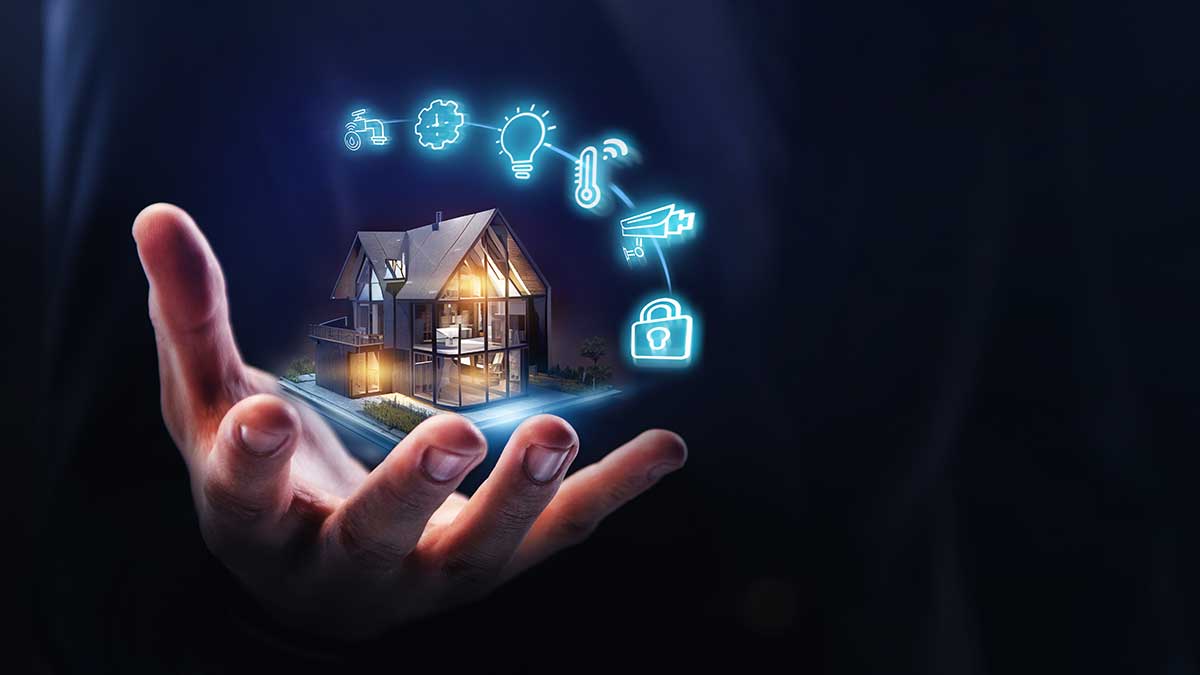
According to Future Market Insights (FMI), the global smart home devices market is set for rapid expansion, climbing from $81.0 billion in 2025 to $389.8 billion by 2035. The market is projected to record a CAGR of 17.0% during the forecast period (2025–2035), underscoring a transformative decade for connected living solutions worldwide.
Key market insights: smart home devices market (2025–2035)
- Market value (2025): $81.0 billion
- Forecast value (2035): $389.8 billion
- Projected CAGR: 17.0%
- Leading segment (2025): security lighting control devices – 28.6% share
- Top regions: North America, Asia Pacific, and Europe
Smart homes: redefining convenience, security, and energy efficiency
The evolution of smart homes represents one of the most profound lifestyle shifts of the 21st century. Growing consumer demand for automation, safety, and energy efficiency, coupled with increasing integration of AI, IoT, and voice-enabled technologies, is revolutionising how individuals interact with their living spaces.
Rising smartphone penetration and seamless connectivity across devices are making smart technologies more accessible. Governments promoting energy-efficient and sustainable housing further amplify this demand.
Security lighting control devices lead the smart home revolution
Within the product landscape, security lighting control devices dominate the market with an estimated 28.6% share in 2025. These systems are instrumental in enhancing safety, deterring intrusions, and optimising energy use through automation and smart connectivity.
Integration with mobile apps and voice assistants like Alexa and Google Assistant has made these devices integral to modern households, merging security and convenience in one ecosystem.
Affordability and direct engagement drive market expansion
The below $25 price range segment accounts for nearly 41.3% of total market revenue, highlighting the growing preference for affordable, entry-level smart home solutions. Increasing manufacturing efficiencies have enabled broader consumer adoption across varied income groups.
Meanwhile, the direct sales channel remains the most prominent distribution mode, capturing 36.8% share in 2025. This reflects brands’ focus on strengthening customer relationships, improving after-sales support, and ensuring product authenticity through owned retail and digital platforms.
Regional outlook: North America leads, Asia-Pacific accelerates
- United States: expected CAGR of 17.6%, driven by strong consumer adoption of connected devices, home automation, and energy-efficient technologies
- China: forecast CAGR of 17.1%, supported by smart city initiatives and robust government backing for smart technology adoption
- Japan: exhibiting a CAGR of 16.2%, the country’s focus on minimalistic design and Calm Technology principles fuels innovation in user-centric devices
- United Kingdom: witnessing high uptake of voice-controlled and energy-saving smart home devices amid growing sustainability efforts
Competitive landscape: innovation and interoperability define market leadership
The smart home devices ecosystem features both global technology giants and fast-scaling startups introducing creative automation solutions. Companies are prioritising cross-device compatibility, AI-driven functionality, and advanced security protocols to capture consumer trust and market share.
Leading companies include:
Samsung Electronics Co. Ltd., LG Electronics, Siemens AG, Honeywell International Inc., Schneider Electric, Koninklijke Philips N.V., Amazon.com Inc., Robert Bosch GmbH, Apple Inc., Nest Labs, Panasonic Corporation, Sony Corporation, and Midea Group.
Recent innovations such as Samsung’s SmartThings Station, Amazon’s latest Echo lineup, and Eve Systems’ Matter-compatible devices showcase the industry’s ongoing push for smarter, more integrated, and energy-efficient living environments.
Future outlook
The global smart home devices market is entering a new era of digital interconnectivity, where energy efficiency, security, and user comfort converge. Companies that invest in AI-driven solutions, interoperability standards, and sustainable manufacturing will be best positioned to thrive.
As connected living becomes the norm, smart home technologies will not only enhance comfort but also play a vital role in energy conservation, aging-in-place solutions, and data-driven home management.
There’s plenty of other editorial on our sister site, Electronic Specifier! Or you can always join in the conversation by visiting our LinkedIn page.