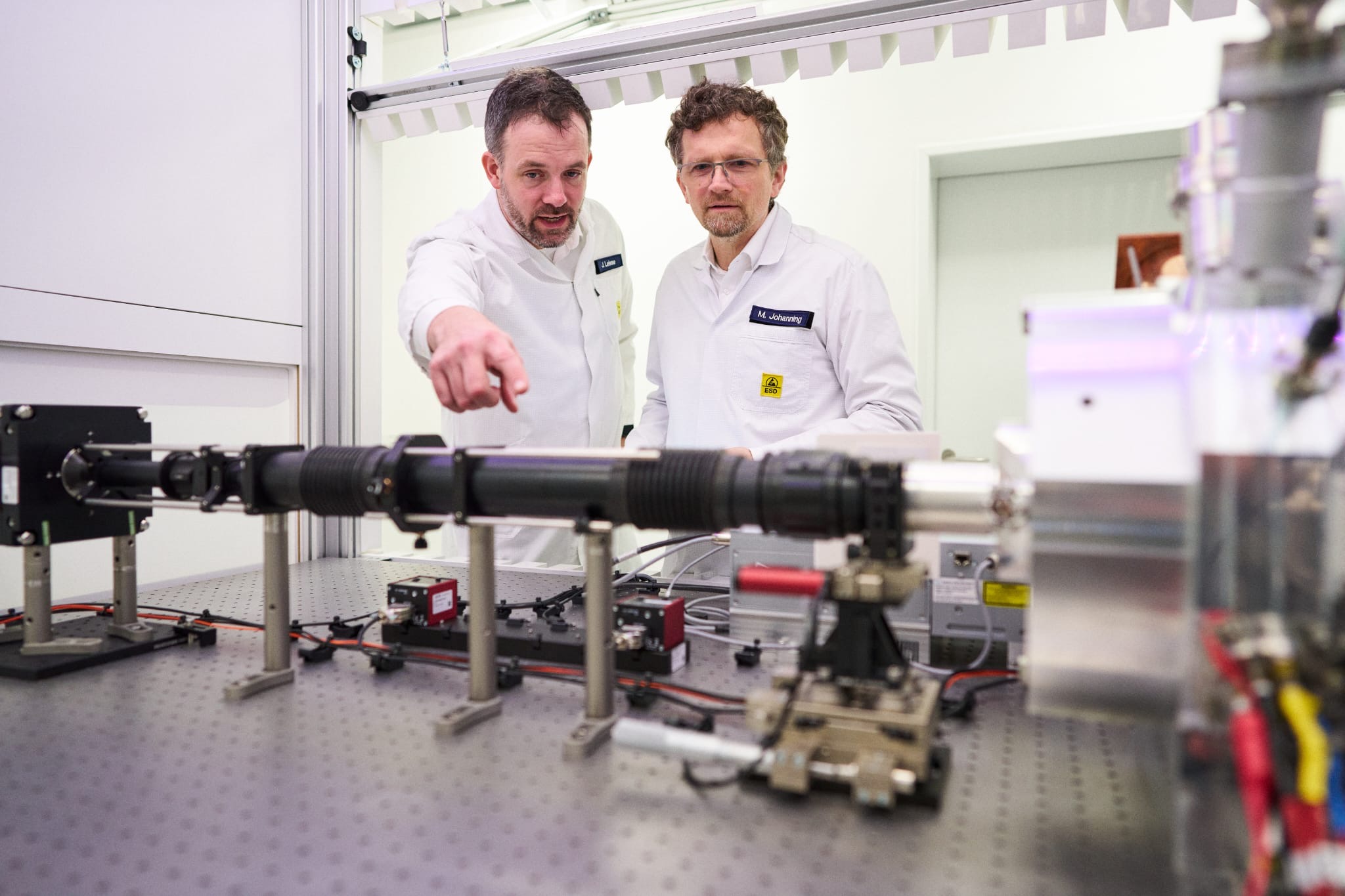
Quantum computing is accelerating fast. Electronics and IoT leaders must act now to build quantum readiness and secure future competitiveness, writes Jan Leisse is CEO of eleQtron, Germany’s first quantum hardware company.
Quantum computing is approaching fast. For companies in the electronics and IoT sectors, the impact will be profound. While the timeline to full-scale quantum advantage may still span several years, the time to prepare is now. That preparation is what we call quantum readiness.
At eleQtron, we define quantum readiness as the ability of an organization to understand, experiment with, and strategically plan for the impact of quantum technologies – long before they become mainstream. For companies in most verticals, including electronics and IoT, it’s no longer a question of if quantum will matter, but when – and whether you’re positioned to benefit or to play catch-up.
What does quantum readiness actually mean?
For the electronics and IoT sectors, quantum readiness means three things:
- Awareness: understanding which parts of your value chain could be transformed by quantum computing – from materials design to system optimisation and cybersecurity.
- Access: building the right partnerships and establishing cloud-based experimentation with real quantum hardware and simulators.
- Alignment: driving digitalization and preparing your data, algorithms, and talent strategy for hybrid classical–quantum workflows.
Companies can assess where they currently stand by mapping high-value simulation or optimisation problems against quantum solution spaces and identifying where today’s high-performance computing hits its limits. Readiness isn’t a binary state; it’s a continuum. The key is knowing where you are on that path.
In a 2024 study by McKinsey, 74% of quantum-aware companies in the electronics sector cited “identifying use cases” as their most urgent next step, yet fewer than 20% had initiated internal pilot projects.
Which use cases in electronics and IoT are likely to benefit first?
In the short term, optimisation and materials design will lead the way. Optimisation is everywhere in IoT: logistics routing, traffic management, energy distribution, network load balancing, predictive maintenance. These are complex, multi-variable systems. Quantum computers are uniquely suited to explore them in parallel, potentially discovering solutions classical algorithms miss.
Volkswagen and D-Wave, for instance, tested a quantum traffic flow optimisation in Beijing — simulating over 10,000 taxis to reduce congestion during peak hours. While early-stage, the pilot hinted at massive efficiencies once systems scale.
In electronics, materials research is another early area of value. Quantum simulations will help model and engineer new semiconductors, battery chemistries, or photonic materials at the atomic level, thus unlocking performance and efficiency improvements that today’s methods can’t deliver.
Further out, cybersecurity and encryption will follow. As quantum-safe algorithms become critical for connected devices, early adopters will have an advantage.
How should companies begin preparing their cybersecurity strategy?
The most important advice: don’t panic, but do plan. Quantum computers capable of breaking RSA or ECC encryption are still years away, but data harvested now could be decrypted later. That’s why migration toward post-quantum cryptography (PQC) must start today, especially for systems with long-term confidentiality requirements.
We recommend:
- Taking inventory of systems and data with extended security lifespans
- Implementing hybrid cryptographic models where feasible
- Following emerging PQC standards from bodies like NIST
- Collaborating across teams – at eleQtron, we actively involve hardware engineers and security architects to test how quantum-resistant algorithms perform on real devices
Cybersecurity in the quantum era will require more than just new algorithms. It will require an integration between quantum and classical systems and a proactive shift in mindset.
What role will hybrid systems play in IoT?
Hybrid systems, so pre-pqc and pqc algorithms as well as quantum classical algorithms, will be the default architecture of the quantum era. Quantum computing will not replace classical or edge computing, but will be a critical compute accelerator addressing the challenges classical CPU and GPU can not adress.
In IoT, classical and edge devices will continue to collect and process real-time data. Quantum systems, meanwhile, will operate in the cloud, solving the most computationally demanding parts of the problem: global-scale optimisations, complex simulations, and next-generation model training.
Our own roadmap at eleQtron reflects this hybrid vision. We’re building scalable, trapped-ion quantum processors based on our proprietary MAGIC® technology – controlled by microwave signals, not lasers – and designed to integrate seamlessly with classical supercomputing environments. This approach enables faster progress, lower cost, and stronger system stability.
Europe’s technological sovereignty in quantum won’t come from isolated labs. It will come from connected, hybrid systems that generate real-world value.
What first steps should early adopters take – without over-investing?
Start with exploration, not heavy investment.
- Educate your teams: Build foundational literacy on what quantum computing can (and can’t) do.
- Identify and implement 1–2 high-potential use cases: Focus on optimisation, simulation, or secure communications.
- Partner with quantum providers: Run small proof-of-concepts on available hardware via the cloud.
- Collaborate within your ecosystem: Engage in cross-industry initiatives and research networks.
The benefits are there: according to the Boston Consulting Group, companies that begin experimenting now – even with small-scale, noisy devices – are 3x more likely to gain an early competitive advantage when commercial quantum systems mature. Also, quantum will not be a solo race. It will be a team sport and those who understand how to collaborate will accelerate fastest.
At eleQtron, we call this approach quantum readiness: the ability to combine awareness, access, and alignment into a strategic posture that shapes, rather than waits for the future.

About the author: Jan Leisse is CEO of eleQtron, Germany’s first quantum hardware company. A trained engineer with an MBA, he has a background in corporate development and previously led a mechanical engineering firm. At eleQtron, he drives growth and strategy, bringing MAGIC-based trapped-ion quantum computers from the lab into industrial use. Recent milestones include partnerships with Infineon and Forschungszentrum Jülich, funding from the European Innovation Council and the award of being a Technology Pioneer by the World Economic Forum
There’s plenty of other editorial on our sister site, Electronic Specifier! Or you can always join in the conversation by commenting below or visiting our LinkedIn page.