
Emerson, the US industrial technology group, has expanded its presence in the energy sector with two recent initiatives: a large-scale hydropower modernisation for Arizona utility Salt River Project (SRP), and the launch of a new emissions-monitoring analyser designed to optimise combustion efficiency.
The dual moves highlight Emerson’s strategy of leveraging its automation and control systems to support both renewable energy integration and industrial decarbonisation, at a time when utilities and manufacturers are under growing pressure to boost efficiency and curb emissions.
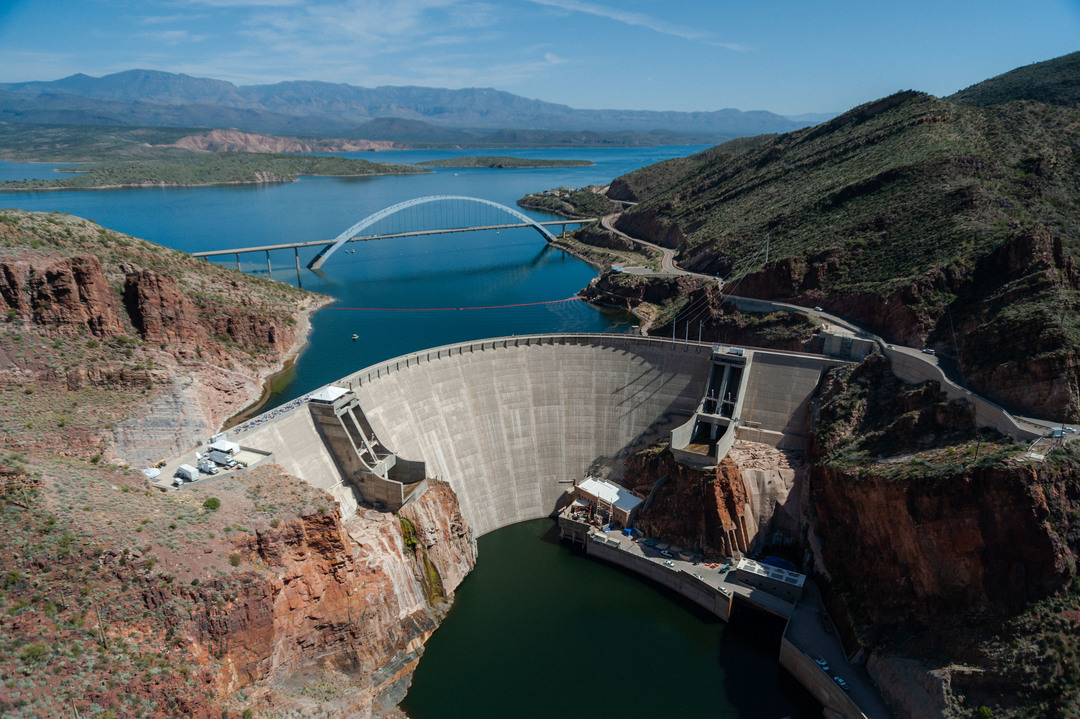
In Arizona, SRP has completed a multi-year upgrade of four hydroelectric dams on the Salt River, replacing ageing excitation systems with Emerson’s Ovation platform. The Roosevelt, Horse Mesa, Mormon Flat, and Stewart Mountain dams collectively generate 265MW — enough to power more than 60,000 households annually.
By standardising its operations on Emerson’s automation technology, SRP has cut maintenance costs by 30% and halved troubleshooting times. The move is expected to improve grid stability as Phoenix grapples with record population growth and extreme heat, which has intensified peak electricity demand.
“Greater operational insight and easier troubleshooting help us maintain unit reliability in the 90th percentile,” said Shari Brady, SRP Hydro Engineer, adding that the projects were delivered on schedule despite compressed timelines.
Bob Yeager, President of Emerson’s Power and Water business, called the overhaul a “transformative step” that positions SRP for long-term resilience amid shifting energy markets.
The company has also unveiled its Rosemount CX2100 In Situ Oxygen Analyzer, aimed at industries reliant on combustion processes, from utilities and refining to pulp and paper. The analyser is designed to simplify installation and maintenance, while delivering real-time data to optimise combustion efficiency and reduce emissions.
Unlike existing models, which are often cumbersome to deploy, the CX2100 can be mounted up to 300 feet from its probe, improving worker safety in high-temperature or high-sulphur environments. The unit features autocalibration, guided commissioning in seven languages, and field-replaceable components to extend service life.
“By freeing technicians from routine calibration and making installations safer and more flexible, the CX2100 helps manufacturers cut costs and reduce downtime,” Emerson said.
Both developments underscore Emerson’s pivot towards solutions that bridge renewable integration and emissions management, as global energy systems become more complex. Hydropower upgrades help stabilise grids increasingly reliant on variable solar and wind generation, while new combustion technologies address regulatory and cost pressures in industrial sectors that remain fossil-fuel dependent.
Emerson, which is headquartered in St Louis and listed on the New York Stock Exchange, has been repositioning its portfolio in recent years, divesting legacy businesses while doubling down on automation, analytics, and energy efficiency solutions. The company is competing against peers such as Honeywell and ABB for a larger share of utility and industrial digitalisation spending.
There’s plenty of other editorial on our sister site, Electronic Specifier! Or you can always join in the conversation by visiting our LinkedIn page.